
Benefits of Styku 3D Body Scanning: What It Shows, and What It Doesn’t
What if the scale isn’t showing the whole progress story? Your weight can change slowly even as your body shape changes, which can make it hard to see how your efforts are adding up. The benefits of Styku 3D body scanning include another way to track those changes, alongside, not instead of, scale weight.
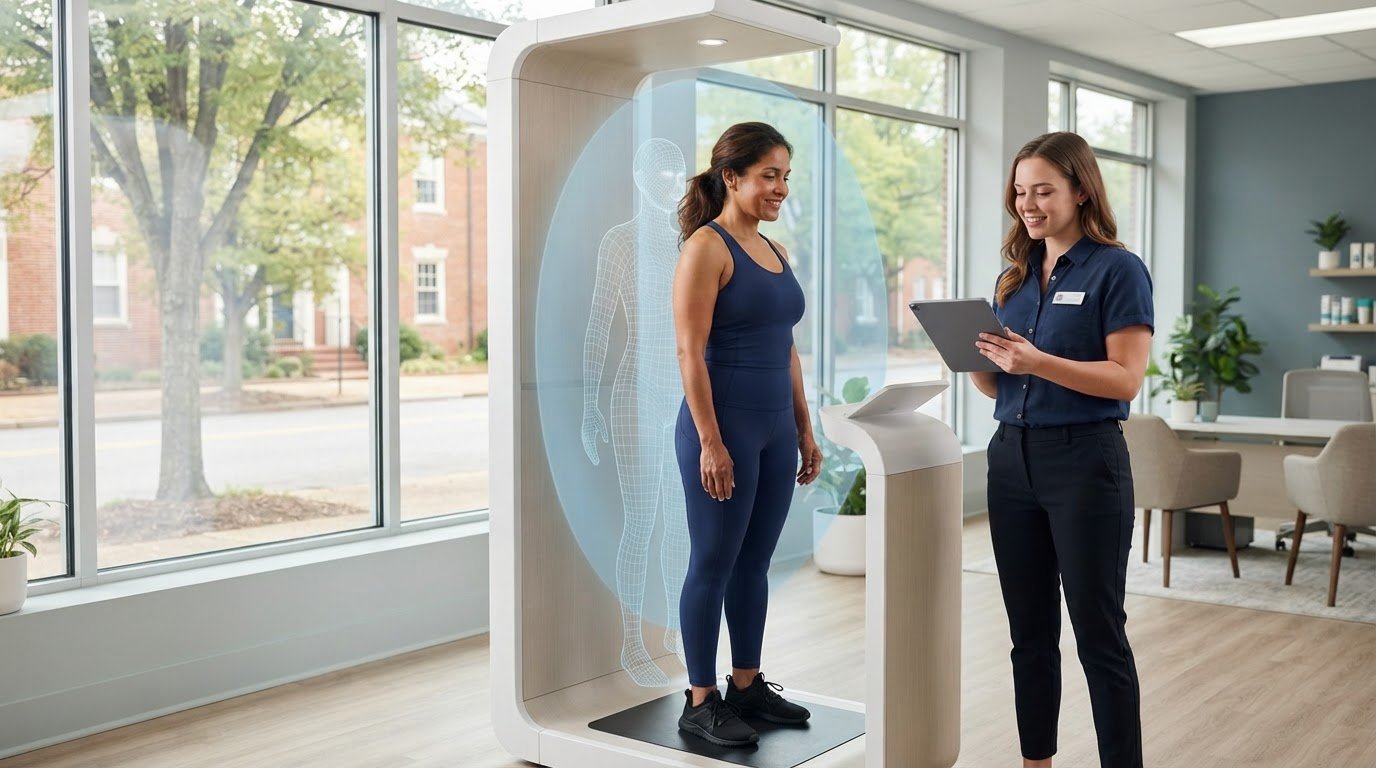
Styku uses infrared imaging to capture external body shape and estimate body-composition measures. Those estimates can offer useful context over time, but they aren’t a diagnosis or a direct measurement of every tissue in your body. A scan is most helpful when you compare results taken under similar conditions and discuss them with a clinician who understands your health goals.
In this article, you’ll learn what a Styku scan can show, where its measurements have limits, and how to compare results responsibly. You’ll also see how scan information may fit into a physician-supervised weight-management plan, where it can complement clinical judgment and help make progress easier to discuss.
Key Takeaways
- The benefits of Styku 3D body scanning may include visual context for body-shape changes that scale weight alone can’t capture.
- Compare scans under similar conditions, and remember that a single result shouldn’t define your progress.
- Scale weight, tape measurements, Styku scans, and clinician assessment serve different purposes and have different limits.
- Use scan results to prepare focused questions for your clinician and decide whether this added tracking fits your supervised plan.
- Medi Slim offers Styku scans alongside medical consultations as part of physician-supervised weight-loss care.
What are the benefits of Styku 3D body scanning during weight loss?
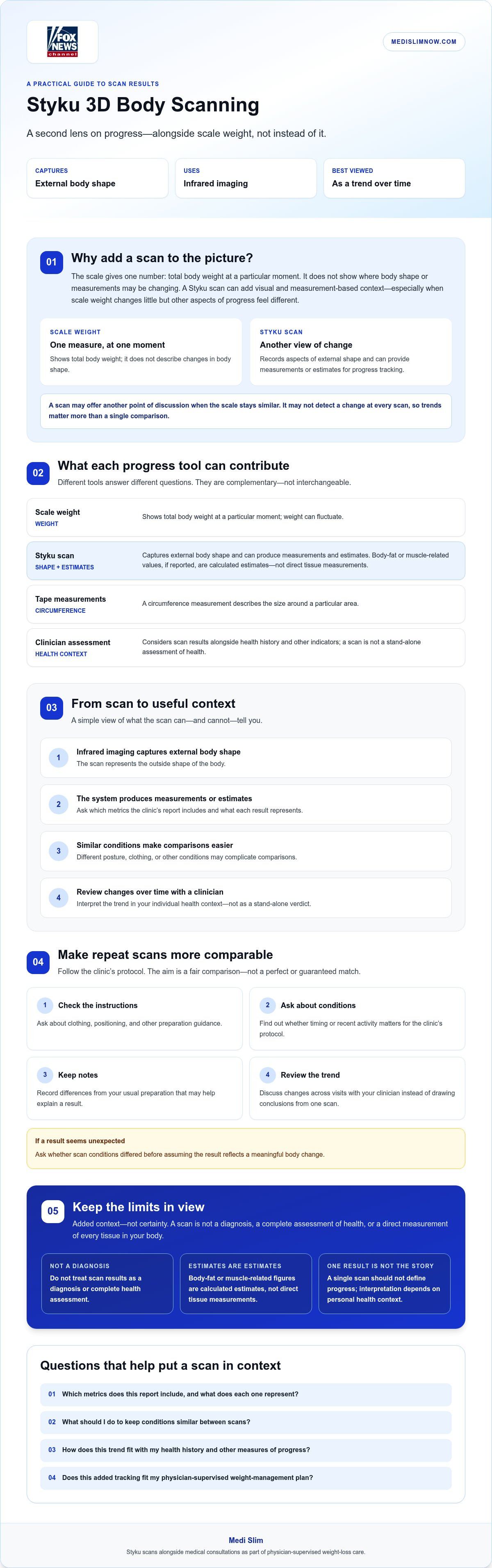
The scale gives you one number: total body weight at a particular moment. It doesn’t show where your body’s shape or measurements may be changing. A Styku scan adds a visual and measurement-based perspective that can help put weight trends in context. That can be useful if the number on the scale changes little while other aspects of your progress feel different.
In brief: A Styku scan records aspects of external body shape and provides measurements or estimates for progress tracking. It isn’t a diagnosis, a complete assessment of health, or a guarantee of a particular result.
How can a body scan add context beyond the scale?
Body weight can fluctuate and doesn’t describe changes in body shape. A scan may help you and your clinician review how measurements and visual contours shift over time, alongside weight. For example, if the scale stays similar between visits, a scan may offer another point of discussion. It won’t necessarily detect a change at every scan, so trends matter more than a single comparison.
Consistent comparisons can make the information easier to interpret, but the meaning of a trend depends on your individual health context. Your clinician can consider scan results with your health history and other indicators rather than treating a scan as a stand-alone measure of progress. The 3D body scanning overview provides a general introduction to the technology and its applications.
What does a Styku scan measure or estimate?
Styku uses infrared imaging to capture external body shape. From that scan, the system can produce body measurements and estimates. A circumference measurement describes the size around a particular area. Body-fat or muscle-related figures, if included in a report, are calculated estimates rather than direct measurements of those tissues.
Medi Slim uses Styku 3D Body Composition Analysis to help track fat loss and muscle gain during a weight-loss journey. Ask the clinic which metrics its report includes before interpreting a particular figure. In particular, don’t treat an estimated body-fat or muscle value as a definitive clinical measurement.
The benefits of Styku 3D body scanning come from added context, not certainty. A clinician can help explain what a result may suggest, what it can’t establish, and whether it fits with other measures of your health and progress.
How Styku 3D body scanning works and why consistent scans matter
A useful comparison depends on more than the scanner. If posture, clothing, or other conditions differ between visits, measurements may be harder to compare fairly. Styku captures a three-dimensional representation of external body shape. Ask the clinic about its scan sequence, positioning instructions, and preparation guidance rather than assuming every location uses the same steps.
What happens during a Styku body scan?
In general, a 3D body scan captures body shape so the system can generate measurements or other report data. The exact setup and what you’ll be asked to do depend on the clinic’s protocol. Ask staff what to expect before your appointment, including how you’ll be positioned and whether you should follow clothing instructions. A clinician can then help you understand the results in the context of your weight-management care.
Body-composition tools differ in what they measure and how they produce results. For broader context, this review of body composition measurement techniques discusses several approaches. Ask the clinic which reports its Styku setup provides and what each result represents.
How should you prepare for repeat scans?
Ask the clinic what conditions to keep consistent between scans. Similar clothing and positioning, along with comparable timing or activity when practical, may make repeat measurements easier to interpret. Follow the clinic’s specific instructions. The goal is a fair comparison, not a perfect or guaranteed match.
Use this simple framework before repeat scans:
- Check the instructions. Ask the clinic about clothing, positioning, and any other preparation guidance.
- Ask about conditions. Find out whether timing or recent activity matters for its protocol.
- Keep notes. Record any differences from your usual preparation that may help explain a result.
- Review the trend. Discuss changes across visits with your clinician instead of drawing conclusions from one scan.
Small differences in how a scan is conducted can complicate comparisons. If a result seems unexpected, ask whether the conditions differed before assuming it reflects a meaningful body change. Consistency can help you get more context from the benefits of Styku 3D body scanning, but scan results still need professional interpretation.
If you’re considering scan-supported monitoring, learn more about Medi Slim’s medical weight-loss care and ask how scans fit into a consultation.
Styku scans versus the scale and other body-composition methods
Each progress tool answers a different question. Scale weight records total weight at one point in time. Tape measurements track selected circumferences, while a Styku scan adds a visual representation of external body shape and related measurements. A clinician’s assessment places those observations alongside your health history and care goals.
Different measurement tools answer different progress questions; none should be expected to provide the whole picture on its own. The benefits of Styku 3D body scanning may include a broader view of body-shape trends, but the scan doesn’t make scale weight irrelevant or establish a diagnosis.
Styku scan versus scale weight: what does each tell you?
A scale can show whether total weight has risen, fallen, or stayed similar. It can’t show where body shape may have changed. A scan may provide additional visual and measurement context, depending on the outputs included in the report. Ask the clinic what its Styku report measures before drawing conclusions from a result.
Neither tool explains the reason for a change by itself. A clinician can help interpret both in light of your circumstances and other health indicators.
How does 3D scanning compare with other body-composition assessments?
Methods such as DEXA and bioelectrical impedance analysis use approaches that differ from an optical body scan. Their outputs aren’t automatically interchangeable, and a comparison shouldn’t be reduced to a blanket claim that one method is always more accurate. The research from the University of North Dakota examines Styku scanner reliability and repeatability. A study’s findings don’t confirm which measures are available in a particular clinic’s setup or determine what’s appropriate for your care.
Use this comparison to clarify what each approach can contribute and what it cannot establish on its own:
| Method | What it can show | What it can’t establish alone |
|---|---|---|
| Scale | Total body weight at the time of measurement | Body shape or the reason weight changed |
| Tape measurements | Circumference at the specific sites measured | Whole-body composition or a health diagnosis |
| Styku scan | A visual capture of external body shape and the measurements included in its report | A diagnosis or definitive tissue composition; confirm the specific clinic outputs |
| Clinician assessment | Professional interpretation of progress in the context of health history and care | Every detail from any single measurement method |
Ask your clinician which measures are useful for your plan and how to interpret them together. A scan can support a progress conversation, but clinical judgment remains essential.
How to use Styku scan results to track progress responsibly
A scan report is most useful when it starts a conversation, not when it’s treated as a verdict. Use it to identify questions and follow changes over time, while remembering that no single result explains your health or determines what your care plan should be.
Try this practical sequence after a scan:
- Review the report. Ask what each displayed measurement or estimate represents. Confirm which results are available through the clinic’s Styku setup.
- Compare similar conditions. Check whether the scans were performed under similar conditions, and ask the clinic how its protocol affects comparisons.
- Note questions and context. Record anything that seems unexpected, along with relevant changes in your routine or how you feel.
- Discuss the pattern with your clinician. Consider the scan alongside your health history, scale weight, and other progress indicators, not in isolation.
Which changes should you discuss with your clinician?
Ask which reported measurements relate most closely to your goals and care. If a scan trend differs from scale weight or doesn’t match your experience, bring that up rather than trying to diagnose the reason yourself. Your clinician can help interpret the information within your broader health context. Medication decisions belong in the clinician-patient conversation. A scan alone doesn’t determine whether treatment should change.
For another perspective on interpreting scan information during care, see how Styku tracks body-scan progress. It can help frame the scan as one piece of a progress discussion, rather than a stand-alone measure.
How should scan trends fit into a weight-loss plan?
Think of the scan as one monitoring input, alongside clinical follow-up and your own account of progress. A result may prompt a question, but it doesn’t predict a specific body-composition change. Prescribed medication, including Semaglutide or Tirzepatide, doesn’t guarantee a particular scan result or weight-loss outcome. Your clinician can advise whether these treatments are appropriate for you and how progress should be reviewed.
There’s no universal scan schedule. Ask the clinic what comparison interval fits its protocol and your plan. For related reading, Semaglutide results tracked with Styku discusses medication-related progress monitoring.
The benefits of Styku 3D body scanning depend on how thoughtfully results are interpreted. To discuss scan-supported progress as part of supervised care, contact Medi Slim about a medical weight-loss consultation.
When a Styku scan may help and how Medi Slim incorporates it
A Styku scan may be worth discussing if scale weight alone doesn’t give you enough context to understand how your body is changing. It isn’t essential to weight-loss care. The right way to monitor progress depends on your goals, comfort, and clinician’s guidance. Some people may find visual body-shape tracking useful; others may prefer simpler measures or choose not to have a scan.
Who may find 3D body scanning useful?
You may appreciate an additional view of body-shape changes if weight is only one part of how you want to follow progress. A scan can provide information to discuss with your clinician, but it can’t define success or confirm a health outcome. Consider whether seeing and reviewing this type of information feels helpful to you. Your monitoring plan can use other measures if a scan isn’t a good fit.
What to ask about Styku scans at Medi Slim
Medi Slim offers Styku 3D Body Composition Analysis alongside medical consultations and physician-supervised weight-loss care. Clinicians use scan information to help monitor body changes as part of that care, rather than treating the scan itself as treatment. Ask what results are included in the clinic’s report and how your clinician uses them during follow-up.
Before deciding whether scanning fits your plan, you can also ask:
- What should I expect during the scan, and what preparation is recommended?
- How does the clinic protect my privacy and handle scan information?
- What is the clinic’s protocol for comparing repeat scans?
- How will scan results be considered alongside other progress measures?
These questions can help you understand the role of scanning before you choose it. The benefits of Styku 3D body scanning depend on whether the information supports your goals and is interpreted in context. A scan doesn’t diagnose a condition or guarantee a particular change in body composition.
Medi Slim’s supervised weight-loss care may include prescribed Semaglutide or Tirzepatide when a clinician determines an option is appropriate for an individual. These medications aren’t suitable for everyone, and neither medication nor a scan result guarantees a specific outcome. Treatment decisions should be made with your clinician, based on your individual evaluation and care needs.
Medi Slim serves people in Richmond, Henrico, Mechanicsville, Midlothian, and Glen Allen. If you’re in the area and want to discuss whether scan-supported monitoring fits your plan, explore Medi Slim’s medical weight-loss care.
Make your progress easier to understand
The benefits of Styku 3D body scanning come from the added context it can provide alongside scale weight, not from replacing clinical judgment. Scan measurements and estimates can help you follow body-shape trends, but they aren’t diagnoses or guarantees of a particular result. Compare scans under similar conditions and discuss the pattern with your clinician.
Medi Slim offers Styku scans alongside medical consultations as part of physician-supervised weight-loss care. Depending on an individual clinical evaluation, care may include prescribed Semaglutide or Tirzepatide. A consultation is a practical place to ask what a scan can show, which results are available, and how they may fit your progress-monitoring plan.
If you’re ready to discuss a supervised approach, explore physician-supervised weight-loss care with Medi Slim. Contact the clinic to discuss a medical weight-loss consultation and whether Styku scanning fits your progress-monitoring plan.
Frequently Asked Questions
Is Styku 3D body scanning accurate?
Accuracy depends on the measurement, device setup, and consistency between scans. Styku captures external body shape and can provide measurements or calculated estimates, but results shouldn’t be treated as a diagnosis or a definitive measure of every body-composition change. Ask the clinic which metrics its report includes, how they’re generated, and how a clinician interprets them alongside your health history and other progress indicators.
What are the main benefits of a Styku body scan?
The benefits of Styku 3D body scanning may include a visual record of body shape and measurements that add context to scale weight. Reviewing trends over time can give you and your clinician another way to discuss progress. The usefulness of a scan depends on comparable scan conditions and thoughtful interpretation. It’s a monitoring tool, not a treatment, a guarantee of results, or a substitute for medical advice.
Can a Styku scan show fat loss if my weight stays the same?
A Styku scan may provide body-shape measurements that add context when scale weight stays similar, but it can’t independently confirm the reason for a change. The information available depends on the clinic’s report, and comparisons are more useful when scan conditions are similar. Discuss the results with your clinician and consider them alongside other health measures. Avoid drawing firm conclusions from one scan or an isolated difference.
How often should you get a Styku body scan?
There’s no universal scan interval that suits everyone. Timing depends on the clinic’s protocol, your monitoring goals, and whether repeat results can be compared under similar conditions. Ask your provider when another scan would be useful for your plan. Frequent scans or small differences between individual results may be difficult to interpret, so focus on trends discussed with your clinician rather than treating every measurement as a meaningful change.
What should I wear for a Styku 3D body scan?
Follow the instructions from the clinic where you’ll be scanned. Clothing and positioning can affect how easily measurements compare between visits, but clothing guidance may vary by clinic and setup. Don’t assume a rule you’ve heard applies to every scan. If you’re unsure what to wear or how to prepare, contact the clinic before your appointment and ask what it recommends for your scan and any future comparisons.
Is a Styku scan better than using a scale?
Neither tool is universally better; they answer different questions. A scale reports total body weight, while a Styku scan may add visual body-shape or measurement information, depending on the report. Neither provides a complete clinical assessment on its own. Your clinician can help decide which measures fit your goals and explain how to interpret them together. You can continue to use scale weight as one part of progress monitoring.
Does Medi Slim use Styku scans during medical weight loss?
Yes. Medi Slim offers Styku 3D Body Composition Analysis alongside medical consultations and physician-supervised weight-loss care. Ask the clinic which metrics its scan report includes, what preparation it recommends, and how repeat scans are handled. A scan supports progress discussions; it doesn’t determine medication eligibility or replace an individual clinical evaluation. Medi Slim serves Richmond, Henrico, Mechanicsville, Midlothian, and Glen Allen, so confirm where scan appointments are available.