

Best Foods for Fat Loss on Semaglutide: A Practical Guide
What are the best foods for fat loss on semaglutide when your appetite has changed? A balanced meal can feel like a challenge when you’re eating less, and nausea, constipation, or other digestive discomfort may make some foods harder to manage.
You don’t need a long list of forbidden foods to make thoughtful choices. A flexible eating pattern can help you focus on nourishing options while adjusting portions and textures to your appetite and tolerance. This guide covers practical sources of protein, fiber, fruits, vegetables, and fluids, plus ways to put them together.
You’ll also find ideas for smaller meals and gentler options when your stomach feels unsettled, along with foods that may worsen discomfort for some people. Semaglutide affects people differently, so there’s no single meal plan that works for everyone. If symptoms persist or make it hard to eat or drink enough, discuss them with your clinician. Physician-supervised guidance can help address nutrition questions and individual needs as treatment progresses.
Key Takeaways
- The best foods for fat loss on semaglutide depend on your nutritional needs and what you tolerate, not a universal menu.
- Build meals in a flexible sequence: choose protein, add produce, include a fiber-rich carbohydrate, then adjust portions to your appetite.
- Rather than following a strict forbidden-food list, notice whether rich, fried, spicy, or highly sugary foods affect your comfort.
- A sample day can offer ideas, but it isn’t a prescription. Adapt meals to your appetite and discuss ongoing symptoms or nutrition concerns with your clinician.
- Physician-supervised care can help personalize nutrition discussions, while Styku 3D body-composition scans offer another way to track changes.
How food choices can support fat loss while taking semaglutide
Semaglutide doesn’t require one universal, medication-specific menu. There’s no single set of foods everyone must eat, and no fixed calorie target or macronutrient ratio that suits everyone. A supportive eating pattern focuses on nutrient-dense foods that fit your health needs, preferences, appetite, and digestive tolerance.
Food choices can help you meet nutrition needs as your appetite changes, but they can’t guarantee fat loss. Semaglutide is one part of care, alongside individual medical guidance and other habits that support health. The Semaglutide overview describes the medication and its effects. Discuss questions about your own treatment and nutrition with your clinician.
What does a balanced semaglutide eating pattern look like?
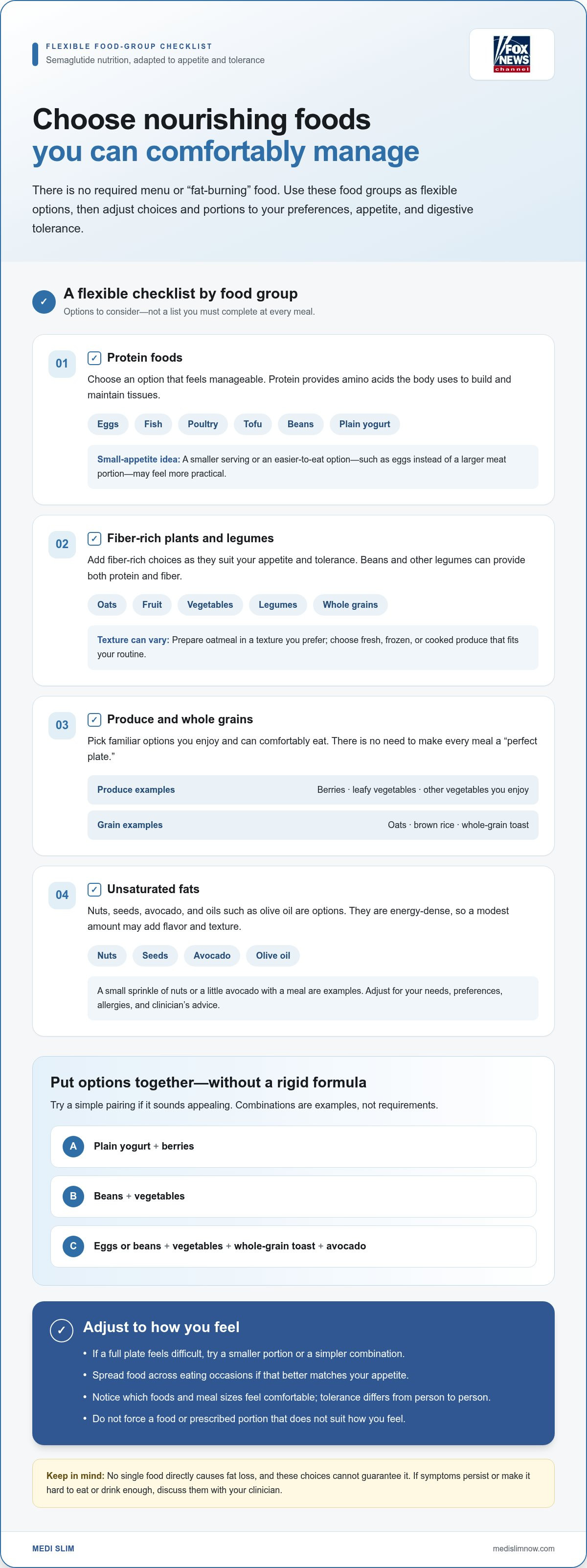
Think in food groups, not strict rules. Include protein foods, fiber-rich plants, whole grains, and sources of unsaturated fat across meals as your appetite and tolerance allow. For example, you could combine eggs or beans with vegetables, whole-grain toast, and avocado. These are options, not a required formula. The best foods for fat loss on semaglutide are those that help you get nourishment in a way you can maintain.
Meal size and composition may need to change over time. If a full plate feels difficult, try a smaller portion or a simpler combination. You can also spread food across eating occasions if that better matches your appetite. The goal is a flexible pattern, not forcing yourself to finish a prescribed portion or following a rigid plan that ignores how you feel.
The Dietary Guidelines for Americans offer general, population-level nutrition guidance, not individualized medical advice. Your health history, medication plan, and symptoms can affect what’s appropriate for you. Use general recommendations as a starting point and discuss personal questions with your clinician.
Why appetite and food tolerance matter
A reduced appetite can make it harder to eat a wide variety of foods or finish your usual portions. Choosing nutrient-dense foods can help make the food you do manage to eat more nourishing. Focus on what feels practical rather than treating any one meal as a test. If your appetite or preferences vary from day to day, your choices can vary too.
Digestive experiences differ. Some people have discomfort during treatment, while others may not, and tolerance can change. Notice whether particular meal sizes or types of food seem to affect your comfort, without assuming that the same foods will cause symptoms for everyone. Persistent or concerning symptoms, or difficulty eating and drinking enough, are reasons to seek guidance from your clinician.
For broader context on treatment and what to expect, the semaglutide patient guide provides an overview. It can help you prepare specific questions about appetite, food tolerance, and nutrition for a medical weight-loss consultation.
Best foods for fat loss on semaglutide: practical choices by food group
There isn’t one food that directly causes fat loss, and no single menu suits everyone taking semaglutide. Instead of searching for “fat-burning” ingredients, look for foods that provide useful nutrients and feel manageable with your current appetite. The choices below are flexible starting points, not a checklist to complete at every meal.
The NHS guidance on Semaglutide describes the medication in the context of weight management and notes the role of diet and physical activity alongside treatment. In practice, it can help to keep familiar options from different food groups on hand, then choose based on preference, tolerance, and what you’re able to eat.
Protein foods and fiber-rich choices to consider
Protein options include eggs, fish, poultry, tofu, beans, and plain yogurt. The USDA’s Dietary Guidelines include protein foods as part of a healthy eating pattern; protein provides amino acids the body uses to build and maintain tissues. Fiber-rich choices include oats, fruit, vegetables, legumes, and whole grains. Try simple pairings such as plain yogurt with berries or beans with vegetables. No combination is mandatory.
If your appetite is reduced, choose a smaller serving or a form that feels easier to eat. Eggs may be more appealing than a larger meat portion, for example, while oatmeal can be prepared in a texture you prefer. Beans and other legumes offer both protein and fiber, but individual preferences and tolerance matter. There’s no need to force a particular food just because it appears on a nutrition list.
Produce, whole grains, and unsaturated fats
Choose produce and grains that fit your routine. Berries, leafy vegetables, other vegetables you enjoy, oats, and brown rice are practical examples. Fresh, frozen, or cooked options can all add variety. If you’re deciding what to eat with limited appetite, prioritize foods you can comfortably manage over trying to make a perfect plate.
Nuts, seeds, avocado, and oils such as olive oil provide unsaturated fats, but they’re also energy-dense. A modest amount, such as a small sprinkle of nuts or a little avocado with a meal, may add enough flavor and texture. You don’t need to avoid these foods or measure every portion rigidly. Adjust based on your needs, preferences, allergies, and clinician’s advice.
The best foods for fat loss on semaglutide aren’t a special class of fat-burning foods. They’re nourishing choices you can adapt to your appetite and tolerance. Medi Slim’s physician-supervised medical weight-loss consultations provide a place to discuss nutrition questions alongside treatment.
Foods to Limit on Semaglutide and Personal Tolerance
Taking semaglutide doesn’t mean you need a universal forbidden-food list. Some people find fried, very rich, spicy, or highly sugary foods less comfortable to eat, while others tolerate them without an obvious problem. Your experience matters more than a blanket rule. The Semaglutide Injection Information from MedlinePlus covers potential medication effects. If you have symptoms or questions about treatment, discuss them with your prescribing clinician rather than relying on food changes alone.
When richer, fried, or spicy foods may be harder to tolerate
Notice how a particular meal feels for you. A large serving of fried food, a rich sauce, or a spicy dish may not suit your appetite or comfort at a given time, but that doesn’t mean everyone taking semaglutide needs to avoid those foods. If you want to try a gentler option, choose a smaller portion, a baked rather than fried preparation, or a leaner protein. Keep the adjustment flexible and base it on your experience.
| Food pattern | Possible reason to adjust | Flexible alternative |
|---|---|---|
| Fried or very rich meals | You notice they feel uncomfortable or difficult to manage | Try a baked preparation or a smaller portion |
| Spicy dishes | You find the heat affects your comfort | Use milder seasoning, then add flavor to taste |
| Highly sugary foods or drinks | They take the place of foods that provide more varied nutrients | Choose fruit or a less-sweet option when it appeals to you |
This table offers ideas, not medical rules. An alternative is useful only if you enjoy and tolerate it. You don’t need to eliminate whole food groups or label a food as “bad” because it appears here.
How to notice patterns without over-restricting
If you’re unsure what affects your comfort, keep a brief note for a short period. Record what you ate, the approximate portion, when you ate it, any symptoms, and when they occurred. This can give you and your clinician a clearer starting point for discussing patterns. One meal may not tell the full story, so don’t treat a single episode as proof that a food is always a trigger.
Make one adjustment at a time, such as changing the preparation or portion while leaving the rest of your meals familiar. Removing several foods or food groups at once can make it harder to identify what changed and may unnecessarily narrow your choices. The best foods for fat loss on semaglutide aren’t defined by a strict avoidance list. Focus on options that fit your needs and tolerance.
Contact your prescribing clinician if symptoms are severe, persistent, worrying, or interfering with eating and drinking. Don’t try to manage significant symptoms through diet alone. Your clinician can help assess whether the issue needs medical attention and discuss appropriate next steps.
How to build satisfying semaglutide-friendly meals when appetite is low
A simple structure can make meal decisions easier when your appetite is smaller. Use this flexible sequence and adjust it to what you can comfortably eat. You don’t have to build every meal the same way.
A simple meal-building method and sample combinations
Start with one manageable choice at a time. The aim is a useful template, not a strict meal plan or a portion you have to finish.
- Select a protein. Choose an option that sounds appealing, such as eggs, plain yogurt, fish, tofu, poultry, or beans.
- Add produce. Include fruit or vegetables in a form you enjoy, such as berries, sliced fruit, cooked vegetables, or a small side salad.
- Choose a fiber-rich carbohydrate. Oats, whole-grain toast, brown rice, or another familiar whole grain can round out the meal.
- Adjust the portions. Begin with an amount that feels manageable. Pause and decide whether you want more rather than serving a large portion by default.
For breakfast, pair an egg or plain yogurt with fruit and oats. For lunch or dinner, try fish, tofu, or beans with vegetables and a whole grain you enjoy. Adapt these combinations to cultural food traditions, dietary preferences, allergies, and clinician advice. The best foods for fat loss on semaglutide are practical choices that fit your needs, not a fixed menu.
Example day, not a prescription: Breakfast could be plain yogurt with berries and a small serving of oats. If you feel hungry later, a snack might be fruit or a small portion of yogurt. Lunch could be tofu with cooked vegetables and brown rice. Dinner might be fish with vegetables and a familiar grain. Swap ingredients or leave out a snack if it doesn’t suit your appetite. This example isn’t a required schedule, and your needs may differ.
Eating and drinking comfortably as appetite changes
Try eating at a comfortable pace. Set utensils down between bites and pause partway through to notice how you feel. If a full portion seems like too much, start smaller or save the rest for later if appropriate. Some people prefer smaller eating occasions; others keep their usual meal pattern with adjusted portions. There’s no need to force a schedule that doesn’t work for you.
Keep fluids accessible and sip throughout the day as comfortable. The National Academies’ general water-intake guidance recognizes that needs vary with factors such as activity and climate. Individual health conditions and clinician instructions can also affect what’s appropriate, so don’t rely on a one-size-fits-all fluid target. Ask your clinician for guidance if a condition or treatment plan affects your fluid intake.
If appetite changes make it difficult to eat or drink enough, discuss your experience during a physician-supervised medical weight-loss consultation. A clinician can help you consider your individual needs alongside treatment.
How clinician guidance can personalize nutrition during semaglutide treatment
General food guidance can offer a starting point, but your appetite, health history, food preferences, and treatment experience are personal. Medi Slim provides physician-supervised medical weight-loss consultations and prescription-based semaglutide treatment tailored to individual health profiles. A clinician can help you discuss nutrition questions in the context of your care, rather than relying on a generic list of the best foods for fat loss on semaglutide.
Questions to bring to a medical weight-loss consultation
Come prepared to describe what eating has been like since starting treatment. Specific details can make the conversation more useful, even if you’re unsure whether a change is related to medication or food.
- Have your appetite, usual meal portions, or food preferences changed?
- Are there foods or meal sizes you find difficult to tolerate?
- Do you have health conditions that affect your nutrition or fluid needs?
- Do food allergies, dietary restrictions, or cultural preferences shape what you eat?
- What medications or supplements are you taking, and what questions do you have about them?
Bring up symptoms that affect your ability to eat or drink, too. Your prescribing clinician can advise on treatment-related concerns. Don’t change your medication dose or schedule on your own in response to appetite changes or symptoms. A consultation is also a place to discuss realistic nutrition adjustments that fit your individual needs.
Tracking progress beyond food lists and scale readings
Body weight is one measure of change, but it doesn’t describe every aspect of body composition. Medi Slim uses Styku 3D Body Composition Analysis to track body-composition changes, including fat-loss and muscle-gain progress. These measurements can add context as care continues, but a scan is not a complete assessment of health, a substitute for clinical evaluation, or a guarantee of treatment outcomes.
Consider measurements alongside your nutrition experience and clinician’s assessment, rather than judging progress from one number or scan. The article on tracking semaglutide results with Styku explains how body-composition tracking can fit into monitoring. Medi Slim’s medical weight-loss consultations also cover prescription options and progress questions.
Medi Slim provides physician-supervised medical weight-loss care in Richmond, Henrico, Mechanicsville, Midlothian, and Glen Allen. A consultation can help you discuss nutrition concerns, appetite changes, and progress measures as part of semaglutide care.
Take the next step with a plan that fits you
Your next useful step doesn’t have to be a perfect menu. Notice which meals feel realistic in your routine, and bring questions or ongoing concerns to your prescribing clinician. A few notes about appetite, food preferences, and how you’re feeling can make that conversation more specific.
The best foods for fat loss on semaglutide are choices that support your nutrition while fitting your needs and tolerance. Those needs may shift during treatment, so revisit your approach rather than expecting one plan to work unchanged. If you’re unsure how to adapt your eating habits, seek guidance that considers your health circumstances instead of relying on rigid rules or trying to adjust medication on your own.
For an individualized next step, explore physician-supervised weight-loss care with Medi Slim in Richmond, Henrico, Mechanicsville, Midlothian, or Glen Allen. Schedule a consultation to discuss your treatment, nutrition questions, and progress.
Frequently Asked Questions
Is there a specific diet you have to follow while taking semaglutide?
No single diet is required for everyone taking semaglutide. The best foods for fat loss on semaglutide depend on your health needs, preferences, appetite, and tolerance. Rather than starting a restrictive plan, look at what you typically eat and choose one manageable change, such as adding a nourishing snack if meals have become smaller. Discuss major changes with your clinician, especially if you have a condition that affects nutrition.
What are the best high-protein foods to eat on semaglutide?
Choose protein foods that suit your preferences and are easy to manage in a meal or snack. Options include cottage cheese, lentils, edamame, canned tuna, and chicken. If a full serving feels like too much, a smaller amount alongside another food may be more practical. Check labels on packaged options for ingredients that matter to you, such as sodium or added sugars, and account for any allergies or dietary restrictions.
Can you eat carbohydrates while taking semaglutide?
Yes. Carbohydrates can remain part of your eating pattern while taking semaglutide. Consider options such as potatoes, fruit, whole-grain bread, or lentils, and pair them with other foods that meet your needs. If you use semaglutide for type 2 diabetes, your overall eating plan may need to account for blood glucose and other medications. Your clinician can help you understand how to make choices that fit your treatment plan.
What foods should you avoid if semaglutide upsets your stomach?
There isn’t one list of foods everyone must avoid. If you notice discomfort, record what you ate and how you felt, then discuss possible patterns with your prescribing clinician. Avoid eliminating several food groups based on one episode. If symptoms are severe, persistent, or worrying, or make it hard to eat or drink, seek medical guidance rather than trying to solve the issue through food changes alone.
How much protein should you eat while taking semaglutide?
There isn’t one protein target that fits every person using semaglutide. Your needs can depend on factors such as body size, overall diet, health conditions, and treatment goals. A clinician or dietitian can help determine an appropriate amount and translate it into foods you enjoy. If you have kidney disease or another condition that affects protein needs, get individualized guidance before substantially increasing protein intake.
What happens if you cannot eat enough because your appetite is reduced?
If reduced appetite makes it difficult to eat or drink enough, tell your prescribing clinician. Share how long it has been happening, what you can manage, and whether you’ve noticed changes in energy or hydration. Don’t force large meals or change your medication dose on your own. Your clinician can assess the situation and advise on appropriate next steps, including whether your treatment plan needs review.
Can you drink coffee or alcohol while taking semaglutide?
Coffee and alcohol aren’t automatically unsuitable for everyone taking semaglutide, but personal health and tolerance matter. Coffee may not feel comfortable for some people, while alcohol can affect decisions around food and may be relevant to blood glucose management. Consider your own response and discuss alcohol use with your clinician, particularly if you have diabetes, take other medications, or have been advised to limit or avoid alcohol.
Should you talk to your clinician before making major diet changes while using semaglutide?
Yes. Discuss major changes such as fasting, a highly restrictive diet, or starting supplements with your clinician, especially if you have a chronic condition or take other medication. Don’t stop or adjust prescription treatment to accommodate a diet without medical guidance. Medi Slim offers physician-supervised consultations in Richmond, Henrico, Mechanicsville, Midlothian, and Glen Allen, where nutrition questions can be discussed as part of medical weight-loss care.