

Can I Drink Alcohol on Tirzepatide? Safety, Side Effects, and Practical Guidance
Alcohol isn’t automatically off-limits on tirzepatide, but it may not be a safe choice for everyone. If you’re asking, “can I drink alcohol on tirzepatide,” the answer depends on your health, other medications, and how you’re responding to treatment. The FDA-approved prescribing information doesn’t list alcohol as a direct contraindication, but specific studies of alcohol use with tirzepatide haven’t been conducted.
It’s understandable to want a clear yes-or-no answer, especially if you’re concerned about nausea, vomiting, or blood sugar changes. Alcohol may overlap with tirzepatide’s side effects, and the combination may raise more concerns if you have certain medical conditions or use other glucose-lowering medicines.
This guide explains what’s known, what remains uncertain, and which personal factors may make drinking riskier. You’ll also find practical questions to raise with your prescriber and guidance on symptoms that need prompt medical attention. A clinician who knows your treatment and health history can help you make an individualized decision.
Key Takeaways
- To answer “can I drink alcohol on tirzepatide,” consider your symptoms, health history, other medicines, and drinking patterns rather than relying on a universal rule.
- Alcohol may worsen or complicate nausea, vomiting, diarrhea, and reduced appetite. Pay attention to how you feel during treatment.
- If you have diabetes, use insulin or a sulfonylurea, have a history of pancreatitis, or have ongoing stomach symptoms, ask your prescriber how these factors affect your choices.
- Before drinking, review your current symptoms and medicines with your prescriber or pharmacist, and ask for advice specific to your situation.
- Seek prompt medical assessment for severe, persistent abdominal pain or repeated vomiting.
Alcohol and Tirzepatide: What the Answer Depends On
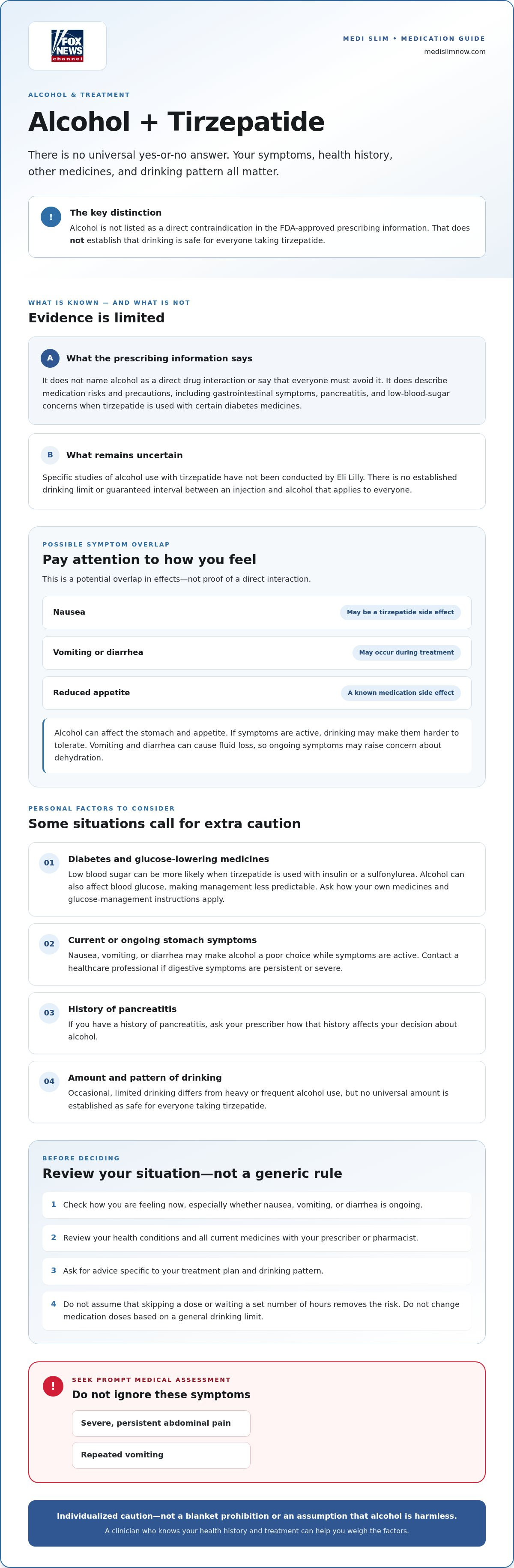
There isn’t a universal yes-or-no answer to “can I drink alcohol on tirzepatide?” Alcohol isn’t listed as a direct contraindication in the current FDA-approved prescribing information. That does not mean drinking is safe for every person taking the medication. Your health history, other medicines, current symptoms, and drinking pattern all matter.
It helps to separate what the prescribing information says from what is known about alcohol specifically. The information describes known medication risks and precautions, while evidence about drinking alcohol with tirzepatide is limited. Eli Lilly has not conducted specific studies on this interaction. For general background on the medicine and its uses, see Tirzepatide.
What tirzepatide prescribing information says about alcohol
Current FDA-approved prescribing information for tirzepatide does not name alcohol as a direct drug interaction or state that everyone must avoid it. It does describe potential side effects and precautions, including gastrointestinal symptoms, pancreatitis, and low blood sugar concerns when tirzepatide is used with certain diabetes medicines. Those warnings do not prove that alcohol directly causes these effects when combined with tirzepatide.
At the same time, the absence of an alcohol-specific warning does not prove that drinking is safe. Because the combination hasn’t been specifically studied by the manufacturer, there isn’t an established drinking limit or a guaranteed interval between an injection and alcohol that applies to everyone.
Why one answer may not fit every patient
Your overall treatment plan can change the conversation. For example, a person with type 2 diabetes who also uses insulin or a sulfonylurea may need to consider blood sugar risks differently from someone who doesn’t take glucose-lowering medicines. Ongoing nausea, vomiting, or diarrhea may also make alcohol a poor choice while symptoms are active.
The amount and pattern of drinking matter, too. Occasional, limited drinking is different from heavy or frequent alcohol use, but no universal amount can be called safe for every person taking tirzepatide. Don’t assume that skipping a dose or waiting a set number of hours removes the risk.
Before deciding, ask your prescriber or pharmacist how your health conditions, symptoms, and other medicines affect your situation. If you’re receiving physician-supervised tirzepatide treatment, a personalized consultation can help you review these factors. The goal is individualized caution, not a blanket prohibition or an assumption that alcohol is harmless.
How alcohol may overlap with tirzepatide side effects and blood sugar changes
The practical concern is often how alcohol may affect symptoms you’re already experiencing, not a confirmed direct interaction. Current FDA-approved prescribing information lists nausea, vomiting, diarrhea, and decreased appetite among tirzepatide’s common side effects. Alcohol can also affect the stomach and appetite, so drinking may make these symptoms harder to tolerate. That possibility should not be mistaken for proof that alcohol and tirzepatide interact directly.
Digestive symptoms, appetite, and hydration
If you already feel nauseated or have vomiting or diarrhea, alcohol may aggravate discomfort or make it harder to keep up with fluids and food. Vomiting and diarrhea can cause fluid loss, and dehydration may become a concern if symptoms continue. Alcohol isn’t a way to prevent or relieve medication side effects.
For a discussion of how alcohol may complicate common side effects and blood sugar management, see this overview of the Mounjaro and alcohol interaction. If digestive symptoms are persistent or severe, contact your healthcare professional rather than trying to manage them by changing your drinking or medication on your own.
Blood glucose and medications that can increase risk
Tirzepatide’s prescribing information warns that low blood sugar can be more likely when it’s used with insulin or a sulfonylurea. Alcohol can also affect blood glucose, sometimes making diabetes management less predictable. The effect may depend on what and how much you drink, whether you’ve eaten, and your treatment plan.
If you have diabetes, ask your prescriber or pharmacist how alcohol fits with your specific medicines and glucose-management instructions. Don’t change medication doses or rely on a general drinking limit to prevent low blood sugar. If you notice symptoms such as shakiness, dizziness, confusion, or a racing heartbeat, follow the guidance in your diabetes care plan and seek medical advice as appropriate.
In short, overlapping effects are a reason for caution, not evidence of a confirmed alcohol-tirzepatide interaction. If you’re still asking, “can I drink alcohol on tirzepatide,” consider your current symptoms and medicines before deciding. A personalized discussion can clarify your individual concerns. If you’re in Richmond, Henrico, Mechanicsville, Midlothian, or Glen Allen, you can also raise them during a medical weight loss consultation.
Who should be especially cautious about alcohol while taking tirzepatide?
Some health factors make it especially important to get personalized advice before drinking. They don’t automatically mean alcohol is forbidden, and they aren’t a reason to change your tirzepatide dose on your own. Current prescribing information includes warnings about low blood sugar when tirzepatide is used with insulin or a sulfonylurea, gastrointestinal side effects, and pancreatitis. These are reasons to review your own circumstances with a clinician, not proof that alcohol and tirzepatide together cause a specific outcome.
| Factor to discuss | Question for your prescriber or pharmacist |
|---|---|
| Diabetes treated with insulin or a sulfonylurea | How could alcohol affect my blood sugar plan with these medicines? |
| History of pancreatitis | Does my history change the advice about alcohol or tirzepatide? |
| Ongoing nausea, vomiting, diarrhea, or reduced appetite | Should I avoid alcohol while these symptoms continue, and when should I seek advice? |
| Other medicines or health conditions | Could any part of my treatment plan affect this decision? |
Diabetes, low blood sugar, and other medicines
If you use insulin or a sulfonylurea, ask about alcohol before drinking. Tirzepatide can increase the risk of hypoglycemia when used with these medicines, and alcohol may complicate blood sugar management. Follow your established glucose-monitoring and low-blood-sugar instructions. Don’t skip, delay, or adjust prescribed medicine to make room for alcohol. If your plan doesn’t address drinking, ask your diabetes care team or pharmacist for advice specific to your medicines.
Digestive symptoms and pancreatitis history
Nausea, vomiting, diarrhea, and decreased appetite are recognized tirzepatide side effects. If these symptoms are recurring or significant, discuss them with your prescriber before drinking. Vomiting or diarrhea can also make it harder to stay hydrated. The prescribing information warns about acute pancreatitis. A past history is worth raising with your clinician, but it does not by itself establish that alcohol is prohibited for you.
A risk factor calls for a conversation, not a self-directed medication change. If you’re wondering, “can I drink alcohol on tirzepatide,” share your medical history, current symptoms, and medication list with your prescriber or pharmacist. They can help you consider your individual situation without assuming alcohol is universally safe or forbidden.
What to Do Before Drinking Alcohol on Tirzepatide
A quick review before drinking can help you identify questions for your prescriber or pharmacist. There isn’t one drinking limit or timing rule that fits everyone taking tirzepatide. Consider your current symptoms, health conditions, other medicines, and the guidance you’ve already received.
- Check how you feel. If you’re unwell or experiencing significant nausea, vomiting, or diarrhea, avoid alcohol and ask your clinician for advice if symptoms persist.
- Review your health history. Diabetes, a history of pancreatitis, and other relevant conditions may affect the advice you receive.
- Look at your medication list. Include insulin, sulfonylureas, and any other medicines or supplements you take.
- Follow your treatment instructions. Don’t skip, delay, or change a prescribed dose to accommodate alcohol.
Questions to ask your prescriber or pharmacist
Be specific about your situation. Ask whether your diabetes medicines or medical history affect the advice, and whether current symptoms mean you should avoid alcohol. If you monitor blood glucose or have a plan for treating low blood sugar, ask how those instructions apply on occasions when you might drink. You can also ask which symptoms mean you should stop drinking and contact your clinical team.
If you choose to drink, keep advice individualized
Don’t rely on a general drink count, a set number of hours after your injection, or advice to adjust your dose. Follow the instructions from your own care team. If symptoms develop or you feel unwell, stop drinking and contact a healthcare professional for guidance. Seek prompt medical evaluation for severe, persistent abdominal pain or repeated vomiting.
For broader context on treatment, read the comprehensive tirzepatide weight-loss guide. If you’re asking, “can I drink alcohol on tirzepatide,” a personalized discussion can help you consider your health history, symptoms, and medication plan. Ask about a personalized medical weight-loss consultation to discuss treatment questions with a clinician.
When to contact a clinician about alcohol and tirzepatide
Some questions can wait for a routine conversation with your prescriber or pharmacist. For example, ask how your other medicines, health history, or current symptoms affect alcohol advice. Severe or persistent symptoms need prompt medical assessment. Don’t assume they’re simply a reaction to alcohol or tirzepatide, and don’t wait for a routine appointment if you feel seriously unwell.
Symptoms that should not be managed by waiting it out
Tirzepatide prescribing information warns about acute pancreatitis. Severe, persistent abdominal pain, sometimes extending to the back, is a warning sign that needs urgent evaluation, especially if accompanied by repeated vomiting. Severe or persistent symptoms deserve assessment whatever you think may have caused them.
- Seek prompt medical care for severe, persistent abdominal pain or repeated vomiting.
- Call local emergency services for severe symptoms, fainting, marked confusion, or suspected serious low blood sugar. If possible, tell responders that you take tirzepatide and share your other medicines.
- Contact your prescriber about ongoing or worsening nausea, vomiting, or diarrhea, even if symptoms don’t seem like an emergency.
A weight-loss clinic is not an emergency service. For severe symptoms, use local emergency services or seek urgent medical evaluation rather than waiting for a clinic consultation.
Make alcohol questions part of supervised treatment
It’s reasonable to ask, “can I drink alcohol on tirzepatide?” Share how much and how often you drink, your current symptoms, your medical history, and all medicines you take. An honest review helps your prescriber or pharmacist give advice that fits your treatment plan. Don’t change or skip a prescribed dose to accommodate alcohol.
For broader background on treatment, read understanding tirzepatide treatment and how it works. Medi Slim offers physician-supervised tirzepatide treatment and personalized medical weight-loss consultations, where you can raise medication questions as part of your care. If you’re in Richmond, Henrico, Mechanicsville, Midlothian, or Glen Allen, you can discuss your treatment questions with the clinic. These consultations are not a substitute for emergency evaluation.
Discuss your tirzepatide questions with Medi Slim as part of a personalized medical weight-loss consultation.
Make an Informed Plan With Your Prescriber
So, can I drink alcohol on tirzepatide? There isn’t a one-size-fits-all answer. Alcohol isn’t listed as a direct contraindication, but the combination hasn’t been specifically studied, and individual factors matter. Current digestive symptoms, diabetes medicines, health history, and drinking patterns can all shape the conversation.
Before drinking, check in with your prescriber or pharmacist, especially if you use insulin or a sulfonylurea, have had pancreatitis, or aren’t feeling well. Don’t change your tirzepatide dose or other medicines to make room for alcohol. Seek prompt medical assessment for severe, persistent abdominal pain or repeated vomiting, and use local emergency services for a medical emergency.
Medi Slim offers physician-supervised tirzepatide treatment and personalized medical consultations. If you’re in Richmond, Henrico, Mechanicsville, Midlothian, or Glen Allen, bring your questions and medication list to a clinician who can consider your individual treatment plan. Discuss your tirzepatide questions with Medi Slim and take the next step with clear, individualized guidance.
Frequently Asked Questions
Can I drink alcohol while taking tirzepatide?
Possibly, but it depends on your health, symptoms, other medicines, and drinking habits. Alcohol isn’t listed as a direct contraindication in current FDA-approved tirzepatide prescribing information, but that doesn’t establish that it’s safe for everyone. Specific studies of alcohol use with tirzepatide haven’t been conducted by the manufacturer. Ask your prescriber or pharmacist for advice based on your treatment plan, rather than relying on a universal drinking limit.
Does alcohol interact directly with tirzepatide?
No direct alcohol interaction is listed in current FDA-approved prescribing information, and there’s no established evidence that the two combine to create a harmful substance. However, the manufacturer hasn’t conducted specific studies on alcohol use with tirzepatide. Alcohol may overlap with side effects or complicate blood sugar management for some people. The lack of a listed interaction shouldn’t be taken as proof that drinking is risk-free for you.
Can alcohol make tirzepatide nausea worse?
It may worsen or complicate nausea, although this isn’t proof of a direct medication-alcohol interaction. Nausea, vomiting, diarrhea, and decreased appetite are recognized tirzepatide side effects, and alcohol can also upset the stomach. If you’re already experiencing these symptoms, avoid alcohol and contact your prescriber if they persist or become severe. Vomiting or diarrhea can lead to fluid loss, so ask a healthcare professional for guidance if you’re struggling to stay hydrated.
Can I drink alcohol on tirzepatide if I have diabetes?
Possibly, but discuss it with your diabetes care team first. Tirzepatide’s low-blood-sugar risk is more relevant when it’s used with insulin or a sulfonylurea, and alcohol can complicate glucose management. Follow your existing monitoring and treatment instructions, and don’t change medicine doses to accommodate drinking. If you’re in Richmond, Henrico, Mechanicsville, Midlothian, or Glen Allen, you can raise medication questions during a personalized consultation with Medi Slim.
Should I skip a tirzepatide dose before drinking?
No. Don’t skip, delay, or change your tirzepatide dose to make drinking seem safer. Changing a prescribed schedule without medical guidance may disrupt your treatment plan and doesn’t guarantee that alcohol-related risks will be avoided. If you’re considering alcohol, ask your prescriber or pharmacist how your health history, symptoms, and other medicines affect the decision. Follow your medication instructions unless your clinician tells you otherwise.
What happens if I drink alcohol and feel sick on tirzepatide?
Stop drinking and assess how severe your symptoms are. Contact your prescriber about ongoing nausea, vomiting, or diarrhea. Seek prompt medical assessment for severe, persistent abdominal pain or repeated vomiting. Call local emergency services for severe symptoms, fainting, marked confusion, or suspected serious low blood sugar. Don’t wait for a routine clinic appointment in an emergency, and tell healthcare professionals which medicines you take.
Can I drink alcohol when starting tirzepatide or increasing my dose?
It’s generally sensible to be cautious during the first weeks of treatment and after a dose increase, when side effects may be more noticeable. Consider avoiding alcohol if you’re experiencing nausea, vomiting, diarrhea, or reduced appetite. There isn’t a guaranteed waiting period that applies to everyone. Ask your prescriber when to reassess based on your symptoms and treatment plan, and follow their individualized advice.
Does alcohol stop tirzepatide from working for weight loss?
There’s no established evidence that alcohol directly cancels tirzepatide’s effect on weight loss. However, alcohol can add calories and may affect eating habits, which could make it harder for some people to follow their weight-management plan. Individual responses and goals vary. If alcohol is a regular part of your routine, discuss it openly with your prescriber as part of your broader treatment plan. Don’t adjust tirzepatide doses based on drinking.