

Managing Side Effects of Tirzepatide: A Practical Guide
Nausea or unexpected fullness can be uncomfortable, but when should you call your clinician? If you’re managing side effects of tirzepatide, it can be difficult to tell what may respond to simple comfort measures and what needs medical attention. Digestive effects are commonly reported, particularly when starting treatment or increasing the dose, but severe or persistent symptoms should not be ignored.
You can try practical steps to ease common discomfort, but don’t change your dose or start an over-the-counter remedy without guidance from your prescriber. This guide explains which side effects are commonly reported, what low-risk adjustments may help, and which warning signs call for prompt or urgent care.
You’ll also learn what details to share with your clinician, including when symptoms began and whether they affect eating, drinking, work, or your usual routine. Medi Slim’s physician-supervised medical weight-loss consultations provide a place to discuss symptoms and treatment questions as part of an individual plan.
Key Takeaways
- Start with practical comfort measures when managing side effects of tirzepatide, while keeping treatment decisions clinician-guided.
- Digestive symptoms and appetite changes can affect meals and hydration, and may shift during treatment.
- Know which symptoms to report promptly and which warning signs may need urgent medical assessment.
- Record symptoms, try low-risk supportive habits, and share useful details with your prescriber.
- A medical weight-loss consultation can help address treatment questions and support an individual plan.
Managing Tirzepatide Side Effects Starts With Knowing What to Expect
Managing side effects of tirzepatide starts with noticing what you feel, choosing sensible comfort measures, and keeping your prescribing clinician informed. This helps you respond to symptoms without making treatment decisions on your own. Digestive effects are commonly reported, but they don’t happen to everyone, and experiencing them doesn’t mean the medicine is working better.
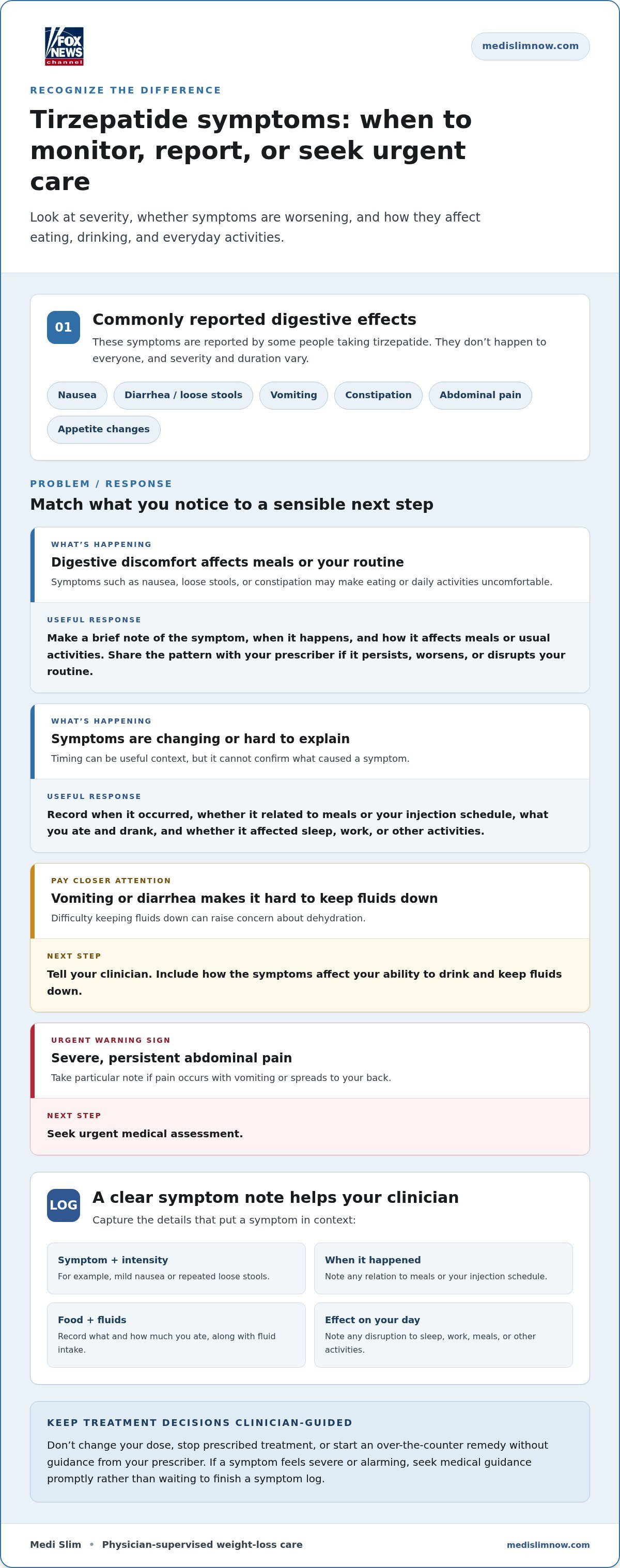
The FDA prescribing information lists nausea, diarrhea, vomiting, constipation, and abdominal pain among common adverse reactions. These symptoms can affect appetite, meal comfort, and daily routines. If vomiting or diarrhea makes it hard to keep fluids down, tell your clinician because dehydration can become a concern. Severe, persistent abdominal pain, particularly with vomiting or pain that spreads to the back, needs urgent medical assessment.
Which tirzepatide side effects are commonly reported?
People taking tirzepatide may experience nausea, loose stools, constipation, vomiting, or abdominal pain. Some may have more than one symptom, while others have few or none. Severity and duration vary, so there’s no single pattern you should expect or use to judge your response. The Tirzepatide Wikipedia article offers a general overview of the medicine. Your prescriber can help interpret symptoms in the context of your treatment.
Notice how symptoms affect everyday activities. For instance, does nausea make it difficult to finish meals? Does diarrhea make it harder to drink enough fluids? A brief record of what you feel and when it happens gives your clinician more specific information to consider.
Why symptoms deserve attention without causing alarm
Digestive discomfort can be frustrating when it affects meals, work, or plans. A symptom doesn’t automatically mean you must stop treatment, but persistent, worsening, or disruptive symptoms should be discussed with your prescriber. Tolerability varies from person to person. Your prescriber can consider what you’re experiencing and discuss next steps. Don’t change your dose without their guidance.
Understanding tirzepatide’s role in a weight-management plan can also provide context. The comprehensive tirzepatide weight-loss guide explains its role in treatment. Keep symptom management separate from progress tracking: changes in weight or body composition don’t determine whether a symptom is safe. If you’re concerned, share what’s happening with your clinician rather than trying to assess a potentially serious reaction alone.
Why Tirzepatide Symptoms Can Change During Treatment
Tirzepatide acts on GIP and GLP-1 receptors, which are involved in regulating appetite and blood sugar. Its effects can change how hungry you feel and how much you want to eat. Some people find smaller meals more comfortable; others may have digestive symptoms that make it harder to eat or drink enough. Experiences vary, and timing alone can’t confirm the cause of a symptom.
Tracking patterns can help you explain what’s happening. A symptom log isn’t a diagnosis or a reason to adjust treatment on your own. It’s a practical record to discuss with your prescriber, who can consider your situation and guide next steps.
Recognizing patterns in appetite and digestive symptoms
Make a brief note when a symptom occurs and how it affects your day. Include details such as:
- The symptom and its intensity, such as mild nausea or repeated loose stools.
- When it occurred, including its relation to meals or your injection schedule.
- What and how much you ate, along with your fluid intake.
- Whether it disrupted sleep, work, meals, or other everyday activities.
For example, noting that nausea followed a meal and made it difficult to drink fluids gives your clinician more context than simply saying, “I felt unwell.” Record appetite changes, too. You may notice that you’re eating smaller portions or feeling full sooner, but don’t assume tirzepatide is the only possible explanation. A clinician needs to assess symptoms in the context of your health and treatment.
Why treatment changes belong in a clinician conversation
Symptoms can shift during treatment. If they persist, worsen, or disrupt your routine, discuss them with your prescriber. Share your notes and explain any concerns about meals, hydration, or daily activities. Only the prescribing clinician should guide changes to your tirzepatide treatment. Don’t change your dose or stop prescribed treatment independently, even if you suspect a symptom is medication-related.
This supervised approach connects symptom management with treatment decisions. It also gives your clinician useful details, including when a symptom started, how often it occurs, and whether it’s improving or worsening. If a symptom feels severe or alarming, seek medical guidance promptly rather than waiting to finish a log.
Broader context can help you understand how prescription options fit into weight management. The 2026 prescription weight-loss medication guide reviews treatment options, while a medical weight-loss consultation gives you a place to discuss symptoms and your individual plan. Medi Slim provides physician-supervised tirzepatide treatment for patients in Richmond, Henrico, Mechanicsville, Midlothian, and Glen Allen. Learn more about Medi Slim’s medical weight-loss care.
Common Discomfort or Warning Sign? How to Assess Tirzepatide Symptoms
Symptoms can range from manageable digestive discomfort to reactions that need prompt or urgent assessment. Consider how severe a symptom is, whether it’s getting worse, and whether you can eat, drink, and carry out usual activities. The FDA prescribing information warns about serious conditions including pancreatitis, gallbladder problems, kidney injury related to dehydration, and severe allergic reactions. Symptoms alone can’t confirm any of these conditions, but they can signal when to seek help.
| Symptoms to report promptly | Symptoms that may require urgent evaluation |
|---|---|
| Nausea, diarrhea, constipation, vomiting, or abdominal discomfort that persists, worsens, or interferes with meals, fluids, or daily activities. | Severe or persistent abdominal pain, especially with vomiting or pain that spreads to the back. Seek urgent medical assessment. |
| Digestive symptoms that make it difficult to keep up with fluids, or changes such as urinating much less than usual. | Repeated vomiting or diarrhea with signs of dehydration, such as marked weakness, dizziness, or very little urination. Severe symptoms need urgent evaluation. |
| New discomfort after meals or recurring pain in the upper right abdomen. Share when it occurs and any related symptoms. | Upper-right abdominal pain with fever, yellowing of the skin or eyes, or pale stools may need urgent assessment for a possible gallbladder problem. |
| A rash or other new symptom, particularly if it is persistent or worsening. | Possible serious allergic-reaction signs, including swelling of the face, lips, tongue, or throat; trouble breathing or swallowing; fainting; or a severe rash. Seek emergency care. |
Symptoms that should prompt a call to the prescriber
Contact your prescriber about symptoms that continue, worsen, or disrupt eating, drinking, or your normal routine. Share when each symptom began, how often it occurs, whether it follows meals, and whether anything else changed. These details help your clinician assess the situation. Don’t start an over-the-counter medicine to manage a symptom without first getting advice from your clinician or pharmacist.
When symptoms may need urgent medical attention
Don’t wait for a routine appointment if you have severe, persistent abdominal pain or signs of a serious allergic reaction. Seek urgent care for severe symptoms, especially if repeated vomiting or diarrhea makes it difficult to stay hydrated. If breathing or swallowing is affected, or your face, lips, tongue, or throat swell, seek emergency help.
This information supports awareness, not diagnosis. Only a qualified clinician can assess your symptoms, determine their cause, and recommend care. When managing side effects of tirzepatide, use the symptom pattern to decide how quickly to seek help, not to determine on your own that a serious condition is present or ruled out.
Practical Steps for Managing Common Tirzepatide Side Effects
A clear routine can make managing side effects of tirzepatide more practical. Identify the symptom, try low-risk supportive habits, note what changes, and contact your prescriber if symptoms persist or interfere with eating, drinking, or daily activities. This approach helps you describe the problem without guessing at its cause or changing treatment on your own.
- Identify what’s bothering you. Note whether you’re experiencing nausea, constipation, diarrhea, vomiting, or another change, and how it affects your routine.
- Try a gentle adjustment. For nausea, consider smaller portions, eating more slowly, and stopping when comfortably full. Avoid meals or routines you’ve noticed make your symptoms worse.
- Pay attention to fluids. Drink fluids regularly as tolerated. If vomiting or diarrhea makes it difficult to keep fluids down, seek medical guidance rather than trying to manage worsening symptoms alone.
- Record the pattern and communicate. Keep notes about symptoms and related changes, then share them with your prescriber. Ask a clinician or pharmacist before using an over-the-counter medicine or supplement.
Everyday habits that may make digestive symptoms easier
Give meals time. Eating slowly can help you notice fullness before you’ve eaten past your comfort level. Smaller portions may feel easier if a full meal worsens nausea, but you don’t need to follow a rigid diet. Pay attention to your experience and write down foods, meal sizes, or routines that seem to coincide with discomfort. A pattern is useful information, not proof that a particular food caused the symptom.
Keep hydration in view, especially if your appetite or fluid intake has changed. Note if drinking becomes difficult or vomiting or diarrhea continues. Your clinician can help determine whether your symptoms need further attention. Don’t start a medication or supplement based on a general tip alone; ask your clinician or pharmacist whether it’s appropriate for you.
What to record before contacting your clinician
A concise log can make a consultation more focused. Record when the symptom began, how often it occurs, its severity, what you ate and drank, and how it affected activities such as work or sleep. Include the timing of your treatment and any recent changes directed by your clinician. Don’t make dose changes to test a theory. Share the information and let your prescriber guide treatment decisions.
If you have questions about symptoms or your treatment plan, discuss your treatment questions with Medi Slim as part of a physician-supervised medical weight-loss consultation.
How Medical Weight-Loss Support Helps You Manage Tirzepatide Side Effects
Managing side effects of tirzepatide is easier when you can discuss symptoms and treatment questions with a clinician who understands your weight-management plan. A medical consultation gives you a place to explain what you’re experiencing, how it affects meals or daily activities, and what concerns you have about continuing treatment. Your clinician can consider those details alongside your individual circumstances and guide treatment decisions.
Medi Slim provides prescription tirzepatide as part of physician-supervised medical weight-loss treatment. Consultations support personalized plans and give you a place to discuss questions as treatment progresses. Side effects can’t always be prevented, and not every symptom has the same explanation. A consultation lets you review your experience with a medical professional rather than make medication decisions alone.
Progress tracking is a separate part of the process. Styku 3D body composition analysis can track changes in fat loss and muscle gain during a weight-management journey. It isn’t a tool for diagnosing, evaluating, or managing medication side effects. Symptom assessment belongs in a conversation with a qualified clinician.
What to bring to a medical weight-loss consultation
Preparation can help make the discussion more specific. Bring notes about your symptoms and a current list of prescription medicines, over-the-counter products, and supplements you take. Include questions about how symptoms affect meals, fluid intake, work, sleep, or other everyday activities.
Describe the severity and pattern as clearly as you can. Explain whether nausea is occasional or persistent, whether vomiting has made it difficult to keep fluids down, and whether symptoms are changing. Mention any clinician-directed treatment changes and when they occurred. Your clinician can use this information to assess your situation and advise on next steps. Don’t adjust or stop prescribed treatment on your own.
Local physician-supervised support in the Richmond area
Medi Slim serves patients in Richmond, Henrico, Mechanicsville, Midlothian, and Glen Allen. Physician-supervised consultations support personalized medical weight-loss planning, including discussion of tirzepatide treatment questions and symptoms. You can connect day-to-day experiences with decisions about your individual plan in a clinical conversation.
Contact your prescriber if symptoms persist, worsen, or interfere with eating, drinking, or usual activities. Seek urgent medical evaluation for severe or persistent abdominal pain, especially with vomiting, or signs of a serious allergic reaction such as facial or throat swelling or trouble breathing. Don’t wait for a routine appointment if symptoms are severe.
For physician-supervised guidance and personalized medical weight-loss planning, explore medical weight-loss support with Medi Slim.
Take Your Next Step With Clear, Clinician-Guided Support
Turn what you’ve noticed into a focused conversation. Write down your questions, what you hope treatment will support, and which symptoms are affecting your routine. This can make your next discussion more relevant to your needs and keep treatment decisions grounded in clinical guidance.
Managing side effects of tirzepatide doesn’t mean handling every concern alone or making changes based on guesswork. Physician-supervised care can connect symptom questions with your broader weight-management goals. To discuss a plan tailored to your situation, explore physician-supervised medical weight loss with Medi Slim.
Keep asking questions and sharing changes. Clear communication and professional guidance can help you take your next step with greater confidence.
Frequently Asked Questions
Can I take an over-the-counter medicine for nausea or constipation while using tirzepatide?
Check with your prescribing clinician or pharmacist before taking an over-the-counter medicine, supplement, or laxative. A familiar remedy may not suit your other medicines or health conditions. Explain which symptom you have, how severe it is, and how long it’s lasted. For example, mention if constipation is accompanied by pain or nausea is limiting your food or fluid intake. Seek prompt care if symptoms are severe or worsening.
Is nausea a sign that tirzepatide is working?
No. Nausea is a reported side effect, not a reliable measure of treatment effectiveness. Don’t use nausea, or its absence, to judge results or change your prescribed treatment. Discuss both your symptoms and progress with your clinician, who can consider appropriate health measures and your individual circumstances, including whether symptoms affect your ability to follow your plan. Managing side effects of tirzepatide should focus on safety and communication, not interpreting discomfort as proof of benefit.
Can tirzepatide affect oral birth control?
Yes. Tirzepatide may affect the absorption of oral hormonal contraceptives, particularly after you start treatment or your dose is increased. Current prescribing information includes additional contraception guidance for these periods. Review the latest FDA-approved medication information and discuss your specific birth-control plan with your prescriber or pharmacist. Don’t stop, switch, or rely on a different method based only on general online advice. If you take oral contraception, raise this question before treatment changes.
Can I drink alcohol while taking tirzepatide?
Alcohol may worsen nausea or other digestive discomfort for some people, and it can affect blood glucose, especially if you also use certain diabetes medicines. Whether drinking is appropriate depends on your health and medication list. Ask your clinician for advice specific to your situation, and describe how much you usually drink and which medicines you take. If symptoms become severe, persistent, or difficult to manage, contact a medical professional rather than relying on general alcohol guidance.
Can tirzepatide side effects appear after months of treatment?
A new symptom can occur at any point, but don’t assume tirzepatide is the cause. Note when it started and consider other medicines, a recent illness, or treatment changes. Contact your clinician if it persists, worsens, or concerns you. Severe abdominal pain, signs of a serious allergic reaction, or difficulty maintaining hydration need prompt medical attention. A clinician can assess the symptom in context rather than relying on timing alone.
Can Richmond-area patients discuss tirzepatide side effects with a medical weight-loss clinician?
Yes. Medi Slim provides medical weight-loss consultations and physician-supervised tirzepatide treatment for patients in Richmond, Henrico, Mechanicsville, Midlothian, and Glen Allen. A consultation gives you an opportunity to discuss symptoms, treatment questions, and your individual weight-management plan. Bring relevant notes and questions so the clinician can understand your concerns. If symptoms are severe or may be urgent, seek appropriate urgent or emergency medical care instead of waiting for a routine consultation.