

Questions to Ask at a Weight Loss Consultation: Your 2026 Checklist
The most useful part of a weight loss consultation may not be a prescription. It may be a clearer understanding of your health, goals, and options. If you’re unsure what to expect or whether medication is appropriate for you, preparing questions to ask at a weight loss consultation can help you share what matters and get direct answers.
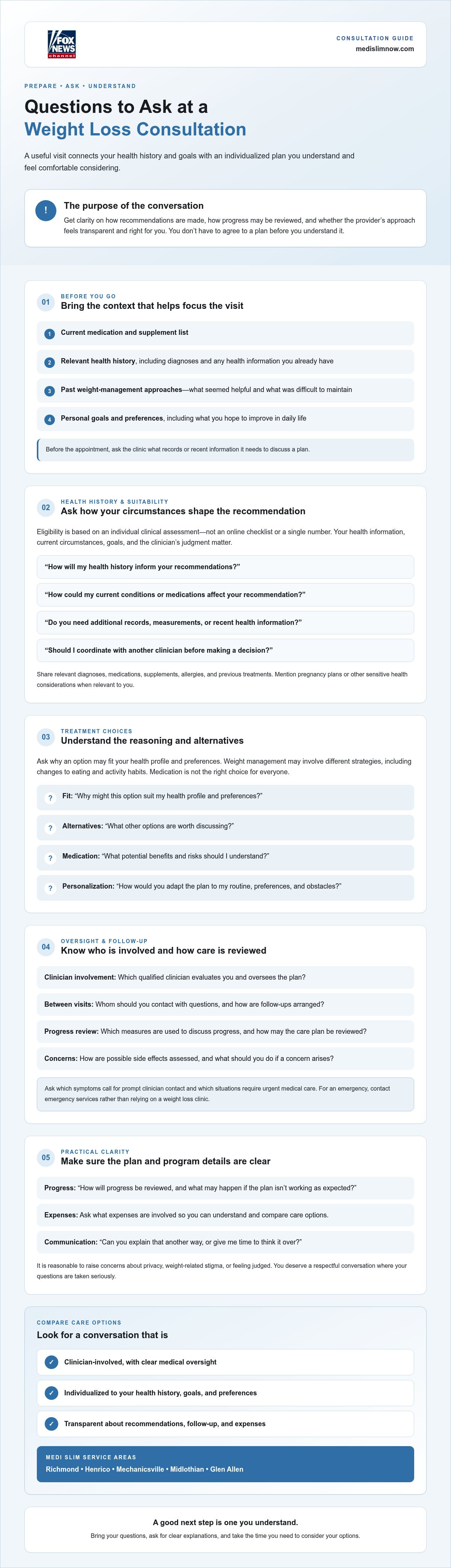
A useful consultation connects your health history with an individualized plan. This checklist covers questions about medical review, treatment options, follow-up, progress tracking, and expenses, so you can compare care options and understand the next steps.
Use the questions below to clarify how recommendations are made, how progress may be reviewed, and whether the provider’s approach feels transparent and right for you.
Key Takeaways
- Bring a current medication list, relevant health history, past weight-management experiences, and personal goals to help focus the consultation.
- Use questions to ask at a weight loss consultation to understand how your health history may affect eligibility and treatment recommendations.
- Ask why an option may fit your health profile and preferences, and what alternatives are worth discussing.
- Clarify how follow-ups are arranged, how the care plan may be reviewed, and which measures are used to discuss progress.
- Compare providers by clinician involvement, individualized recommendations, and clear communication. Medi Slim serves Richmond, Henrico, Mechanicsville, Midlothian, and Glen Allen.
Questions to Ask at a Weight Loss Consultation Before You Begin
You don’t need to have every answer figured out before your appointment. A few prepared questions can make the conversation more focused and collaborative. Bring a current list of medications and supplements, relevant health history, past weight-management approaches, and the goals you want to discuss.
A productive consultation uses your health history and goals to shape a plan you understand and feel comfortable considering. Ask the clinician to explain unfamiliar terms, clarify the reason for a recommendation, or give you time to consider your options. You don’t have to agree to a plan before you understand it.
What should I share about my goals and past efforts?
Describe what you hope to improve. This might include health-centered goals, such as having more energy or finding daily activities easier, as well as weight-related outcomes that matter to you. Share what you’ve tried, what seemed helpful, and what was difficult to maintain. This context helps the clinician understand your experience without treating past challenges as a failure.
Ask, “How would you adapt the plan to my routine, preferences, and obstacles?” A recommendation should make sense in the context of your daily life. You can also ask how progress will be reviewed and what may happen if the plan isn’t working as expected.
How can I prepare for a useful first conversation?
Write down your questions to ask at a weight loss consultation so you can refer to them during the visit. Along with your medication and supplement list, note relevant diagnoses, prior treatments, and any health information you already have. Before your appointment, ask the clinic what records or recent information it needs to discuss a plan.
- “How will my health history inform your recommendations?”
- “What information do you need to assess my options?”
- “Can you explain that another way, or give me time to think it over?”
It’s reasonable to raise concerns about privacy, weight-related stigma, or feeling judged. You deserve a respectful conversation where your questions are taken seriously. If it helps, explain what language or approach makes it easier for you to discuss your health.
Weight management may involve different strategies, including changes to eating and activity habits. The overview of healthy weight management offers general background, but your consultation should focus on how your own health history and preferences shape the discussion. Ask about the reasoning behind recommendations, not just the proposed next step.
Questions About Health History, Eligibility, and Medical Oversight
Your health history helps a clinician assess which approaches may be appropriate and what to consider before making a recommendation. Eligibility can’t be determined from an online checklist or a single number. It depends on an individual clinical assessment, including relevant health information and the clinician’s judgment.
Medical suitability depends on an individual clinical assessment of your health history, current circumstances, and treatment goals. Ask how the clinician reached a recommendation and whether other options should be considered. If medication comes up, ask about potential benefits, risks, and how your health profile affects the decision. A prescription isn’t the right choice for everyone.
Which health details should I ask the clinician to review?
Share relevant diagnoses, medications, supplements, allergies, and past weight treatments. Ask how each may affect the options under consideration. Mention pregnancy plans or other sensitive health considerations when relevant to you. These details can be important to discuss openly, even if they feel personal.
Useful questions include:
- “How could my current conditions or medications affect your recommendation?”
- “Do you need additional records, measurements, or recent health information?”
- “Should I coordinate with another clinician before making a decision?”
- “How do my previous treatment experiences inform the options we’re discussing?”
These questions can help you understand the reasoning behind a plan. They don’t replace a clinician’s review or let you determine your own eligibility.
Who supervises care, and how can I reach the team?
Before starting treatment, clarify which qualified clinician evaluates you and oversees the plan. Ask whom to contact with questions between visits, how possible side effects are assessed, and what to do if a concern arises. You should know the appropriate contact route.
Ask the clinic to explain which symptoms call for prompt clinician contact and which situations require urgent medical care. For an emergency, contact emergency services rather than relying on a weight loss clinic. Clear instructions can help you respond appropriately if your health changes.
Look for answers that address your circumstances, not just general assurances. Medi Slim provides physician-supervised consultations, with Semaglutide or Tirzepatide prescribed when appropriate based on individual health profiles. You can review its physician-supervised weight loss consultations as one local option while comparing how providers approach medical review and follow-up.
Questions to Compare Weight Loss Treatments, Including Medication
There isn’t one approach that fits everyone. Ask why a recommendation may suit your health profile, goals, and preferences, and which alternatives are reasonable to discuss. Use the comparison below to structure the conversation. These are discussion points, not a self-assessment tool or a substitute for clinical advice.
| Approach | Questions to ask |
|---|---|
| Medication | Is it appropriate for me after an individual evaluation? What benefits, risks, and side effects should I understand? What monitoring and follow-up are planned? |
| Nutrition support | What guidance is included, and how can it fit my needs, preferences, and routine? |
| Activity guidance | What movement goals are appropriate for my health and current abilities? How might we adjust them over time? |
| Other clinician-recommended care | Why are you recommending this option? What should I know about its role, limitations, and follow-up? |
What should I ask about Semaglutide or Tirzepatide?
Ask whether either medication may be appropriate after a clinician reviews your individual health profile. The prescribing clinician can explain potential benefits, risks, possible side effects, and monitoring needs. Ask how treatment decisions are made, what could prompt a change, and what to do if you have a concern or find the plan difficult to tolerate. For a broader overview, ask the provider where to find its weight loss medication guide.
These questions to ask at a weight loss consultation can make the conversation more specific:
- “Why might this medication fit my health needs and goals?”
- “What side effects or other risks should I watch for, and when should I contact you?”
- “How will we decide whether to continue, adjust, or reconsider the plan?”
How will we decide whether the treatment plan is working?
Agree on how you’ll review progress rather than relying on scale weight alone. Ask which health measures or functional goals matter in your case, how often they’ll be discussed, and how tolerability and challenges will inform reassessment. If body composition tracking is part of the conversation, ask what it measures and how the clinician will explain the results. Medi Slim offers Styku 3D Body Composition Analysis to complement progress discussions, without guaranteeing a particular outcome.
A useful plan includes a clear way to review whether the approach still fits. Ask what changes in your health, goals, or experience would lead the clinician to revisit the recommendation.
Questions About Follow-Up, Progress Tracking, and Program Logistics
A treatment recommendation is only one part of a care plan. Before deciding, clarify how follow-up works, what the clinic measures, and what support and expenses to expect. These details can help you judge whether the program fits your routine and whether its terms are clear.
How often will progress and the care plan be reviewed?
Follow-up timing may depend on your individual plan. Ask how the schedule is set, what could prompt an earlier check-in, and whom to contact if progress stalls or the plan feels difficult to follow. Ask how the clinician will consider your health and personal goals alongside changes in weight.
Use these questions to clarify the process:
- “How often will we review my progress, and what determines the timing?”
- “What should I do if I have a concern between scheduled visits?”
- “If I’m struggling to follow the plan or progress stalls, how will we reassess it?”
- “Which health measures and personal goals will we consider alongside weight?”
A progress review helps you and your clinician assess what’s happening. It isn’t a promise of a particular outcome. Ask how results will be explained and how they may inform adjustments. Make sure you understand what a measurement can show, as well as its limits.
What measurements and support are included?
Ask which measurements the clinic uses and whether body composition analysis, such as Styku 3D analysis, is part of the care plan. Find out what the results represent, how they’ll be discussed, and how they complement other indicators of progress. Body composition tracking can add context to a conversation, but it doesn’t predict or guarantee an outcome.
Clarify which services and support are included, who provides them, and how ongoing expenses are explained. Ask for a clear breakdown of the program and any separate costs before you commit. If an introductory offer or verbal summary leaves something unclear, ask what it covers. Request the details in writing so you can review them at your own pace.
If you’re considering Medi Slim, ask how its Styku 3D Body Composition Analysis may fit into progress discussions and what the results can tell you. You can ask Medi Slim about progress tracking as part of your consultation conversation.
Questions to Ask When Choosing a Richmond-Area Weight Loss Clinic
A clinic’s approach should be clear before you commit to care. Compare how providers explain clinical oversight, treatment recommendations, potential risks, and follow-up. Notice whether the clinician listens to your concerns, welcomes questions, and gives you time to consider your options. Guarantees or pressure to decide immediately are reasons to pause.
How can I tell whether a clinic’s answers are clear and patient-centered?
Look for specific explanations, not broad assurances. The clinician should be able to explain why a treatment may or may not fit your health profile, what risks to discuss, and how the plan will be reviewed. Compare written information with what you hear during the consultation. If details don’t match or remain unclear after you ask for clarification, request a fuller explanation before moving forward.
Use this checklist to compare providers:
- Who evaluates you and oversees the treatment plan?
- How are recommendations tailored to your health history, goals, and preferences?
- How are possible risks, follow-up, and changes to the plan explained?
- Can you take time to review written details before making a decision?
What should I confirm before choosing a local provider?
Ask which services are available and whether the clinic’s care model matches what you’re looking for. Confirm appointment formats, how to contact the team, follow-up arrangements, and program expenses directly with the clinic. Details can change, so check them rather than relying on assumptions or outdated information.
Medi Slim serves Richmond, Henrico, Mechanicsville, Midlothian, and Glen Allen. Its offerings include physician-supervised medical weight loss consultations, Semaglutide or Tirzepatide when prescribed based on an individual health profile, and Styku 3D Body Composition Analysis. Confirm current service and appointment details directly, then compare them with your priorities.
The questions to ask at a weight loss consultation can also help you compare clinics. Clear answers about oversight, individualized recommendations, and follow-up make it easier to assess whether the care feels appropriate for you. You can review Medi Slim’s medical weight loss consultation as one option and decide at your own pace whether you’d like to learn more.
Take Your Next Step With Clarity
A useful consultation should leave you with a clearer understanding of your options, the reasoning behind any recommendation, and how follow-up works. Use your questions to ask at a weight loss consultation to guide an open discussion about your health, goals, and the support you need. Take time to compare providers and decide whether their approach feels transparent and appropriate for you.
Medi Slim offers medical consultations and physician-supervised treatment planning. Styku 3D Body Composition Analysis is available to support progress tracking, and the clinic serves Richmond, Henrico, Mechanicsville, Midlothian, and Glen Allen. Treatment recommendations, including whether medication is appropriate, depend on an individual evaluation.
If you’re ready to explore a local option, explore physician-supervised weight loss care at Medi Slim. Start by asking what matters most to you, then discuss your options with the clinic.
Frequently Asked Questions
What questions should I ask at a weight loss consultation?
Ask how your health history and goals shape the recommendation, who supervises your care, and which treatment options may be appropriate. Questions to ask at a weight loss consultation should also cover potential benefits and risks, possible side effects, follow-up, progress measures, and included support. Ask how expenses are explained, too. Bring a written list, note the answers, and confirm the next steps before you leave.
Should I ask about weight loss medication at my first consultation?
Yes, if medication is something you want to discuss. Ask whether it may be appropriate after the clinician reviews your individual health profile, what potential benefits and risks apply, and how treatment would be monitored. Recommendations should be personalized, not based on the assumption that medication suits everyone. You can also ask which non-medication options may be considered and take time to weigh the information before deciding.
How do I know if a weight loss clinic is medically supervised?
Ask which clinician evaluates patients, who makes treatment decisions, and how the care plan is followed. Clarify whom to contact with questions between visits and how concerns or possible side effects are handled. Request a plain-language explanation of the clinic’s process. Medi Slim provides physician-supervised medical weight loss consultations for people in Richmond, Henrico, Mechanicsville, Midlothian, and Glen Allen. Clear answers can help you decide whether a clinic’s approach fits your needs.
What health information should I bring to a weight loss consultation?
Bring an up-to-date list of medications and supplements, relevant medical history, known allergies, and information about previous weight-management approaches. Write down your health goals and questions so you can refer to them during the conversation. Ask the clinic in advance whether it needs records or recent measurements. Share information relevant to your care, and ask how the practice handles patient privacy if you have concerns.
Can I ask about Semaglutide or Tirzepatide during a weight loss consultation?
Yes. Ask whether Semaglutide or Tirzepatide may be an option for you and how the clinician evaluates suitability. Discuss potential benefits, risks, side effects, and monitoring based on your personal health profile. Ask which alternatives may be considered and how treatment decisions could change over time. A consultation doesn’t guarantee a prescription. The recommendation for you may differ from what’s appropriate for another patient.
How is progress measured during a medical weight loss program?
Ask which measures the clinic tracks, how often they’re reviewed, and how results inform your care plan. Depending on the program, discussions may include weight and other relevant health or body composition measures. Ask what each measure can and can’t tell you, and how results are interpreted alongside your goals and experience. A single measurement doesn’t capture every meaningful change, so ask how progress is assessed in context.
What should I ask a weight loss clinic about program costs?
Ask for a clear explanation of what the program includes and whether services or follow-up visits may involve separate charges. If medication is discussed, clarify how its cost is handled and whether it’s separate from clinic services. Ask what could change your expenses over time, and request the details in writing if available. Comparing clinics is easier when you understand what each quoted amount covers instead of relying on an unclear headline figure.