

Risks of Unmonitored Weight Loss Injections: What to Know
What can you miss when weight loss injections are taken without medical follow-up? The risks of unmonitored weight loss injections go beyond side effects. Without clinical context, it can be harder to recognize when a dose change, health condition, or medication source may affect your safety.
Questions about nausea, other symptoms, or whether a dose is right for you are reasonable. These medications can cause side effects, and medical oversight does not eliminate that risk. It can help a clinician review your health history, assess your response, and decide whether a change or further evaluation is appropriate.
This article explains the main risks of using injections without follow-up, symptoms that may need prompt medical attention, and what a clinician can monitor over time. You’ll also find practical steps if you’re already using injections without ongoing care. An individualized medical weight loss consultation can put your questions in the context of your health profile and help you discuss a plan with medical oversight.
Key Takeaways
- The risks of unmonitored weight loss injections can involve dosing, product sourcing, and missed health factors, not just medication side effects.
- Learn which digestive effects to track and why persistent vomiting or diarrhea may raise concern about dehydration.
- Health screening and follow-up can help identify concerns and guide decisions, but they cannot guarantee that side effects won’t occur.
- If you’re already using injections without follow-up, document what you’ve taken, gather product details, and arrange a clinical review before making medication changes.
- An individualized consultation can help put questions about semaglutide or tirzepatide in the context of your health and goals.
Risks of unmonitored weight loss injections: what can be missed?
Unmonitored use means taking a weight loss injection without appropriate prescribing, a review of your health and medicines, or follow-up with a clinician. This doesn’t mean everyone will experience a complication. The concern is that treatment decisions may be made without enough context to recognize individual risks or respond when something changes.
Some risks come from the medication itself, including side effects described in its prescribing information. Others involve uncertainty about the product, how it was prepared, or whether its dose was changed without guidance. These are separate concerns, but either can make a new symptom harder to interpret and a safe next step harder to identify. Follow-up lets a clinician consider symptoms alongside your health history and treatment details.
Feeling well today is reassuring, but it doesn’t replace screening or follow-up. Health conditions, other medicines, and changes in how you feel over time may affect what a clinician needs to consider. A medical weight loss consultation can put treatment questions in the context of your health history and goals.
How self-directed use can increase uncertainty
Using someone else’s prescription or changing your treatment without the prescriber’s direction can leave important details unreviewed. A clinician may need to know the medication, dose, when you last used it, and what other medicines or supplements you take. Your health conditions also shape the risk discussion. This doesn’t mean a complication is certain; it means your situation needs an individual assessment.
Unsupervised dose changes can make it harder to connect a symptom with a particular dose or timing, and can complicate decisions about what to do next. Keep the medication packaging and a written record of what you’ve taken so a clinician can review the details rather than relying on memory.
Why the medication source and product matter
FDA-approved medicines and compounded products are not interchangeable by default. Compounded drugs are not FDA-approved, and the FDA has warned about misleading claims that compounded GLP-1 products are FDA-approved, generic, or proven equivalent to brand-name medicines. The agency has also raised concerns about unapproved ingredients and semaglutide salt forms, which are not the same as the active ingredient in approved medications.
Products from unclear channels can add uncertainty about identity, strength, or handling. Be cautious with products labeled “research use only” or “not for human consumption.” If you’re unsure what you have, don’t guess from the packaging or change how you use it on your own. Bring the product details and prescription information to a clinician.
For general background on semaglutide, its uses, and safety information, see the Semaglutide Wikipedia page. It isn’t a substitute for medication-specific prescribing information or individualized medical advice. A clinician can help clarify what product you’re using and which concerns apply to your health profile.
Which side effects and warning signs need clinical attention?
Knowing what can happen can help you respond without assuming every symptom signals a serious problem. Semaglutide and tirzepatide can cause gastrointestinal effects, but the risks and precautions depend on the medication, why it’s prescribed, your health history, and other medicines you take. The right response to a possible warning sign depends on its severity and clinical context.
Common effects versus symptoms that should not be ignored
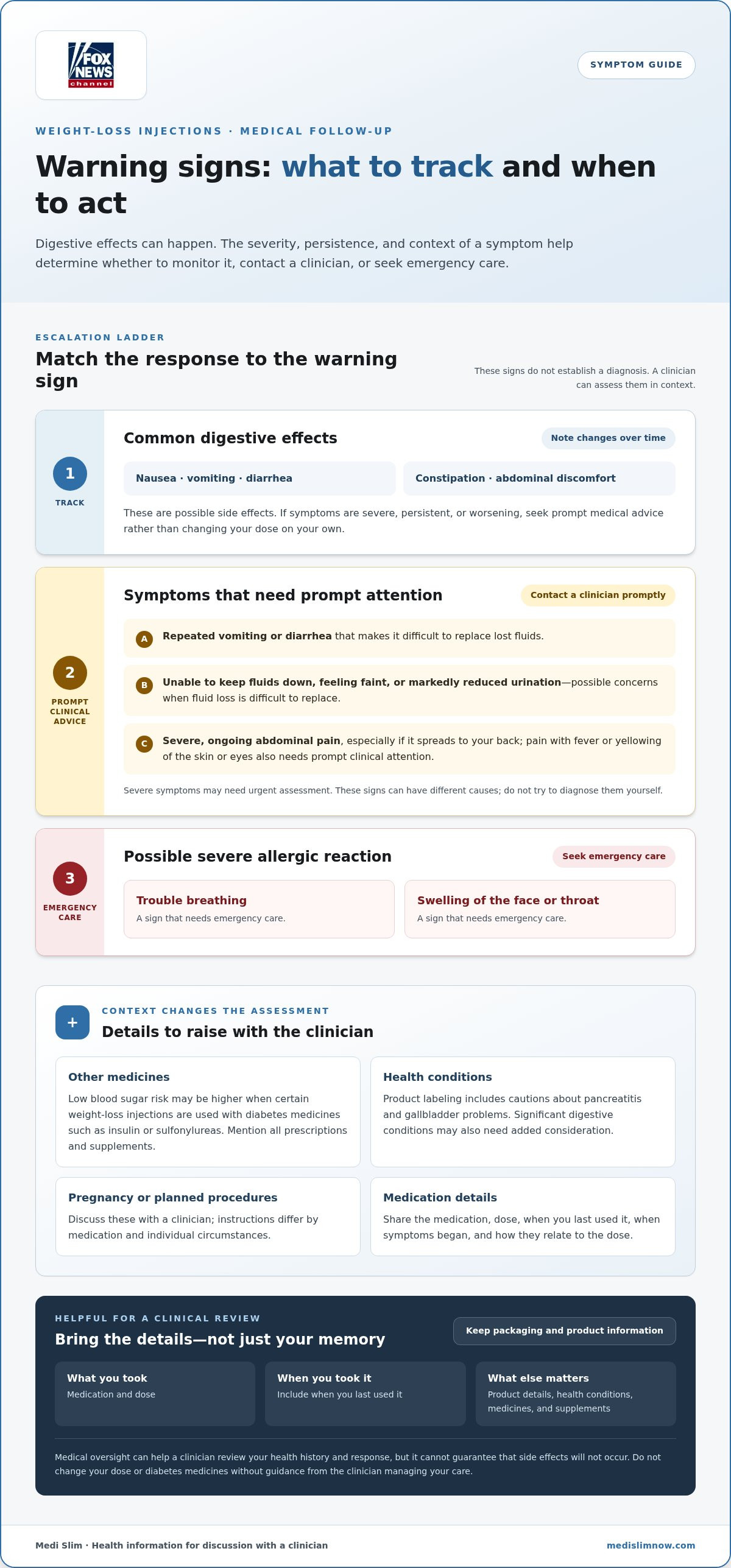
Nausea, vomiting, diarrhea, constipation, and abdominal discomfort are possible side effects. They may be more noticeable during treatment changes, but severe, persistent, or worsening symptoms deserve prompt medical advice. Don’t change your dose on your own to manage them.
Repeated vomiting or diarrhea can make it difficult to replace lost fluids. If you can’t keep fluids down, feel faint, or notice markedly reduced urination, contact a clinician promptly. Severe symptoms may need urgent assessment. Severe, ongoing abdominal pain, especially if it spreads to your back, also needs prompt evaluation. It can have different causes, so a clinician needs to assess it rather than you trying to diagnose it yourself.
Seek emergency care for signs of a severe allergic reaction, such as trouble breathing or swelling of the face or throat. For other new or worsening symptoms, tell the prescriber what you’re experiencing, when it began, and how it relates to your medication dose. These details can help guide next steps.
Risks that depend on personal health and other medicines
Product labeling includes cautions about conditions such as pancreatitis and gallbladder problems. Persistent severe abdominal pain, or pain accompanied by symptoms such as fever or yellowing of the skin or eyes, needs prompt clinical attention. These symptoms don’t establish a diagnosis, but they shouldn’t be ignored. Medicines that slow stomach emptying also need added consideration for some people with significant digestive conditions.
Low blood sugar risk may be higher when certain weight loss injections are used with diabetes medicines such as insulin or sulfonylureas. The combination and the person’s treatment plan matter, so don’t adjust diabetes medication without guidance from the clinician managing it. Mention all prescription medicines and supplements during a medication review.
Pregnancy and planned procedures are also important to discuss. Instructions differ by medication and individual circumstances. If you’re pregnant, planning a pregnancy, or may undergo a procedure involving anesthesia or deep sedation, tell your prescriber and procedural team. Don’t stop or change treatment based on general advice; ask for medication-specific guidance.
Follow-up helps connect symptom patterns with dose history, other medicines, and health conditions. It doesn’t eliminate side effects, but it gives a clinician information for more informed decisions. If you’re in Richmond or nearby and want to discuss medication questions in the context of your health history, a medical weight loss consultation can help you review them with Medi Slim’s physician-supervised team.
What medical monitoring adds beyond a prescription
A prescription is only one part of medication care. Screening helps a clinician consider whether treatment fits your health circumstances. Follow-up gives you a place to report symptoms and discuss how the plan is working. These steps can help identify concerns and support informed decisions, but they can’t guarantee that side effects or complications won’t occur.
With medical supervision: A clinician reviews relevant health history, current medicines, and treatment goals. Prescribing decisions are made in that context, and follow-up can address tolerability, symptoms, response, and changes in health.
With self-directed use: Health factors or medication interactions may go unreviewed. Dose changes and symptom decisions may be made without a prescriber who knows the treatment history. This can make it harder to interpret what’s happening or decide what to do next.
This comparison isn’t a checklist that applies identically to everyone. The risks of unmonitored weight loss injections depend partly on the medication and an individual’s medical circumstances. Monitoring adds clinical context, not a guarantee of safety.
What a clinician may review before treatment
A clinician may ask about your medical history, current prescription and over-the-counter medicines, supplements, and any prior reactions to treatment. They can consider relevant product-label cautions alongside your health profile and goals. This review helps shape an individualized discussion about whether a particular treatment plan may fit your circumstances. It isn’t a one-size-fits-all eligibility checklist.
Be prepared to share details that might seem unrelated, such as a history of digestive problems or diabetes medicines you take. These details can affect which cautions or possible interactions deserve attention. Bring a current medication list and be open about previous weight loss treatments, including side effects or changes you made.
How follow-up can support safer decisions
Follow-up creates an opportunity to review how you’re tolerating treatment, whether symptoms have changed, and how your response aligns with your goals. A clinician can also consider new health information or medicines added since the last review. This ongoing conversation puts changes in context instead of treating each symptom or dose as an isolated issue.
If you have concerns, record when they began and how they relate to treatment. Share that information with the prescribing clinician. Medication adjustments belong with the prescriber, who can weigh the details and discuss an appropriate next step. Don’t independently increase, reduce, stop, or combine treatments based on someone else’s experience.
For more context about prescription choices, consult the guide Weight Loss Medication Guide: Understanding Prescription Options in 2026. A clinician can help connect general information with your health history and treatment questions. Follow-up supports informed decisions, but new or worsening symptoms still need to be taken seriously.
Already using injections without follow-up? Practical next steps
If you’ve been using weight loss injections without regular clinical follow-up, you can take a clear next step without judging yourself. The risks of unmonitored weight loss injections depend on details a clinician needs to understand, including the product, how you’ve used it, and your health history. Be honest about what’s happened so far. Accurate information makes a useful review possible.
Prepare for a useful medication review
Before arranging a review, gather the package, prescription details, and any records from the pharmacy or seller. Write down what you’ve used and when, including missed or changed doses. Note your symptoms and when they occurred. List your other medicines and supplements, relevant health conditions, and prior reactions. If you don’t know the product’s exact identity or source, say so rather than guessing.
A clinician needs these details to assess your circumstances. Self-directed use is something to discuss openly, not a reason to feel ashamed. Don’t independently change your dose, stop treatment, or combine injections or other weight loss medicines. Discuss medication decisions with the prescriber, who can consider your product and history.
Know when a concern cannot wait
For severe or life-threatening symptoms, seek emergency care now. Examples include trouble breathing, swelling of the face or throat, fainting, or severe, persistent abdominal pain. Significant vomiting or diarrhea can also become urgent, especially if you can’t keep fluids down or feel severely weak. Don’t wait for a routine appointment or rely on an article to assess an emergency.
For symptoms that are concerning but not immediately life-threatening, contact the prescribing clinician promptly. Describe what you’re experiencing, when it began, and the medication and dose involved. Warning information can vary between products, so refer to the patient information for your specific medication and follow clinician guidance. If you’re unsure whether symptoms are an emergency, seek urgent medical advice rather than delaying care.
For non-urgent questions, arrange a clinical review and bring your notes and product details. A clinician can discuss your health context and treatment concerns, but follow-up can’t guarantee that side effects will be prevented. If you’re in Richmond or nearby, you can discuss a supervised weight loss plan with Medi Slim through an individualized medical weight loss consultation.
How Medi Slim approaches weight loss injections with medical oversight
Weight loss injections are medical treatments, so choosing one involves more than selecting a product. Medi Slim provides physician-supervised treatment with prescription semaglutide and tirzepatide, along with individualized medical weight loss consultations. A consultation gives you space to discuss your health context, goals, medication history, and questions about treatment and follow-up.
This conversation can put possible medication risks in perspective. It isn’t a promise that side effects won’t happen or that one treatment is right for everyone. It supports an informed discussion of options based on your circumstances. If you’re concerned about the risks of unmonitored weight loss injections, bringing your questions to a clinician is a constructive step toward a plan with medical oversight.
What a personalized medical weight loss conversation can cover
You can discuss previous or current weight loss medications, other medicines you take, health conditions, and any symptoms or reactions you’ve experienced. Be open about how you’ve used injections, even if your use hasn’t been supervised. Accurate details help a clinician consider your health profile and discuss relevant precautions, treatment questions, and expectations for follow-up.
The conversation should be specific to you. Your goals and medical history matter, and medication information can vary by product and indication. For background before a consultation, the guide Semaglutide for Weight Loss in Richmond: A Comprehensive Patient Guide explores semaglutide and its use for weight loss. Use general reading to prepare questions, not as a substitute for advice based on your health.
How progress tracking fits into supervised care
Medi Slim also offers Styku 3D body composition analysis to track body changes over time. These measurements can add context to progress discussions alongside your goals and treatment experience. Tracking is one part of a supervised plan, not a test of whether a medication is safe for you or a way to identify every possible side effect.
Body composition results don’t replace clinical assessment, medication review, or a conversation about symptoms. Share a health change with your clinician even if your measurements appear to be moving in the direction you hoped. For more on how body composition tracking can fit into treatment, see Tracking Tirzepatide Results with Styku or Tracking Semaglutide Results with Styku.
If you’re in Richmond, Henrico, Mechanicsville, Midlothian, or Glen Allen, consider an individualized medical weight loss consultation with Medi Slim. Bring your questions, discuss your health context, and explore whether a physician-supervised approach fits your needs. The goal is a thoughtful, informed conversation, not pressure to decide before you’re ready.
Make your next step an informed one
You don’t need every answer before asking for help. If you’re uncertain about a dose, product, symptom, or whether treatment fits your health needs, write down your questions and bring them to a clinician. A clear conversation can help you decide what information is still needed and which next step makes sense for you.
The risks of unmonitored weight loss injections are best approached with individual medical context, not guesswork or comparisons with someone else’s experience. If you’re already using injections without follow-up, arrange a review and share what you know about the medication and how you’ve taken it. If you’re considering treatment, a consultation can help you discuss your goals and concerns before making a decision.
Explore a physician-supervised weight loss consultation with Medi Slim and take a measured next step toward care that reflects your needs. You deserve clear information and support as you consider your options.
Frequently Asked Questions
Can weight loss injections cause serious side effects?
Yes. Serious problems are possible, though they don’t happen to everyone. In addition to digestive effects, medication labeling describes concerns such as pancreatitis, gallbladder disease, and severe allergic reactions. The risks of unmonitored weight loss injections can be harder to assess if no clinician knows what product or dose you’re using. Seek emergency care for severe symptoms such as trouble breathing, facial or throat swelling, or intense abdominal pain.
Is it safe to take weight loss injections without a prescription?
No. Semaglutide and tirzepatide are prescription medications, and using another person’s supply or buying injections through an informal seller bypasses an individual medical review. A product’s label or online claims may not reliably establish what it contains. Don’t use an injection that wasn’t prescribed for you. If you’ve already taken one, keep the packaging or seller details and share them with a clinician.
What happens if I increase my injection dose without medical advice?
An unsupervised increase may raise the chance or intensity of side effects, including vomiting or diarrhea, and make it harder to determine which dose caused a problem. Don’t take an extra dose to compensate for a missed one or copy another person’s schedule. Contact the prescriber for direction. If you’ve taken more than prescribed and develop severe symptoms, seek urgent medical care.
How can I tell whether an injection is from a reliable source?
There’s no dependable way to verify a medicine by appearance alone. Use medication prescribed for you and dispensed through a legitimate pharmacy, and keep the original packaging and prescription details. Be wary of products marketed as “research use only,” sold through social media, or described as FDA-approved compounded drugs. If the source or product identity is unclear, don’t inject it until you’ve discussed it with a clinician.
Can weight loss injections interact with other medications?
Yes. The combination matters. For example, semaglutide or tirzepatide used with insulin or certain diabetes medicines, such as sulfonylureas, may increase low blood sugar risk. Tell the prescriber about prescriptions, over-the-counter medicines, and supplements, including medicines started by another clinician. Don’t stop or adjust another medication to accommodate an injection on your own. A medication review can help identify which combinations need closer attention.
Should I stop an injection if I feel nauseated?
Not necessarily, but don’t decide to stop or change the dose without guidance from the prescriber. Share when the nausea began, how severe it is, and whether it affects eating or drinking. Contact the clinician for persistent or worsening symptoms. If nausea comes with severe abdominal pain, repeated vomiting, fainting, or other serious symptoms, seek urgent medical care rather than waiting for a routine appointment.
Do I need monitoring if I have no side effects?
Yes. Feeling well doesn’t show whether a dose remains appropriate as your health, other medicines, or treatment circumstances change. Follow-up also gives the prescriber a chance to review how treatment is going and address questions before you make changes. In Richmond, Henrico, Mechanicsville, Midlothian, and Glen Allen, Medi Slim’s medical weight loss consultations provide an opportunity to discuss your health profile and treatment concerns with a physician-supervised team.