

Semaglutide vs. Bariatric Surgery: Comparing Weight Loss Efficacy and Safety in 2026
For decades, invasive surgery was considered the only reliable way to achieve life-changing weight loss. In 2026, the conversation has shifted from altering your anatomy to recalibrating your biology. You likely feel torn between the immediate results of a procedure and the ongoing nature of medical injections. It's natural to worry about the permanent changes of a gastric sleeve or the long-term commitment of a weekly prescription.
This article breaks down the critical differences in semaglutide vs bariatric surgery to help you choose the safest path for your body. While surgery can lead to 60% weight loss, new 2026 clinical data shows that high-dose options like Wegovy HD now offer significant results without the risks of an operating room. We'll explore efficacy, safety profiles, and how a supervised medical approach fits into your Richmond lifestyle. By understanding how these treatments affect your metabolic health, you can make an informed decision that prioritizes long-term success over temporary fixes.
Key Takeaways
- Understand the fundamental difference between recalibrating your hormones with GLP-1 medications and physically altering your digestive tract through surgery.
- Compare the clinical efficacy of semaglutide vs bariatric surgery using 2026 data, including how high-dose medications are narrowing the weight loss gap.
- Evaluate the safety profiles of both paths, weighing the risks of anesthesia and malabsorption against the manageable side effects of physician-supervised programs.
- Learn why the reversibility of medical weight loss offers a flexible alternative to the permanent anatomical changes required by surgical interventions.
- Discover how Styku 3D Body Composition Analysis ensures you lose fat rather than vital muscle mass during your transformation.
Semaglutide vs. Bariatric Surgery: Defining the Weight Loss Landscape
Weight management options look very different than they did five years ago. For a long time, patients with significant weight to lose felt they had only two real choices: traditional dieting or major surgery. By 2026, the debate over semaglutide vs bariatric surgery has evolved into a more nuanced discussion about long-term metabolic health. Pharmaceutical advancements have bridged the gap, offering powerful results without the permanence of an operating room.
The primary goal of both interventions remains the same. You want to achieve a healthier BMI and reduce your risk of obesity-related comorbidities like Type 2 diabetes or heart disease. However, the path you take to get there depends on whether you prefer a biological recalibration or a physical alteration of your digestive tract. This shift toward pharmaceutical intervention is driven by a desire for manageable, medical processes that don't involve the risks of invasive procedures.
What is Semaglutide and How Does It Differ from Surgery?
Semaglutide is a metabolic regulator that mimics natural satiety hormones to reduce appetite and improve blood sugar control. It belongs to a class of drugs called GLP-1 receptor agonists. Unlike surgery, it is administered via a simple weekly injection. This non-invasive approach targets the brain's hunger signals and slows gastric emptying, helping you feel full for longer periods.
In contrast, bariatric surgery is a mechanical intervention. Procedures like the gastric sleeve or bypass physically reduce the size of the stomach or reroute the intestines to limit food intake. While surgery forces a smaller meal size through physical restriction, semaglutide works by helping your body naturally feel satisfied with less food. This biological approach is the hallmark of the "Shift of 2026," where more patients choose medical oversight over the finality of the scalpel.
Who Qualifies for These Weight Loss Interventions?
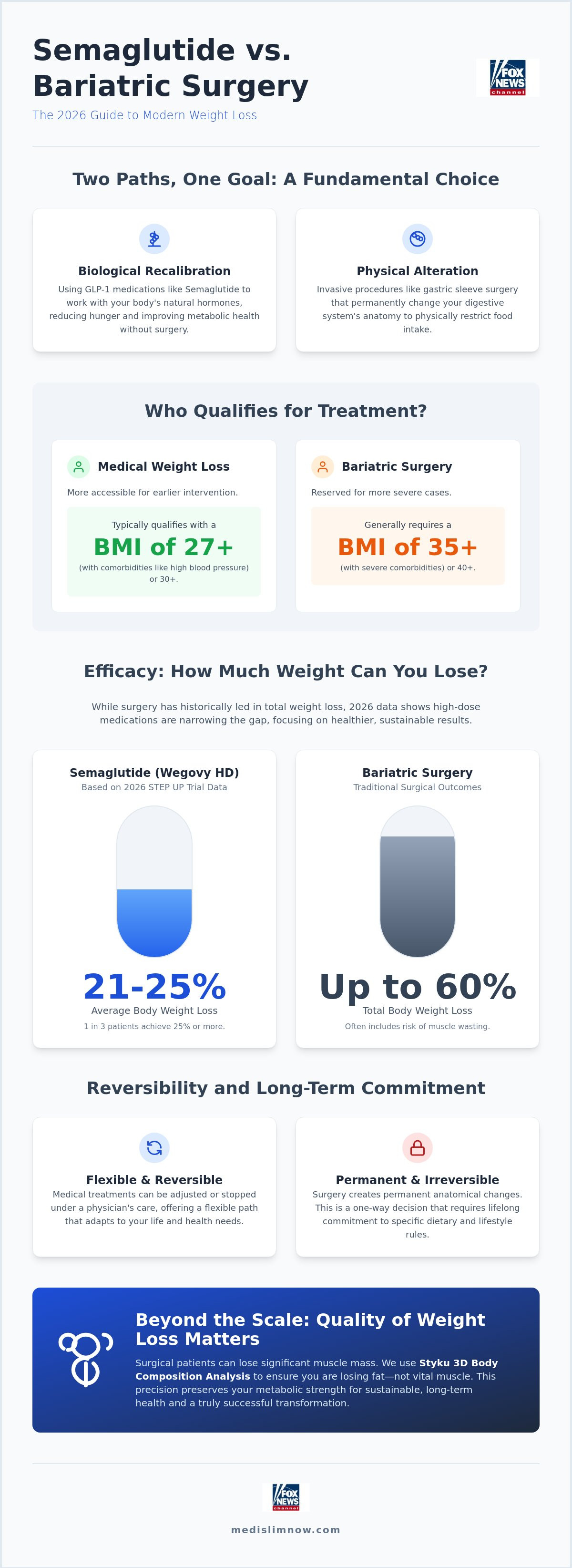
Eligibility for these treatments is determined by your health history and your Body Mass Index (BMI). Medical weight loss is often more accessible because it allows for earlier intervention before weight-related issues become severe.
- Medical Weight Loss: You typically qualify if your BMI is 30 or higher. If you have an existing health issue like high blood pressure, you may qualify with a BMI as low as 27.
- Bariatric Surgery: This is generally reserved for higher thresholds, such as a BMI of 40 or higher, or a BMI of 35 with severe comorbidities.
Choosing a medical path allows you to address weight concerns before they reach the level where surgery becomes the only viable option. With the March 2026 approval of Wegovy HD (7.2 mg), the weight loss results from medication are increasingly comparable to surgical outcomes for many patients. This makes pharmaceutical intervention a practical first step for those who want to avoid the risks associated with anesthesia and long recovery times.
Efficacy Comparison: How Much Weight Can You Expect to Lose?
When comparing semaglutide vs bariatric surgery, the most common question involves the final number on the scale. Historically, surgery offered a clear advantage in total pounds lost. However, 2026 clinical data shows that medical interventions are narrowing this gap significantly. While surgery remains a high-impact tool, the quality of weight loss and the metabolic benefits of medication provide a compelling alternative for many patients.
Total weight loss is a misleading metric if you are losing lean muscle mass instead of fat. Surgical patients often experience significant muscle wasting due to rapid, forced caloric restriction. At Medi Slim, we prioritize the quality of your transformation. By using Styku 3D Body Composition Analysis, we monitor your fat-to-muscle ratio in real-time. This precision ensures your metabolism remains strong as you reach your goal, a level of detail often missing in traditional surgical follow-ups.
Semaglutide Clinical Outcomes and Expectations
In the original STEP clinical trials, participants using semaglutide consistently achieved a 15% reduction in total body weight. The 2026 introduction of Wegovy HD (7.2 mg) has pushed these expectations even higher. Data from the STEP UP trial indicates an average weight loss of approximately 21% over 72 weeks, with one in three patients achieving a 25% reduction or higher. This progress is steady and predictable. It allows your body to adjust without the physical shock of a surgical procedure. Tracking semaglutide results with Styku ensures that this weight loss comes from fat stores rather than essential muscle tissue.
Bariatric Surgery Results: The High-Impact Approach
Bariatric surgery often results in a 25% to 30% reduction in total body weight within the first year. This rapid change is effective for immediate health crises, but it frequently leads to a metabolic plateau after 18 to 24 months. Many surgical patients also face the challenge of weight regain if they don't maintain strict dietary changes, as the body attempts to find a new equilibrium. Unlike medication, which can be adjusted or tapered, surgery is a permanent anatomical shift. If you want to explore how a non-surgical path can provide similar health benefits, you can schedule a medical consultation to review your specific health profile.
The "Tirzepatide Factor" is also worth noting in 2026. Newer dual-agonist medications are showing results that closely mirror surgical outcomes, often exceeding 22% total weight loss. This pharmaceutical evolution means that the "efficacy gap" is smaller than it has ever been. For many, the choice is no longer about which method loses the most weight, but which method provides the most sustainable path for their lifestyle.
Safety, Side Effects, and Recovery: The Patient Experience
Safety is a primary concern when evaluating semaglutide vs bariatric surgery. While both paths are medically validated, the physical impact on your daily life differs significantly. Surgery requires a hospital stay and a recovery period that usually spans several weeks of restricted activity. Injections, however, offer a streamlined experience that integrates easily into a modern lifestyle. You don't have to put your life on hold to begin your transformation.
Bariatric procedures involve inherent surgical risks. These include reactions to anesthesia, potential infections, and "dumping syndrome," where food moves too quickly from the stomach to the small intestine. Because surgery alters your digestive anatomy, it can also lead to lifelong malabsorption. This means your body may struggle to absorb essential nutrients from food alone. These are permanent changes that require a high level of commitment and caution.
Semaglutide side effects are primarily gastrointestinal. You might experience nausea, constipation, or indigestion, especially when you first start the medication. These symptoms are generally temporary and manageable. Our "clinical-lite" approach focuses on professional oversight to ensure your journey is comfortable. By using precise dose titration, we help your body adjust gradually to the medication. This supervised method reduces the anxiety of side effects by providing a clear, manageable plan.
The Reality of Post-Surgical Life
Life after a gastric sleeve or bypass involves permanent changes to how you eat. You'll need to adhere to strict dietary restrictions, focusing on very small portion sizes and avoiding certain food types that might cause discomfort. Because of the anatomical changes, lifelong vitamin supplementation is mandatory to prevent severe nutritional deficiencies. Some patients also require surgical revisions if complications like leaks or strictures occur years after the initial procedure. The finality of surgery is a significant factor to consider.
Managing Semaglutide Side Effects with Medical Oversight
Our physician-led programs in Richmond and Henrico are designed to minimize discomfort through personalized care. We don't just hand you a prescription; we monitor your progress and adjust your dosage based on your specific tolerance. This flexibility is a major advantage of medical weight loss. If you find a particular dose causes too much nausea, we can modify the schedule to keep you on track without sacrificing your quality of life. You might wonder, is tirzepatide safe or how it compares to other GLP-1s. Both medications thrive under the same model of expert supervision, ensuring that your health remains the top priority throughout the process.
The Decision Framework: Reversibility and Long-Term Commitment
Choosing between semaglutide vs bariatric surgery often comes down to how much flexibility you want in your future. Both paths require significant lifestyle changes to be successful. Surgery forces these changes through physical restriction, while medication supports them by quietening hunger signals. The psychological impact of this choice is profound. Many patients feel a sense of relief knowing that a medical plan can be adjusted, whereas surgery represents a finality that cannot be easily undone.
The cost-benefit analysis also plays a role in the decision. Bariatric surgery involves a high upfront investment, often ranging from $15,000 to $25,000 without insurance. Medical weight loss involves a monthly investment in your health. While the long-term costs of medication are a factor, they come without the risks of surgical complications or the need for expensive revision procedures later in life. This makes pharmaceutical intervention a manageable, predictable part of a modern healthcare budget.
Permanence vs. Flexibility
Bariatric surgery is a "burnt bridge" approach. It is an invasive procedure that is difficult and risky to reverse. Once your stomach is physically altered, your body must adapt to that new reality forever. If you experience complications or find the dietary restrictions too taxing, there is no simple way to return to your original anatomy.
Medical weight loss offers a different level of control. It works with your current anatomy rather than against it. This flexibility allows for an "exit strategy" or a maintenance phase. As you reach your goal weight, a physician can help you taper your dosage. This supervised transition ensures your metabolism remains stable. If your needs change, your medical plan can change with you. You can start your journey with a professional consultation to see how this flexibility fits your goals.
Candidate Suitability: Which Path is Yours?
Surgery remains a critical clinical choice for individuals with extreme BMIs or life-threatening comorbidities that require immediate, drastic intervention. However, for many people in Central Virginia, semaglutide is often the superior first-line option. It allows you to address obesity before it reaches a crisis point. This "metabolic-first" approach is less taxing on the body and requires zero downtime from work or family life. If you are ready to explore your options, read our semaglutide for weight loss in richmond guide to understand the local patient experience. Choosing a non-surgical path means you are opting for a biological solution that respects your body's natural structure.
The Non-Surgical Alternative: Medical Weight Loss in Richmond
Choosing a weight loss path in Central Virginia doesn't have to mean committing to a hospital stay. When evaluating semaglutide vs bariatric surgery, the logistical ease of a medical program is often the deciding factor. You don't need to navigate the complex, months-long referral process required for major surgery. Instead, you can access physician-supervised care right here in Henrico, Mechanicsville, and Midlothian. This local approach integrates into your daily routine, allowing you to prioritize your health without disrupting your career or family life.
At Medi Slim, we bridge the gap between simple prescriptions and surgical results by using advanced diagnostics. We focus on total body composition rather than just the number on the scale. This distinction is vital. It ensures your weight loss is healthy, targeted, and sustainable. By choosing a medical-first path, you are opting for a biological solution that respects your body's natural structure while achieving significant metabolic improvements.
Tracking Transformation with Styku 3D Scanning
Tracking your progress with a styku body scan provides a level of precision that a standard scale cannot match. While surgery often leads to rapid weight loss, it can also cause significant muscle wasting. Our 3D imaging technology proves that you are losing body fat while preserving lean muscle mass. This data is essential for maintaining a high metabolic rate during your transformation. Seeing a digital representation of your shrinking measurements is a powerful motivator. It provides scientific validation that your recalibration is working as intended.
Your First Consultation at Medi Slim
Your journey begins with a comprehensive medical weight loss evaluation. During this first visit, we review your health history, conduct an initial Styku scan, and discuss your specific goals. You'll receive a personalized plan that includes precise dosing of semaglutide or tirzepatide. We also provide nutritional guidance tailored to your lifestyle in Richmond. We prioritize safety and comfort above all else. Our team ensures your dosage is titrated correctly to minimize side effects, providing a level of care that self-guided efforts simply cannot provide.
This professional oversight is the cornerstone of our program. We act as your partners, adjusting your plan as your body changes. If you are ready to see which path fits your body best, you can Schedule your consultation today. Our team is here to provide the clinical authority and empathetic support you need for a successful, long-term transformation.
Choosing Your Path to Sustainable Health
Deciding between semaglutide vs bariatric surgery is a significant step toward reclaiming your metabolic health. You now understand that while surgery provides a permanent anatomical change, medical weight loss offers a biological recalibration with the flexibility to adapt. In 2026, pharmaceutical advancements have narrowed the efficacy gap; this makes non-surgical interventions a powerful first-line option for many patients who want to avoid the operating room.
Our approach focuses on high-quality transformation. We use Styku 3D Body Composition tracking to ensure you are losing fat while maintaining vital muscle mass. This precision, combined with professional supervision, reduces the anxiety of side effects and provides a clear, manageable roadmap to success. You don't have to navigate this journey alone. Our team provides the clinical authority and support needed to help you reach your goals safely.
Take the next step toward a healthier version of yourself. Book Your Medical Weight Loss Consultation in Richmond to start your personalized, physician-supervised program today. Your journey toward sustainable weight loss is ready when you are.
Frequently Asked Questions
Is Semaglutide as effective as gastric bypass surgery?
Bariatric surgery generally produces higher total weight loss, often reaching 60% to 70% of excess body weight. However, the efficacy gap is narrowing with pharmaceutical advancements. By 2026, high-dose semaglutide options like Wegovy HD show average weight loss results of 21%, with many patients achieving 25% or more. For many individuals, this level of reduction is sufficient to resolve major health issues without the risks of invasive surgery.
Can I switch from Semaglutide to bariatric surgery later if I need to?
Yes, you can transition from medical weight loss to surgical intervention if your clinical needs change. Because medication doesn't alter your anatomy, it remains a flexible and reversible first-line option. In some cases, physicians even use semaglutide to help patients lose an initial percentage of weight. This can make a future surgery safer by reducing the risks associated with anesthesia and immediate post-operative complications.
Do I have to take Semaglutide forever to keep the weight off?
Obesity is a chronic condition, and many patients require a long-term maintenance plan to sustain their results. While some individuals successfully taper their dosage under medical supervision, stopping the medication abruptly often leads to weight regain. Our program focuses on a structured maintenance phase. This helps your metabolism stabilize as you reach your goal weight, ensuring your transformation is lasting and manageable.
What are the long-term risks of bariatric surgery vs. GLP-1 medications?
Bariatric surgery carries risks of lifelong malabsorption, nutritional deficiencies, and potential surgical revisions. GLP-1 medications primarily involve gastrointestinal side effects like nausea or constipation. When comparing semaglutide vs bariatric surgery, the medication route avoids the permanent anatomical complications and anesthesia risks associated with the operating room. This makes it a preferred choice for those seeking a less invasive safety profile.
Does insurance cover Semaglutide more often than weight loss surgery in 2026?
Insurance coverage varies significantly by provider and employer. In 2026, approximately 43% of the largest companies cover GLP-1 drugs for weight loss, though Medicare continues to exclude them from coverage. Conversely, bariatric surgery is often covered by a wider range of plans if you meet specific BMI and health criteria. We recommend checking your specific policy for weight management benefits to understand your out-of-pocket responsibilities.
How much weight can I lose with Semaglutide before surgery is considered necessary?
Most patients achieve a 15% to 21% reduction in total body weight with modern semaglutide protocols. If this reduction resolves your health issues and meets your goals, surgery may never be clinically necessary. Surgery is typically reserved for cases where medical interventions don't produce the results needed to treat life-threatening conditions. Many patients find that pharmaceutical results provide the transformation they need without the scalpel.
What happens if I stop taking Semaglutide after reaching my goal weight?
If you stop taking the medication without a transition plan, your natural hunger signals will likely return. This often leads to weight regain as the biological drive to eat increases. This is why we emphasize a supervised maintenance phase. We work with you to find a sustainable dose or lifestyle strategy that preserves your progress without requiring the same intensity as the initial weight loss phase.
Are there people who should choose surgery over medication?
Surgery is often the recommended path for individuals with a BMI of 40 or higher, or those with life-threatening health issues that require immediate, massive weight reduction. If a patient has not responded to maximum-dose GLP-1 therapies, a surgical consultation may be the next logical step. A physician can help you determine if your specific health profile requires the high-impact, permanent nature of a surgical procedure.