
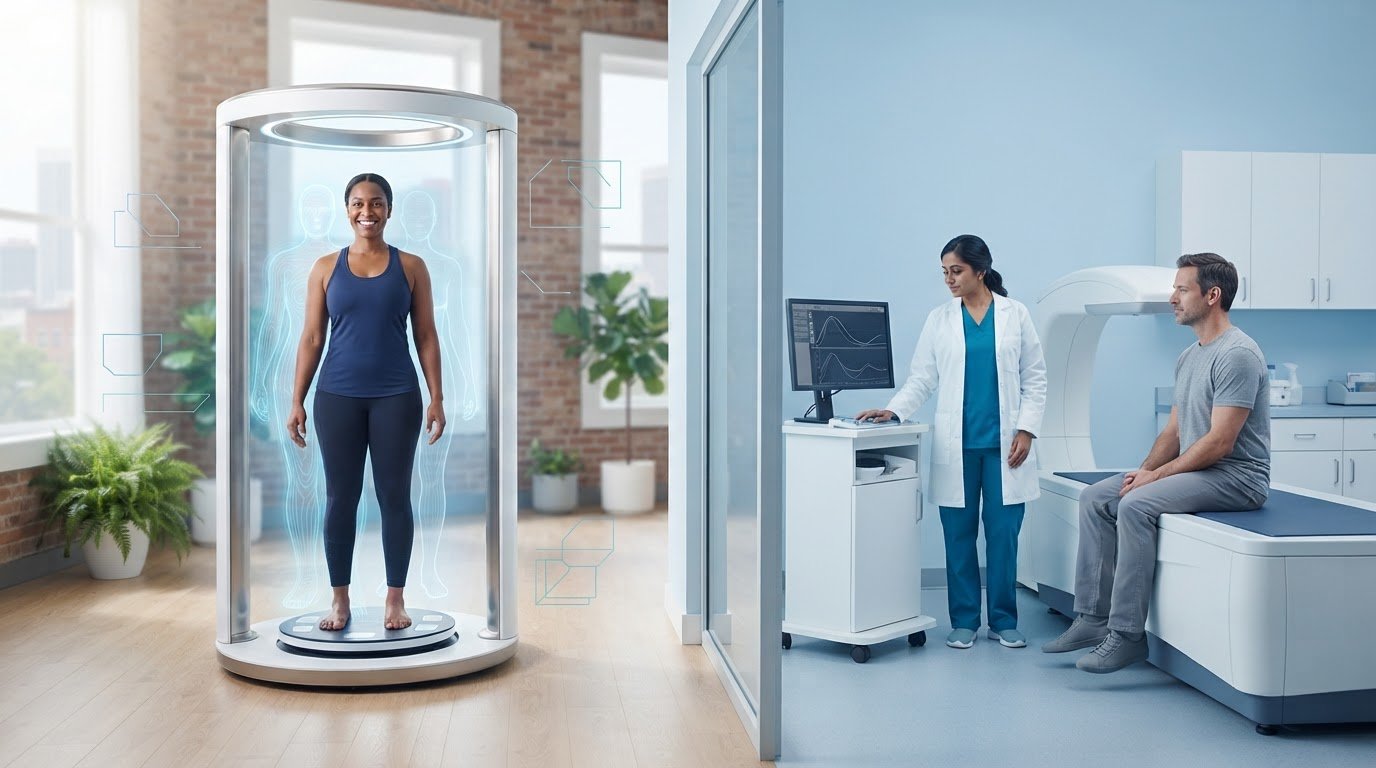
Styku Scan vs. DEXA Scan: Which Body Composition Test Is Right for You?
The scan with more detail isn’t automatically the right scan for you. In the Styku scan vs DEXA scan comparison, each method answers a different question: Styku uses infrared scanning to create a 3D body model and estimate body composition, while DEXA uses low-dose X-rays to assess bone density and body composition.
If your weight hasn’t changed, it’s reasonable to wonder whether your body is changing in other ways. Conflicting claims about which scan is more accurate can make the choice harder. The useful answer depends on what you want to track, how you’ll use the results, and what each method can and can’t tell you.
This article compares what Styku and DEXA measure, where their estimates have limitations, and how to choose a scan for your health or progress-tracking question. Neither result is a complete assessment of your health. Medi Slim offers Styku 3D body-composition analysis as a progress-tracking option alongside medical weight-loss care. DEXA is not listed among the clinic’s services.
Key Takeaways
- The Styku scan vs DEXA scan choice depends on the question you want answered, not on a universal accuracy ranking.
- Compare each method’s outputs and limitations before using its results to guide decisions about your health or progress.
- For progress tracking, focus on consistent measurements over time rather than treating one scan as a complete health assessment.
- Consider whether your question calls for body-shape tracking or clinical imaging, and discuss clinical needs with a qualified health professional.
- Medi Slim offers Styku analysis alongside physician-supervised weight-management care, where scan results can complement other progress measures.
Styku Scan vs DEXA Scan: What Question Does Each Test Answer?
A Styku scan uses infrared scanning to create a three-dimensional model of your body. A DEXA scan uses X-ray imaging. Both can provide body-composition information, but they use different methods and don’t produce interchangeable results. The right option depends on what you want to understand or track.
Body composition describes what your body weight is made up of, including fat tissue, lean tissue such as muscle and organs, and bone. A scale reports your total weight, but not how that weight is distributed. A scan result, on its own, is not a complete assessment of health.
What does a Styku scan measure or estimate?
Styku captures body shape to create a 3D scan and uses that shape to estimate body-composition information. The measurements and estimates available can depend on the scan setup and report, so ask the provider which outputs are included. Styku results can help you compare changes over time, but they aren’t a diagnosis or a substitute for clinical evaluation.
For useful progress tracking, compare scans taken under similar conditions and focus on the direction of change rather than treating one result as definitive. Medi Slim offers Styku 3D body-composition analysis alongside medical weight-loss care. If you’re in Richmond, Henrico, Mechanicsville, Midlothian, or Glen Allen, confirm scan availability with the clinic before planning a visit.
What does a DEXA scan measure?
DEXA, short for dual-energy X-ray absorptiometry, uses two X-ray energy levels to assess body tissues. A body-composition DEXA estimates fat and lean tissue and can assess bone. The Dual-energy X-ray absorptiometry (DEXA) overview explains the technology and its uses.
Not every DEXA appointment has the same purpose. A bone-density assessment focuses on bone mineral density, while a body-composition scan also reports estimates of fat and lean tissue. Ask the provider which type of scan is being performed and what the report will cover. DEXA uses low-dose X-rays, so discuss individual clinical questions with a qualified health professional.
In practical terms, Styku focuses on body shape and estimates derived from a 3D scan. DEXA uses imaging to assess bone and estimate body tissues. Neither result should be read in isolation. Your goals, clinical needs, and the method’s limitations all matter.
How Styku and DEXA Scans Work: Why Their Results Can Differ
Styku and DEXA produce results through different processes. Styku uses infrared scanning to capture body shape and generate a 3D model. A body-composition DEXA scan uses X-ray imaging to estimate tissue composition. Since one method derives estimates from external shape and the other uses imaging, their numbers aren’t expected to match exactly.
What happens during a Styku 3D body scan?
During a Styku scan, you stand in position while the scanner captures your body’s shape. The system uses the scan to generate measurements and body-composition estimates. Instructions and specific outputs can vary by setup, so ask the provider what the report includes and how to prepare.
For comparisons over time, try to keep scan conditions consistent. Similar clothing, posture, and setup can make changes easier to interpret. If your weight or measurements shift between scans, consider the full trend rather than assuming every difference reflects a change in body fat or lean tissue.
What happens during a DEXA body-composition scan?
A body-composition DEXA generally involves lying still on a scanning table while the equipment passes over your body. The scan uses X-rays, and the report estimates tissue distribution. Providers may differ in equipment, reporting formats, and which results they emphasize. Ask what the scan is designed to assess, especially if you’re comparing a body-composition scan with a bone-density assessment.
Hydration, recent food or exercise, positioning, and other preparation details may affect how results are interpreted. Follow the testing provider’s instructions, and ask a qualified clinician whether a scan is appropriate for your individual needs. The NIH overview of body composition methods provides broader context on how assessment techniques differ.
Results from different technologies may not match because each method uses its own measurement process, assumptions, and reporting system. Don’t treat a Styku estimate and a DEXA result as interchangeable. If you’re considering Styku tracking as part of weight-management care, you can ask Medi Slim about Styku analysis and whether it fits your goals.
Styku vs. DEXA: Compare Uses, Results, Access, and Limitations
Neither scan is a universal winner. The useful comparison is whether a method’s measurements fit your question and can be collected consistently. Styku is designed around 3D body-shape scanning and derived estimates. DEXA is an imaging-based method used for bone-density assessment and, with body-composition protocols, estimates of fat and lean tissue.
| Comparison | Styku | DEXA |
|---|---|---|
| Method | 3D scanning captures body shape; software derives measurements and estimates. | X-ray imaging assesses bone and, in body-composition scans, estimates tissue distribution. |
| Typical purpose | Tracking changes in body shape and measurements over time. | Bone-density assessment or body-composition analysis, depending on the scan ordered. |
| Results | 3D body representation and outputs available for the specific system and report. | Bone-density results or estimates of fat and lean tissue, depending on protocol. |
| Practical access | Available through providers that offer Styku. Medi Slim offers Styku analysis; confirm availability with the relevant office. | Access depends on local imaging, clinical, or wellness providers. Medi Slim does not list DEXA as a service. |
| Limitations | Estimates depend on the system and consistent scan conditions; it isn’t a diagnosis. | Results depend on the scan protocol and interpretation. A body-composition scan and a bone-density assessment answer different questions. |
Which scan is more accurate for body composition?
Accuracy depends on what is being measured, the device and protocol, and the question behind the test. A body-shape measurement and an imaging-based tissue estimate are not identical outcomes. Don’t compare a Styku measurement with a different DEXA output as if they were the same metric. If results will inform a clinical decision, review them with a qualified clinician.
Which scan is more practical for tracking weight-loss progress?
For routine progress tracking, repeatability matters. Using the same method and keeping scan conditions similar can make trends easier to interpret. Styku may help show changes in body shape and measurements alongside scale weight. DEXA may be useful when its imaging-based outputs match a specific question, but access and the type of report vary by provider.
If the scale moves slowly, body measurements can offer additional context, though they don’t explain every change in health or body composition. In the Styku scan vs DEXA scan decision, consider your goal, available providers, and any clinical guidance. Choose a method you can use consistently, then interpret results as one part of a broader progress picture.
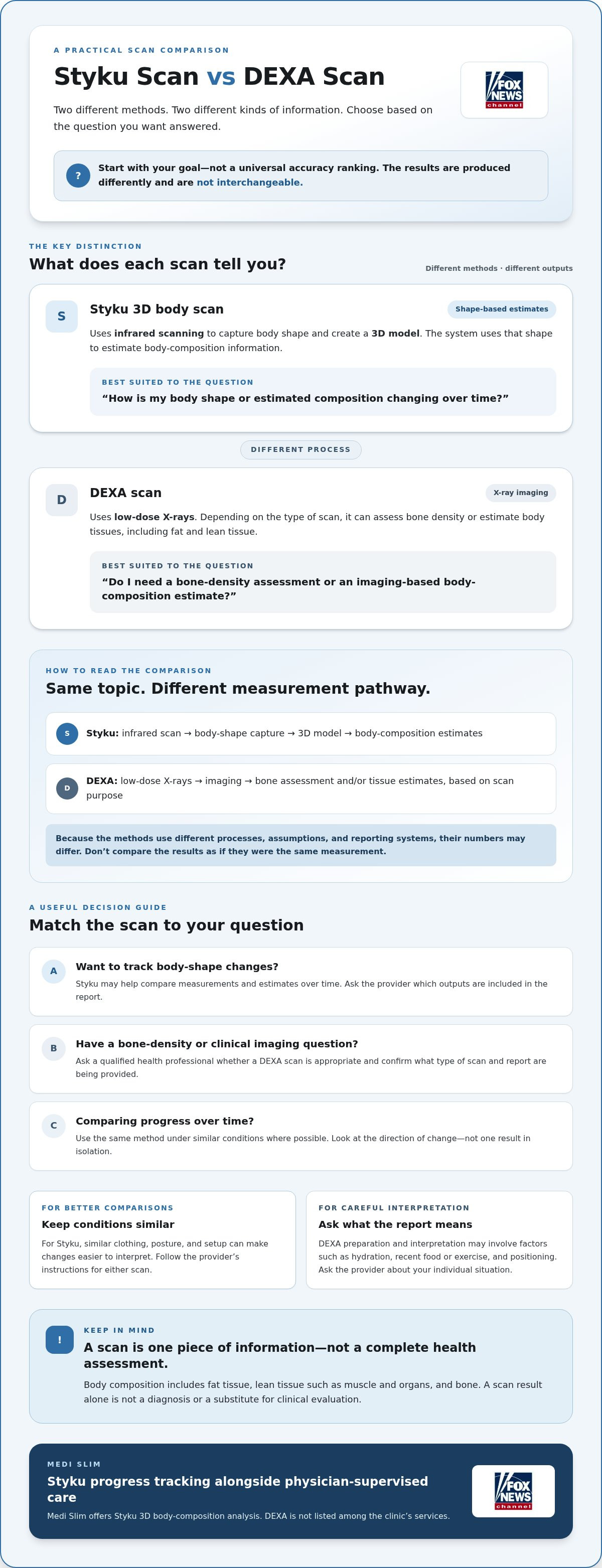
How to Choose Between a Styku Scan and DEXA Scan for Your Goal
Start with the question you want the result to answer. A scan is most useful when its measurements match your goal and you can interpret them in context. You don’t need to pick one method for every purpose. Use this sequence:
- Define your goal. Are you looking to follow changes in body shape over time, or do you need imaging-based information for a specific clinical question?
- Check what each provider reports. Ask which measurements are included and whether the scan is intended for progress tracking, bone-density assessment, or body-composition analysis.
- Consider clinical needs. If testing relates to a health concern or medical decision, discuss the appropriate method with a qualified clinician.
Choose a scan based on the information you need
For recurring checks of body shape and measurements, Styku may be a practical tracking option. A clinician may discuss DEXA when imaging-based information is relevant to your question. The two methods don’t produce interchangeable results. Medi Slim offers Styku 3D body-composition analysis, not DEXA scanning, so ask a DEXA provider or clinician about access and suitability if you’re considering that method.
Make repeat measurements more useful
For tracking change, consistency is more useful than chasing the highest or lowest number. Use the same method where possible, follow the provider’s preparation instructions, and aim for comparable scan conditions. A single result can vary, so look at the trend over time rather than drawing conclusions from one reading.
Pair scan trends with relevant context, such as weight trends and feedback from your clinician. If scale weight is moving slowly, body-shape measurements may add another perspective, but they don’t explain every change or provide a complete health assessment.
For more context on tracking during treatment, Medi Slim’s published articles Tracking Tirzepatide Results with Styku and Tracking Semaglutide Results with Styku discuss how scans can fit into progress monitoring. They don’t replace individualized medical guidance.
If you’re considering Styku as part of weight-management follow-up in Richmond, Henrico, Mechanicsville, Midlothian, or Glen Allen, ask Medi Slim about Styku tracking during a consultation. A clinician can help you decide whether it fits your goals and how to interpret results alongside other progress measures.
Using Styku Progress Tracking with Medi Slim’s Physician-Supervised Care
A body scan can add context to a weight-management plan, but it should support care rather than define success on its own. Medi Slim offers Styku 3D body-composition analysis alongside medical weight-loss consultations and physician-supervised programs. The scan can help you visualize changes over time and discuss them with your care team.
How can Styku fit into a weight-management plan?
Repeated Styku scans may show changes in body shape and measurements that scale weight alone doesn’t capture. Your clinician can consider those trends alongside weight changes, your individual plan, and other relevant information. A scan doesn’t diagnose a condition, prescribe treatment, or guarantee a particular result. It’s one progress measure, not a substitute for medical care.
If you’d like more detail on using scan information during a weight-management journey, Medi Slim’s guide Beyond the Scale: Styku 3D Body Composition Analysis offers additional context. The key is to interpret measurements over time rather than rely on a single reading.
What to ask before scheduling a body-composition scan
Before arranging a scan, ask practical questions so you know what the results can tell you and how they’ll fit your care:
- Which measurements and estimates does the current Styku setup report?
- How are the results reviewed and discussed as part of follow-up?
- Is Styku scanning currently available at the Medi Slim location you plan to visit?
- What should you do to keep repeat scans as comparable as possible?
For readers in Richmond, Henrico, Mechanicsville, Midlothian, and Glen Allen, scan availability may vary by location, so confirm directly with the clinic before making plans. Medi Slim lists Styku analysis, not DEXA scanning. If you’re comparing Styku and DEXA because of a specific health concern, discuss the question with a qualified clinician and ask which type of assessment is appropriate.
If you’re considering physician-supervised weight-management care, contact Medi Slim to discuss your goals and whether Styku tracking may be useful for follow-up. Ask about the scan, the measurements it provides, and its availability at your preferred location before deciding what makes sense for you.
Choose a Useful Measure for Your Next Step
The Styku scan vs DEXA scan decision comes down to the information you need. Styku can support body-shape progress tracking, while DEXA uses imaging and may be discussed for different clinical or body-composition questions. Their results aren’t interchangeable, so focus on trends from the same method and review health-related concerns with a qualified clinician.
A scan can add context to weight changes, but it isn’t a diagnosis or a complete measure of health. Medi Slim offers Styku 3D body-composition analysis alongside medical weight-loss consultations and physician-supervised care. You can discuss your goals, whether tracking may be useful, and current scan availability at your preferred location.
Explore Medi Slim’s physician-supervised weight-loss care and ask how progress tracking may fit your plan. A clear question and consistent follow-up can help you make informed choices as you move forward.
Frequently Asked Questions
Is a Styku scan as accurate as a DEXA scan?
Not necessarily, because the methods measure or estimate body composition differently. Styku uses a 3D body scan to derive estimates from body shape, while DEXA uses X-ray imaging to assess bone and estimate body tissues. Accuracy depends on the specific measurement, equipment, protocol, and purpose. For the Styku scan vs DEXA scan comparison, focus on whether the result answers your question, and review clinically important findings with a qualified clinician.
What is the difference between a Styku scan and a DEXA scan?
A Styku scan captures your body’s shape in three dimensions and generates measurements and body-composition estimates based on the scan system. DEXA is an imaging-based method that uses X-rays. It may be used for bone-density assessment or body-composition analysis, depending on the test ordered. The reports aren’t interchangeable, so ask the provider what the specific scan measures and how its results should be interpreted.
Can a Styku scan measure body fat?
A Styku scan can provide body-fat estimates when that output is included in the specific system and report. It creates a 3D representation of body shape, then uses the scan to generate measurements and estimates. Ask the provider which outputs its current setup offers. Treat the result as one progress measure, not a diagnosis or a complete assessment of health, and compare trends using the same method under similar conditions.
Does a DEXA scan use radiation?
Yes. DEXA uses X-rays, typically at a low dose for the scan. The purpose and report depend on whether the test is ordered for bone-density assessment or body-composition analysis. If you have questions about exposure, the need for testing, or whether it’s suitable for you, speak with the clinician ordering the scan or the imaging provider. They can explain the process in the context of your health and the specific test.
Which scan is better for tracking weight-loss progress?
Neither is best for everyone. Styku may be useful for following body-shape changes and measurements over time, while DEXA provides imaging-based results that may suit a different question. Choose a method you can repeat consistently, and consider scan trends alongside weight changes and clinician feedback. If the scale moves slowly, body measurements may add context, but no scan result alone explains every change or determines overall health.
How often should I get a Styku or DEXA scan?
There isn’t one scan schedule that suits everyone. The right timing depends on your goal, the method, and whether results are being used to guide a clinical decision. For progress tracking, ask the provider or clinician to recommend an interval that makes sense for your plan. Use the same method and comparable conditions when possible, and avoid repeating scans simply to chase a different number.
Does Medi Slim offer DEXA scans?
No. Medi Slim offers Styku 3D body-composition analysis alongside medical weight-loss consultations and physician-supervised care, but does not list DEXA scanning as a service. Styku scan availability may vary by office. If you’re in Richmond, Henrico, Mechanicsville, Midlothian, or Glen Allen, contact the clinic to confirm availability at your preferred location and ask how scan results may fit into progress discussions.