

Tirzepatide Dosing for Weight Loss: A Complete 2026 Patient Reference
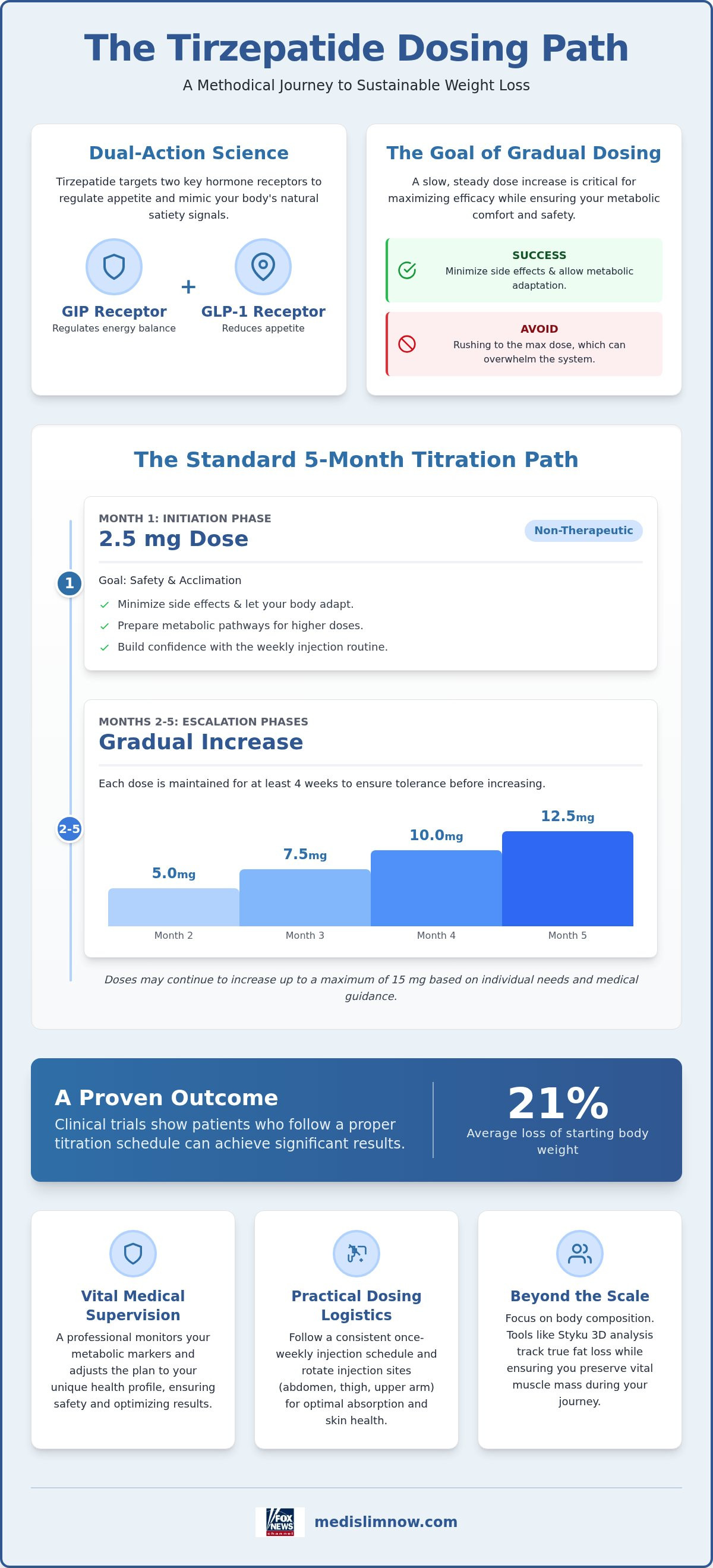
The highest dose of medication isn't always the one that delivers the best results. You might assume that reaching the 15 mg maximum as quickly as possible is the fastest way to transform your body. However, the true success of tirzepatide dosing for weight loss depends on a methodical, five-month titration path that prioritizes your metabolic comfort over speed. Clinical trials show that patients can lose an average of 21% of their starting body weight, but achieving this requires a careful balance between efficacy and safety.
It's natural to feel a mix of excitement and anxiety. You likely have questions about managing side effects or how to handle the logistics of weekly injections. You want to see the numbers on the scale drop, but you don't want the process to feel like a constant struggle of willpower. This guide will help you master the titration schedule so you can approach your treatment with quiet confidence. You'll learn how professional medical supervision turns a clinical protocol into a manageable, streamlined part of your lifestyle.
We'll provide a clear roadmap of the standard dose increases and explain how to track your progress beyond just weight. From understanding maintenance options to utilizing Styku 3D body composition analysis, you'll gain the knowledge needed to navigate your health journey with precision and ease.
Key Takeaways
- Learn how tirzepatide targets both GIP and GLP-1 receptors to mimic natural satiety signals and support your metabolic health.
- Master the standard four-week titration schedule and understand why gradual tirzepatide dosing for weight loss is essential for minimizing side effects.
- Discover why professional medical supervision is vital for monitoring metabolic markers and adjusting your plan based on your unique health profile.
- Get practical guidance for once-weekly injections, including proper site rotation techniques to ensure optimal medication absorption and skin health.
- Shift your focus from the scale to body composition by using Styku 3D analysis to track actual fat loss and muscle preservation.
Understanding Tirzepatide Dosing for Sustainable Weight Loss
Achieving significant, lasting weight reduction requires more than just access to the right medication. It requires a precise strategy that respects your body's unique biology. Proper dosing is the primary factor in long-term weight management success. If the dose is too low, you may not see the metabolic shifts needed for progress; if it's too high too quickly, side effects can derail your journey. Tirzepatide dosing for weight loss is a gradual escalation process that allows your body to safely adapt to metabolic changes while maximizing fat reduction.
The Science of Dual-Action Weight Loss
The effectiveness of this treatment lies in its unique dual-action mechanism. Tirzepatide is a dual agonist, which means it targets two different hormone receptors: glucose-dependent insulinotropic polypeptide (GIP) and glucagon-like peptide-1 (GLP-1). These receptors are naturally found in areas of the brain that regulate appetite and food intake. By activating both pathways simultaneously, the medication mimics natural hormone signals that tell your brain you're full and satisfied.
This dual-action approach is a significant advancement in medical weight loss. While earlier medications targeted only one receptor, the combination of GIP and GLP-1 allows for potentially higher efficacy. It addresses hunger from multiple angles, making it easier to maintain a calorie deficit without the intense cravings that often lead to "willpower fatigue." To understand the biological mechanics in more detail, you can explore our guide on How Does Tirzepatide Work? which breaks down the cellular science behind your transformation.
The Goal of the Initiation Phase
Every patient begins their journey with an initiation phase, typically at a 2.5 mg dose. It's vital to understand that this starting dose is for acclimation rather than maximum weight loss. Your body needs a "grace period" to adjust to the new hormonal signals without overwhelming your digestive system. During these first four weeks, we focus on establishing a baseline for your tolerance and ensuring you can manage the medication comfortably.
Starting at a lower dose serves several critical purposes for your safety:
- Minimizing Side Effects: A slow introduction helps your stomach and intestines adapt, reducing the risk of nausea or indigestion.
- Metabolic Preparation: It prepares your insulin and glucose pathways for the more significant changes that occur at higher doses.
- Patient Confidence: It allows you to become familiar with the self-injection process and the rhythm of weekly dosing in a low-stakes environment.
We don't rush this process. By prioritizing safety during the initiation phase, we create a stable foundation. This methodical approach to tirzepatide dosing for weight loss ensures that once you move into the escalation and maintenance phases, your body is ready to respond efficiently and predictably.
The Standard Tirzepatide Dosage Chart: A 2026 Reference Guide
The titration schedule for this medication follows a specific, methodical rhythm. It isn't a race to the highest dose. Instead, it's a structured path that ensures your body remains in a state of metabolic optimization. Consistency is the most important factor. Missing doses or jumping ahead can cause your plasma levels to fluctuate, which often leads to increased side effects or stalled progress. By following a steady chart, you allow your hormones to recalibrate safely.
Month 1: The 2.5 mg Initiation Dose
Every patient begins at the 2.5 mg level. This is the universal starting point regardless of your starting weight or health history. It's important to set realistic expectations for these first four weeks. This is a non-therapeutic dose. Its primary purpose is safety and acclimation. While you might notice early appetite suppression, the goal is to introduce the medication to your system without causing distress. Since the FDA approval for Zepbound, this introductory month has proven essential for long-term patient adherence.
Escalation Phases: 5 mg to 12.5 mg
If you tolerate the initiation dose well, your physician will move you to 5 mg for the second month. From there, tirzepatide dosing for weight loss follows a step-up process in 2.5 mg increments. You might move through 7.5 mg, 10 mg, and 12.5 mg levels. Each stage typically lasts a minimum of four weeks.
This schedule is not set in stone. A skilled physician monitors your weight loss velocity and your physical comfort at every step. If you're seeing excellent results at 7.5 mg, your provider might recommend staying at that level for an additional month. The goal is to find your "sweet spot." This is the specific dose where your weight loss is steady and your side effects remain minimal. If you're curious about how your body might react to these changes, a medical weight loss consultation can help tailor the timeline to your specific health profile.
The 15 mg Maximum Maintenance Dose
The 15 mg dose represents the highest therapeutic level available. For many, this dose provides the maximum metabolic impact needed to reach a final goal. Reaching this level usually takes about five months of consistent titration. Once you achieve your goal weight, your strategy will change. Maintenance is about weight stability. Some patients remain at 15 mg, while others work with their doctor to find a lower maintenance dose that keeps the weight off without further loss. This transition requires professional oversight to ensure your metabolism stays balanced as you move away from the active loss phase.
Why Medical Supervision is Critical During Dose Escalation
Managing a medical weight loss program involves more than just following a calendar. While the titration schedule provides a general framework, your body's response to hormonal changes is entirely unique. Self-managing your doses can lead to severe gastrointestinal distress or stalled progress if you increase too quickly or stay at a sub-therapeutic level for too long. Professional oversight ensures that your tirzepatide dosing for weight loss remains effective while protecting your overall health.
Physicians monitor your vital signs and metabolic markers at every dose increase. This isn't just about the number on the scale. We look at how your blood pressure, heart rate, and blood sugar levels respond to the medication. By having a doctor supervise the process, you ensure that your weight loss is primarily fat, not lean muscle mass. This distinction is vital for maintaining a healthy metabolism long after you've reached your target weight. Local clinics in Richmond and Henrico provide the accessible, face-to-face consultations necessary to track these nuances accurately.
Metabolic Adaptation and Safety
Your body undergoes significant changes as it adapts to dual-action hormone signals. Over several months, your insulin sensitivity improves and your hunger cues shift. A doctor helps you navigate this transition safely. We monitor for rare but serious risks, such as pancreatitis or gallbladder issues, which require clinical expertise to identify early. The FDA approval of Zepbound for weight management highlighted the importance of clinical trials and professional administration to ensure these risks are managed. For a deeper dive into these protocols, read our doctor-led guide: Is Tirzepatide Safe?.
Personalized Dosing vs. One-Size-Fits-All
National telehealth platforms often treat titration like an automated assembly line. However, many of our patients in Midlothian and Glen Allen find that they don't need the maximum 15 mg dose to see transformative results. Some achieve their goals at 7.5 mg or 10 mg without ever needing further increases. A local provider can adjust your schedule for life events, such as upcoming travel or specific health needs, that a generic algorithm might miss.
Accessibility is a major advantage of choosing a local clinic. If you experience unexpected nausea or have questions about your progress, you don't have to wait for an email response from a distant corporation. You can have a face-to-face consultation with a professional who knows your health history. This immediate support provides the reassurance needed to stay committed to your journey with confidence.
Practical Dosing Logistics: Administration and Timing
Integrating your treatment into your weekly routine is designed to be straightforward and efficient. While the biological science behind the medication is complex, the physical act of administration is not. Success with tirzepatide dosing for weight loss relies on three practical pillars: consistency, proper technique, and correct storage. When you manage these logistics effectively, the medication becomes a seamless part of your lifestyle rather than a clinical burden.
Tirzepatide is a once-weekly subcutaneous injection, meaning it is delivered into the fatty tissue just beneath the skin. It's not an intramuscular injection, so the needles are very short and thin, which helps minimize discomfort. To ensure the medication remains potent, you must store it in the refrigerator between 36°F and 46°F. If you're traveling, the medication can typically remain at room temperature for up to 21 days, but you should avoid exposing it to direct heat or light. If a dose is accidentally frozen, it must be discarded, as extreme cold breaks down the delicate protein structure of the dual-action hormones.
Life occasionally disrupts the best-laid plans. If you miss a dose, follow the 4-day window rule. You can administer the missed dose as soon as you remember, provided it's within 96 hours of your scheduled time. If more than four days have passed, skip that dose entirely and wait for your next regularly scheduled day. Never administer two doses at once to "catch up," as this significantly increases the risk of gastrointestinal distress.
How to Administer Your Tirzepatide Injection
Administering your dose takes less than a minute. By following a methodical process, you ensure safety and optimal absorption every time:
- Step 1: Choose and rotate your site. The best areas are the abdomen (at least two inches from the belly button), the front of the thighs, or the back of the upper arm. You must rotate your site every week. If you injected into your right thigh last week, choose the left thigh or the abdomen this week. This prevents skin irritation and a condition called lipohypertrophy, which can interfere with how the drug enters your system.
- Step 2: Prepare the area. Clean the chosen site with an alcohol swab and let it air dry. If you're using a pre-filled pen, remove the base cap only when you're ready to inject.
- Step 3: Inject and dispose. Place the base flat against your skin, unlock the pen, and press the button. You'll usually hear a click when the injection starts and another when it's finished. Dispose of the pen or syringe in a puncture-resistant sharps container immediately.
Managing the Injection Schedule
Consistency helps maintain stable plasma levels of the medication in your bloodstream. Most patients find success by picking a specific "shot day," such as Sunday evening, to prepare for the week ahead. If you need to change your injection day, you can do so safely as long as there are at least three days (72 hours) between doses. Tracking your progress is equally important. Use a simple log or a mobile app to note the date, dose amount, and injection site. This data is invaluable during your follow-up consultations, as it helps your doctor fine-tune your plan. If you're ready to start your journey with expert guidance, schedule your medical weight loss consultation to begin your personalized program.
Beyond the Dose: Optimizing Results with Styku 3D Analysis
Success isn't just about the number on the scale. When managing tirzepatide dosing for weight loss, the ultimate goal is a complete metabolic transformation. Total body weight can be a misleading metric because it doesn't distinguish between fat loss and muscle preservation. High-quality weight loss focuses on reducing adipose tissue while keeping your lean muscle intact. This is where advanced technology becomes an essential partner in your medical journey, providing the data needed to make informed clinical decisions.
At our clinics serving Glen Allen and Mechanicsville, we utilize Styku 3D Body Composition Analysis to provide a precise map of your progress. This non-invasive scan creates a digital avatar of your body in seconds. It measures circumferences, body fat percentage, and lean mass with clinical accuracy. By visualizing your transformation in three dimensions, you see the physical changes that a traditional scale simply cannot capture. This visual evidence is often the most motivating factor for patients during the middle stages of their titration path.
The Role of 3D Scanning in Dosing Decisions
Body composition data is a critical tool for your physician. It helps determine if your current dose is optimal or if an adjustment is necessary. For example, if the scale hasn't moved but your Styku scan shows a significant reduction in waist circumference and a shift in fat-to-muscle ratio, your medication is working effectively. In these cases, staying at your current dose might be more beneficial than increasing it prematurely. This identifies "hidden" progress that would otherwise go unnoticed.
Tracking muscle mass ensures your titration isn't too aggressive. If a patient loses weight too rapidly, they risk losing lean tissue, which can eventually slow down the metabolism. We use this data to fine-tune your program, ensuring your tirzepatide dosing for weight loss supports a healthy, sustainable rate of change. You can learn more about Tracking Tirzepatide Results with Styku to see why the scale is only part of the story.
Starting Your Journey in Richmond
Your path to a healthier lifestyle begins with a comprehensive medical weight loss consultation at our Richmond location. We don't believe in a one-size-fits-all approach. During your initial visit, we'll review your medical history, discuss your goals, and perform your first Styku 3D scan to establish a baseline. This combination of prescription care and advanced tracking provides Central VA residents with a level of oversight that self-guided programs can't match.
We focus on making the process as streamlined and user-friendly as possible. From your first injection to your long-term maintenance phase, you'll have a professional partner to guide your decisions. If you're ready to take the first step, our guide on How to Start Tirzepatide for Weight Loss outlines exactly what to expect during your first 30 days of treatment. By combining the right medication with the right data, you can move forward with quiet confidence in your results.
Start Your Personalized Path to Metabolic Health
Mastering your titration schedule is the foundation of a successful transformation. The process of tirzepatide dosing for weight loss is most effective when it's gradual and professionally managed. By prioritizing metabolic adaptation over speed, you can achieve significant results while minimizing physical discomfort. You now understand that tracking your progress involves more than just a scale. It's about monitoring your body composition to ensure you're losing fat and maintaining vital muscle mass.
You don't have to navigate these clinical decisions alone. Our team provides physician-supervised dosing plans tailored to your specific health profile. With convenient locations in Richmond, Henrico, and Midlothian, expert care is always within reach. We integrate advanced Styku 3D Body Composition Analysis into every program to give you a clear, visual map of your success. This precision ensures your journey is safe, predictable, and effective.
Schedule your physician-led Tirzepatide consultation in Richmond today to begin your journey. Your goals are achievable with the right professional partner by your side.
Frequently Asked Questions
What is the starting dose of tirzepatide for weight loss?
The starting dose for all new patients is 2.5 mg once weekly for the first four weeks. This initiation phase is designed to let your body acclimate to the hormone changes. It focuses on safety and tolerance rather than peak weight loss. Starting at this level helps minimize early gastrointestinal side effects as your digestive system adapts.
How often do I increase my tirzepatide dosage?
You typically increase your dosage every four weeks. Following the first month at 2.5 mg, your physician may move you to 5 mg. Each subsequent increase happens in 2.5 mg increments after at least four weeks on the current dose. This methodical approach to tirzepatide dosing for weight loss ensures your metabolism adjusts safely and effectively.
What happens if I miss a dose of tirzepatide?
You should take a missed dose as soon as you remember, provided it's within four days (96 hours) of your scheduled time. If more than four days have passed, skip the dose entirely and resume your regular schedule on the next planned day. Don't take two doses at once. If you miss two or more doses in a row, contact your provider for guidance on how to safely restart.
Can I stay on a lower dose of tirzepatide if I am losing weight?
Yes, you can stay on a lower dose if you're achieving steady weight loss and maintaining good health markers. Higher doses aren't always necessary for everyone. If you're seeing progress at 5 mg or 7.5 mg, your doctor may recommend staying there to avoid unnecessary side effects. This personalized approach prioritizes your physical comfort over reaching the maximum possible dosage.
What is the maximum dose of tirzepatide for weight loss?
The maximum therapeutic dose for weight management is 15 mg once weekly. This level is reached after several months of consistent titration. While 15 mg provides the highest metabolic impact, many patients achieve their goal weight on lower maintenance doses. Your physician will help you determine the right ceiling for your specific health journey based on your results and tolerance.
Do I need to take tirzepatide on the same day every week?
You should aim to take your injection on the same day every week to maintain stable medication levels in your system. Consistency helps your body regulate appetite and glucose predictably. If you need to change your shot day, you can do so as long as there are at least three days (72 hours) between the two doses to ensure safety.
How do I know if my tirzepatide dose is too high?
You may know your dose is too high if you experience severe or persistent gastrointestinal distress. Symptoms like continuous vomiting, extreme nausea, or signs of dehydration suggest your body isn't tolerating the current level. If these side effects interfere with your daily life, your doctor can adjust your titration schedule or lower your dose to a more manageable level.
Can I skip a week of tirzepatide for a special event or vacation?
You can skip a week if medically necessary, but you should always consult your physician first. Skipping doses can cause your medication levels to drop, which might lead to a return of hunger cues. If you're away for more than two weeks, you may need to restart at a lower dose to prevent severe side effects when you resume your treatment plan.