

What Does Semaglutide Do? Understanding the Science of Medical Weight Loss
What if your struggle with weight isn't a lack of willpower, but a biological signal that simply won't turn off? For many, the constant "food noise" and persistent hunger make traditional dieting feel like an uphill battle. If you've ever wondered what does semaglutide do to change this cycle, you're not alone. It's exhausting to rely on sheer determination when your hormones are constantly sending signals that keep you feeling hungry.
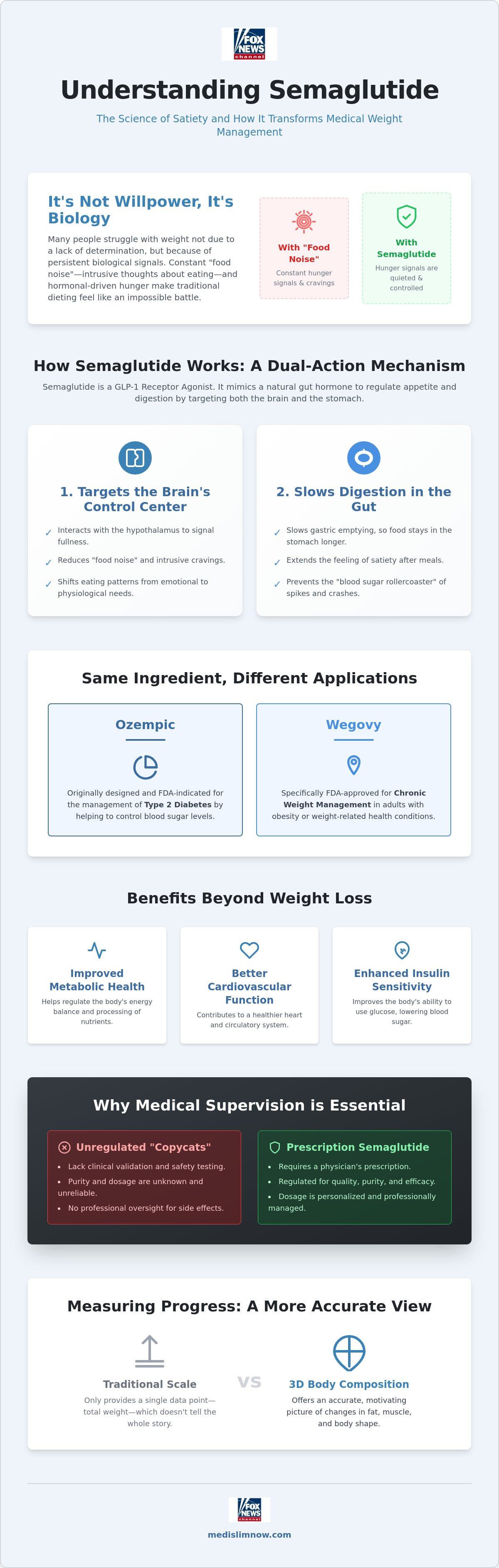
The truth is that medical weight loss is about biology, not just behavior. Semaglutide works by mimicking a natural gut hormone to slow digestion and signal fullness to your brain. This article will help you understand how this medication stabilizes blood sugar and supports a manageable, long-term transformation. We'll explore the latest clinical insights, including the March 2026 FDA approval of higher-dose options for those needing additional support. You will also learn how to access safe, medically supervised programs in Henrico and Midlothian to ensure your journey is professionally managed from start to finish.
Key Takeaways
- Learn how semaglutide mimics natural hormones to quiet persistent hunger and slow digestion for lasting satiety.
- Understand exactly what does semaglutide do to improve metabolic health markers, including insulin sensitivity and cardiovascular function.
- Discover the history of GLP-1 agonists and their transition from diabetes care to a gold standard for medical weight management.
- See why professional oversight is the critical factor in managing side effects and ensuring your dosage is personalized for safety.
- Explore how 3D body composition analysis provides a more accurate and motivating picture of your progress than a traditional scale.
What is Semaglutide and How is it Classified?
Semaglutide belongs to a class of medications known as GLP-1 receptor agonists. To understand What is Semaglutide, you should first look at how your body naturally manages hunger. This medication is a synthetic version of the glucagon-like peptide-1 hormone, which your gut releases after you eat. By mimicking this natural process, the drug helps regulate your metabolic system more effectively than diet and exercise alone often can.
If you are exploring what does semaglutide do to support your health journey, the answer lies in its ability to communicate directly with the brain. It signals the body to feel full while slowing down the rate at which your stomach empties. This isn't a temporary stimulant or a simple appetite suppressant; it's a clinical tool designed for chronic weight management. It helps shift the body's biological set point, making it easier to maintain a healthy weight over time rather than experiencing the common rebound often seen with willpower-based dieting.
The medication is most commonly recognized under brand names like Ozempic and Wegovy. While they share the same active ingredient, they serve different primary purposes:
- Ozempic: Originally designed and indicated for the treatment of Type 2 diabetes.
- Wegovy: Specifically FDA-approved for chronic weight management in adults with obesity or weight-related health conditions.
The Evolution of GLP-1 Therapy
Researchers initially developed GLP-1 medications to help patients manage blood sugar levels. During clinical trials, they noticed a consistent and significant side effect: patients were losing weight. This discovery led to focused studies on obesity, eventually resulting in the June 2021 FDA approval of semaglutide for weight loss. This milestone changed the landscape of medical weight loss. As of 2026, it remains the gold standard for non-surgical intervention, offering a reliable path for those who haven't found success through traditional methods alone.
Prescription vs. Over-the-Counter Options
True semaglutide is a powerful pharmaceutical that requires a physician's prescription. You won't find it on a shelf at a supplement store or through unregulated retailers. Many "copycat" supplements claim to provide GLP-1 benefits, but these products lack clinical validation and rigorous safety testing. Using pharmaceutical-grade medication under professional supervision ensures you're receiving a pure substance that's regulated for both quality and efficacy. This oversight is vital for managing your dosage and ensuring the medication works safely with your unique biology.
How Semaglutide Works: The Science of Satiety
To truly understand what does semaglutide do, you must look at its dual-action mechanism. It operates as a biological bridge between your digestive system and your brain. While many people view weight loss as a matter of self-control, this medication addresses the underlying signals that often override willpower. It doesn't just help you eat less; it changes how your body perceives hunger and satisfaction. By mimicking a natural hormone, it creates a more balanced metabolic environment where healthy choices feel sustainable rather than exhausting.
One of the most significant impacts reported by patients is the suppression of "food noise." This term describes the constant, intrusive thoughts about your next meal or the urge to snack even when you aren't physically hungry. These thoughts are often driven by hormonal imbalances rather than a lack of discipline. By quieting these mental interruptions, the medication allows you to focus on your daily life rather than your next calorie intake. Because this process involves complex hormonal shifts, Medical Supervision is Essential to ensure your body is responding safely and optimally to the treatment.
Targeting the Brain's Reward Center
The medication interacts directly with the hypothalamus, the part of your brain responsible for regulating appetite and energy balance. It binds to GLP-1 receptors, sending a clear signal that you have sufficient energy stored. This shift moves you away from emotional eating, where stress or boredom triggers hunger, and back toward physiological eating based on actual nutritional needs. Satiety is the feeling of fullness that persists between meals, preventing the urge to graze throughout the day.
Slowing Digestion for Sustained Fullness
Beyond the brain, semaglutide works in the gut by slowing gastric emptying. This means food stays in your stomach for a longer duration, extending the period of fullness after every meal. This biological delay prevents the "blood sugar roller coaster," which consists of the sharp spikes and crashes in glucose that often lead to binging or intense cravings. When you stabilize these levels, you reduce the physical drive to overeat. When integrated into a structured semaglutide weight loss program, this mechanism helps you establish long-term habits that feel natural rather than forced.
Stabilizing your insulin and blood sugar is a foundational step in your transformation. If you're ready to see how this science applies to your specific health goals, a medical weight loss consultation can help you determine the best path forward for your biology.
The Biological Benefits Beyond Weight Loss
While the scale provides a clear number, the most significant changes often happen where you can't see them. When asking what does semaglutide do, it's vital to look past the surface. This medication initiates a systemic reset that improves your internal health markers. It targets systemic inflammation and metabolic dysfunction, providing benefits that extend far beyond a smaller waistline. By addressing these core issues, the therapy supports your long-term vitality and reduces the biological stress that often accompanies excess weight.
The medication's ability to lower A1C levels and enhance insulin sensitivity is a cornerstone of its clinical value. It helps your body process glucose more efficiently, which prevents the energy crashes and long-term cellular damage associated with high blood sugar. These improvements aren't just about managing a condition; they're about restoring your body's natural ability to regulate its own energy. This foundational shift in your biology creates a ripple effect of health improvements that you can feel in your daily life.
Metabolic Health Improvements
A primary benefit of this therapy is the reduction of visceral fat. This is the dangerous fat stored deep within the abdominal cavity, surrounding your vital organs. Unlike subcutaneous fat, visceral fat is metabolically active and releases inflammatory markers that increase your risk of heart disease. By reducing this specific type of fat, you significantly lower your risk of metabolic syndrome. Data from the scientific review of semaglutide indicates that patients often see a marked improvement in glycemic control. For those exploring alternatives, our tirzepatide for weight loss guide details another dual-action breakthrough.
Cardiovascular and Kidney Protection
The impact on your vascular system is profound. GLP-1 agonists exert an anti-inflammatory effect on the lining of your blood vessels. This reduces systemic stress and helps lower blood pressure. Clinical studies have shown a decrease in the risk of major adverse cardiovascular events, such as heart attacks, in adults with established heart disease. This protection contributes to overall longevity and a higher quality of life. It isn't just about adding years to your life; it's about adding life to your years by ensuring your cardiovascular system remains resilient.
As your internal health improves, you'll likely notice changes in your daily physical experience. Many patients report improved mobility and reduced joint pain as the inflammatory load on the body decreases. Better sleep quality is another common outcome, often linked to the reduction of weight-related breathing issues. These changes lead to higher energy levels, allowing you to engage more fully in your personal and professional life. Understanding what does semaglutide do means recognizing it as a comprehensive health intervention that supports every system in your body.
Why Medical Supervision is Essential for Safety
Medical weight loss is a partnership, not a solo journey. While the medication is highly effective, its success depends on how your body adapts to it over time. If you're wondering what does semaglutide do to ensure your safety, the answer lies in professional oversight. A clinician doesn't just write a prescription; they monitor your metabolic response, adjust your dosage, and help you navigate the transition. This level of care transforms a medical procedure into a manageable health journey that prioritizes your long-term well-being.
Personalized dosing is the most critical part of this process. Every individual responds differently to GLP-1 therapy. Some patients may experience rapid results at a low dose, while others require a more gradual titration to avoid discomfort. When asking what does semaglutide do for your specific biology, a doctor provides the necessary data through regular check-ins. A clinician monitors for rare but serious complications that you might not recognize on your own. This proactive approach ensures that the medication supports your health without causing unnecessary strain on your system.
Managing Common Side Effects
Most patients encounter mild side effects during the first few weeks of treatment. Nausea, fatigue, and minor digestive changes are the most frequently reported issues. Clinical oversight in Richmond allows you to address these challenges in real-time. Your provider can suggest specific dietary adjustments or timing changes to mitigate discomfort. Staying well-hydrated and focusing on small, protein-rich meals can often resolve early symptoms. Having a professional to call when you feel "off" provides peace of mind that self-guided programs cannot offer.
Protecting Lean Muscle Mass
One concern often raised by patients is the risk of losing muscle alongside fat. Rapid weight loss can sometimes lead the body to burn muscle tissue for energy, which can slow your metabolism in the long run. Professional programs use advanced technology to prevent this. By incorporating 3D body composition analysis, we can track exactly where your weight loss is coming from. This data allows us to adjust your nutrition plan to prioritize muscle retention and metabolic health. For a deeper look at how this works in a clinical setting, you can read our semaglutide for weight loss patient guide.
Ready to start your journey with professional support? Schedule a medical weight loss consultation today to discuss your goals and find a plan that works for your body.
The Medi Slim Approach: Science Meets 3D Tracking
Understanding what does semaglutide do for your metabolism is the first step toward a healthier lifestyle. The second step is accurately measuring that transformation. At Medi Slim, we believe that a standard bathroom scale provides an incomplete picture of your progress. It cannot distinguish between water weight, muscle mass, and fat loss. To provide a more precise view, we integrate Styku 3D Body Composition Analysis into our programs. This technology allows you to see the physical changes in your body that a number on a scale often hides.
Medical weight loss is most effective when you have clear, visual data to support your efforts. By using advanced body scanning, we move beyond guesswork. You can see exactly where you are losing inches and how your body composition is shifting in real time. This data-driven approach ensures that the biological changes triggered by your medication are translating into the physical results you desire. It provides a level of clarity that helps you stay committed to your long-term health goals.
Visualizing Success with Styku 3D Scans
Seeing a 3D avatar of your progress is a powerful motivator. Styku uses high-resolution infrared sensors to capture millions of data points in seconds. It measures your waist, hips, and limbs with clinical precision, providing a much more accurate assessment than a traditional tape measure. This technology is a game-changer for medical weight loss because it confirms you are losing fat while retaining the lean muscle we discussed in previous sections. When you see your body shape physically change in a digital model, it reinforces the biological work the medication is doing. These non-scale victories are often more significant for long-term success than daily weight fluctuations.
Local Care in Central Virginia
Accessibility is key to maintaining a consistent medical program. We've designed our services to fit seamlessly into a modern lifestyle for residents across Central Virginia. Whether you live in Henrico, Midlothian, or Mechanicsville, professional care is within reach. Our clinics in Glen Allen and Richmond provide a clinical environment where safety and results come first. We focus on physician-supervised, non-surgical solutions that respect your time and your health goals. You don't have to navigate the complexities of metabolic health alone or rely on self-guided efforts that lack professional validation.
Transitioning from research to action is the most important part of your journey. If you're ready to experience a professionally managed approach to weight loss, the next step is simple. Schedule a medical weight loss consultation with our team to see if semaglutide is the right tool for your biology. We'll work with you to create a defined, uncomplicated path forward that prioritizes your safety and your success.
Take the Next Step Toward Metabolic Health
Understanding exactly what does semaglutide do for your body is the foundation of a successful transformation. This medication offers more than a lower number on the scale; it provides a biological reset by quieting food noise and stabilizing your metabolic signals. By mimicking natural hormones, it allows you to regain control over your appetite and long-term health without the constant struggle of willpower alone.
At Medi Slim, we believe your journey should be safe, transparent, and professionally managed. Our physician-supervised programs combine clinical expertise with advanced Styku 3D Body Composition Analysis to ensure you're losing fat while protecting your lean muscle. We are proud to serve residents in Richmond, Henrico, and Midlothian with a streamlined, medical approach to weight management that fits your modern lifestyle.
You don't have to navigate these metabolic changes on your own. Our team is here to provide the oversight and data you need to reach your goals with confidence. Schedule Your Medical Weight Loss Consultation at Medi Slim Today and discover how a science-based approach can support your health journey.
Frequently Asked Questions
Is semaglutide a type of insulin?
No, semaglutide is not a type of insulin. It belongs to a class of medications called GLP-1 receptor agonists. While insulin is a hormone that directly lowers blood sugar, semaglutide works by prompting your body to release its own insulin more effectively when glucose levels are high. It also targets the brain to regulate appetite and slow digestion, which are functions insulin does not perform.
How long does it take for semaglutide to start working?
You may begin to feel a reduction in appetite within the first week of treatment. However, visible weight loss usually takes several weeks as your body adjusts to the medication. When exploring what does semaglutide do for your timeline, it's helpful to know that the dose is typically increased gradually over several months. This titration process helps your body adapt safely while minimizing potential side effects.
Can I take semaglutide if I am not diabetic?
Yes, you can take semaglutide even if you do not have diabetes. While the medication was originally developed for Type 2 diabetes, the FDA has approved specific versions like Wegovy for chronic weight management. It is frequently prescribed for adults with obesity or those who are overweight and have at least one weight-related health condition, such as high blood pressure or high cholesterol.
What happens if I stop taking semaglutide?
If you stop taking the medication, the hormonal signals that suppress your appetite and slow your digestion will eventually fade. Many patients find that "food noise" and hunger return to their previous levels. Without a structured maintenance plan or significant lifestyle changes, there is a risk of regaining the weight. This is why professional medical supervision is vital for creating a long-term strategy for success.
Are the weight loss results from semaglutide permanent?
Results can be maintained long-term if the medication is used as part of a comprehensive lifestyle program. Because semaglutide addresses biological hunger signals, stopping the treatment without a maintenance plan often leads to weight regain. We use tools like 3D body scans to monitor your progress and help you establish the habits necessary to protect your results after the active weight loss phase ends.
What is the most common side effect of semaglutide?
Nausea is the most frequently reported side effect, especially during the first few weeks of treatment or when your dose is increased. Most patients find that this symptom is mild and subsides as the body becomes accustomed to the medication. Other common effects include minor digestive changes like constipation or diarrhea. Our clinical team provides personalized guidance on nutrition and hydration to help you manage these symptoms.
How much weight can I expect to lose on semaglutide?
Weight loss results vary based on the specific formulation and your individual biology. Clinical trials for Wegovy HD (7.2 mg) showed an average weight loss of approximately 21% at 72 weeks. Other studies on the oral version of the medication showed a mean weight loss of 13.6% at 64 weeks. Your results will depend on your adherence to the program, your starting weight, and your lifestyle habits.