
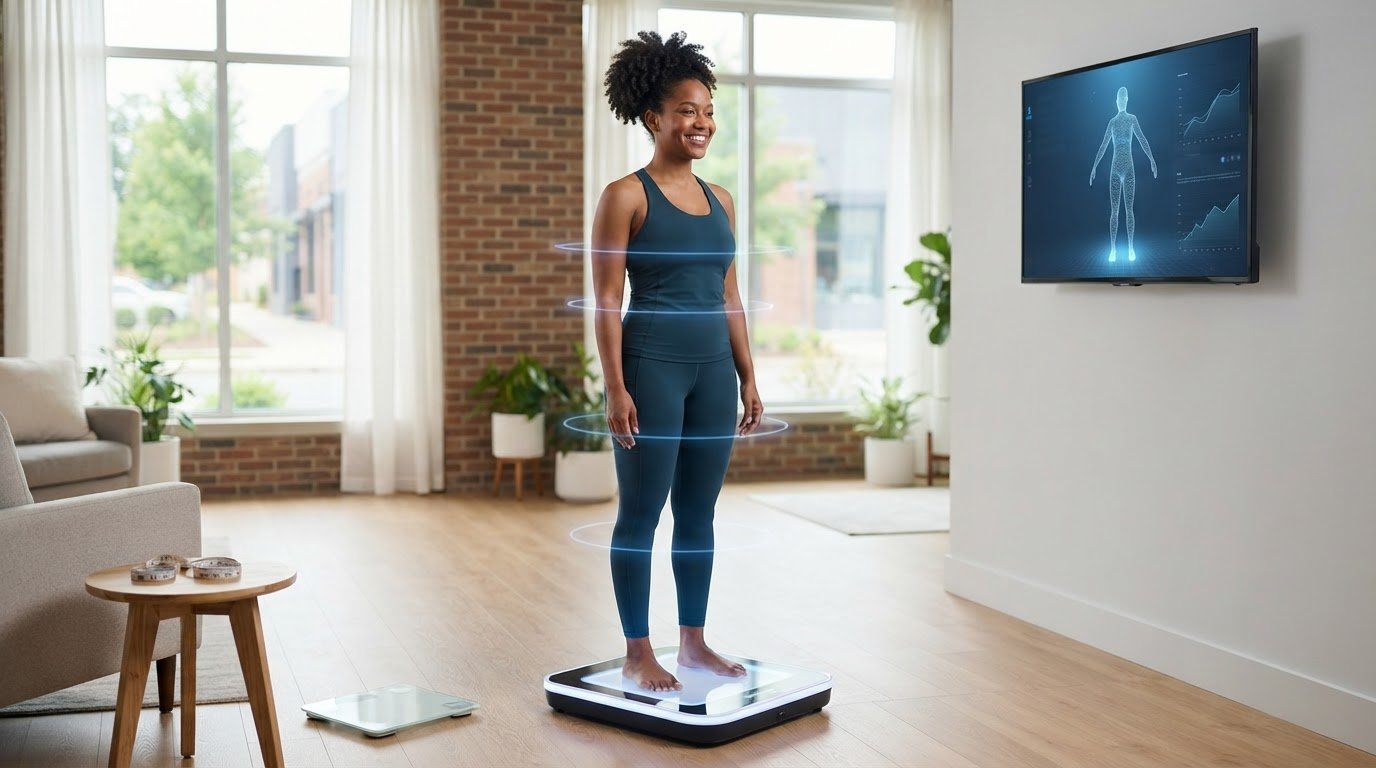
Choosing Between At-Home Body Fat Measurements and Styku
For a practical comparison of how to measure body fat percentage at home versus using Styku, the key difference is how the estimate is produced. Home methods use tools such as tape measures or body-fat scales, while Styku uses infrared scans to map body shape and predictive formulas to estimate body fat and muscle mass. Neither circumference measurements nor a 3D scan directly measures body fat.
It makes sense to want a simple number you can track over time. But body-fat estimates vary by method, and changes in circumference do not translate directly into a specific body-fat percentage. Considering measurements alongside estimates gives you a more useful picture of progress.
This article explains how common at-home methods work, what a Styku scan involves, and how circumference measurements relate to body composition. You’ll also find a side-by-side comparison to help you choose between convenient home tracking and a more detailed scan-based view.
Key Takeaways
- Choose an at-home method for convenient trend tracking, and keep your measuring technique consistent from one check to the next.
- Understand how a Styku scan builds a 3D view from body measurements and estimates body composition.
- Use circumference changes as one piece of progress information; they don’t translate directly into a specific body-fat percentage.
- Compare the methods based on the detail you need and how you plan to track changes over time.
What Is Styku 3D Health Screening?
Styku 3D health screening uses infrared imaging and analytics to create a visual model from body measurements. Body composition describes how total body weight is distributed across fat, bone, and muscle.
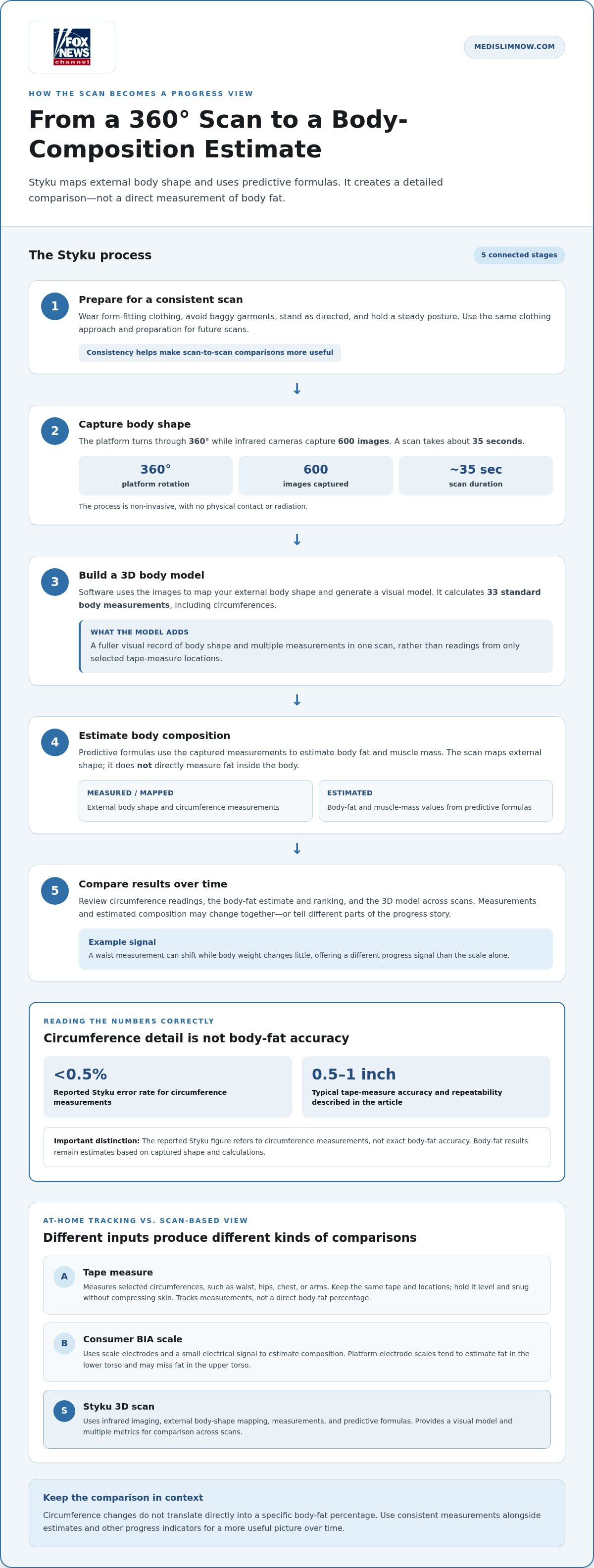
For consistent Styku scan results, wear form-fitting clothing and avoid baggy garments, which can affect circumference readings. Stand on the platform as directed, hold a steady posture, and follow the same clothing approach at future scans.
Styku 3D Scanning and Composition Analysis
Styku captures body shape without physical contact or radiation, then produces a 3D image and body composition breakdown. Its software calculates 33 standard body measurements, including circumferences. Unlike a tape measure, which records selected locations, 3D body scanning provides a fuller visual record of body shape and multiple metrics in one scan.
Body Composition Results and Progress Tracking
A scan can show circumference measurements, a body-fat estimate, a body-fat ranking, and a visual 3D model. Compare these results across scans to see whether measurements and estimated composition are changing together. For example, a waist measurement may shift while body weight changes little, giving you a different progress signal than the scale alone.
How Styku Calculates Body Composition
Infrared cameras map your external body shape, and predictive formulas use those measurements to estimate body fat and muscle mass. The scan does not directly measure fat inside your body. Its estimates depend on the captured shape and calculations, so use the same preparation and scanning process to compare results over time.
| Option | How it works | What you can compare |
|---|---|---|
| At-home tape | Measures selected circumferences | Specific body measurements |
| Consumer BIA scale | Uses scale electrodes | Estimated body-fat metrics |
| Styku | Infrared 3D body scanning | Visual model, measurements, and estimates |
Choose based on whether you need simple measurements at home or a broader visual comparison of body composition and circumferences.
Circumference measurements
Circumference readings describe the size of specific areas, not the amount of fat directly. A tape measure can track changes in your waist, hips, chest, or arms; a waist-to-hip ratio compares waist circumference with hip circumference. These measurements help monitor body shape, but do not independently provide a precise body-fat percentage.
For at-home tracking, use the same tape and measurement locations each time. Keep the tape level and snug without compressing the skin. Record waist and hip readings separately before calculating a waist-to-hip ratio. A typical tape measure may have accuracy and repeatability of 0.5 to 1 inch, so small differences can reflect technique rather than a meaningful change.
The U.S. The U.S. Navy circumference method uses circumference measurements, height, and age to calculate body composition. By contrast, a waist-to-hip ratio compares two circumferences without estimating body composition. Neither makes a circumference value a direct measurement of body fat. Nutrition, body shape, and changes in lean mass can all affect measurements over time.
A 3D body scan captures multiple circumferences, including waist, hip, chest, and arm measurements. Styku reports an error rate of less than 0.5% for circumference measurements. This can make repeated readings more detailed than a home tape routine, where placement, tape tension, and posture may vary. The 3D model also records body shape visually, giving you another way to compare changes.
Use circumference metrics alongside other progress indicators rather than treating one reading as the whole result. For example, a smaller waist with an unchanged hip measurement changes the waist-to-hip ratio, but does not reveal your exact body-fat percentage. Consistent measurements make comparisons more useful, whether you’re monitoring wellness goals or changes related to nutrition.
If you want a structured way to monitor changes, explore body composition tracking as part of your progress plan.
How Does Styku 3D Scanning Work?
Styku scanning captures body shape from multiple angles, then creates a 3D model for visual progress comparisons. The platform rotates through 360 degrees, and a scan takes about 35 seconds.
To estimate body fat at home with skinfold calipers, gently pinch the skin at the locations specified in the instructions. Measure each location consistently and use the supplied calculation method. Accurate technique and consistent placement make repeated readings more useful.
At-home body-fat scales that use bioelectrical impedance estimate body composition by sending a small electrical signal through the body. Consumer scales with platform electrodes tend to estimate fat in the lower torso and may miss fat in the upper torso. Treat the result as an estimate and compare readings under consistent conditions.
During a Styku scan, infrared cameras capture 600 images as the platform turns. Software uses the images to map external body shape and predictive formulas to estimate body fat and muscle mass. The process is non-invasive and involves no physical contact. Its visual model and circumference metrics can help track changes beyond scale weight.
Skinfold calipers, BIA scales, and Styku each rely on different inputs. Calipers assess folds at selected sites, while a BIA scale estimates composition from electrical impedance. Styku captures body measurements and applies predictive equations. A 2020 study reported test-retest reliability approaching 0.99 for body-size measurements in athletes, but that figure describes measurement reliability, not exact body-fat accuracy.
DEXA uses low-dose X-rays to measure mineral, lean, and fat mass across body regions. Its results can differ from Styku estimates because DEXA uses X-ray measurements, while Styku maps external shape and predicts composition. Choose DEXA when regional tissue measurements are the goal; Styku offers quick, non-invasive visual comparisons over time.
An InBody-style BIA assessment is useful for checking estimated composition through electrical impedance. Styku offers a 3D shape record and circumference measurements instead. Choose based on whether you value impedance-based estimates or visual body-shape progress.
Body fat percentage and body measurements
Body-fat percentage estimates how much of your total body weight comes from fat. A waist measurement describes one physical dimension, not the percentage of fat throughout your body. For example, a smaller waist can indicate a change in body shape, but cannot show how much fat or muscle has changed. That distinction matters when tracking fitness or weight-loss progress.
The American Council on Exercise lists body-fat ranges for different categories. Its athlete ranges are 14% to 20% for women and 6% to 13% for men. Its fit ranges are 21% to 24% for women and 14% to 17% for men. These categories show why an estimate needs context, rather than being treated as a standalone score.
How to measure body fat percentage at home vs Styku depends on the information you need. A tape records dimensions at selected sites, while Styku uses infrared measurements of body shape and predictive calculations. Neither a waist reading nor a visual image directly measures fat tissue throughout your body. The methods answer related but different questions.
For useful progress tracking, compare the same measures over time. Pair a body-fat estimate with waist or hip measurements and body weight, then note whether they move in the same direction. For instance, if your weight stays similar while your waist circumference decreases, that adds context beyond weight alone. Consistent methods make results easier to interpret.
How to measure body fat percentage at home vs Styku is also a question of consistency: repeat the same method and record the same measures. The American Council on Exercise ranges describe categories, while individual results also depend on the method used. To discuss how measurements fit into a weight-management plan, plan your body-composition tracking with a medical consultation.
Medi Slim: Semaglutide
Medi Slim offers semaglutide as part of its medical weight-loss care. If you’re considering medication or want guidance interpreting body-composition changes, a Medical Weight Loss Consultation can help you discuss your goals and available options. The conversation may include semaglutide, tirzepatide, and Styku 3D Body Composition Analysis for tracking changes in fat and muscle over time.
Body-fat estimates are one indicator of progress, not a complete picture of health. A consultation can connect your measurements with a personalized weight-management plan and explain how progress tracking may fit into it. Medication decisions are considered during a medical consultation, not based on a single scale reading or scan result.
To discuss your next step, visit medislimnow.com.
Choose a Tracking Plan That Fits Your Next Step
Deciding how to measure body fat percentage at home vs Styku can clarify which tracking approach suits you. Next, consider how you want to use that information: monitor measurements independently or bring your questions and goals to a medical weight loss consultation at Medi Slim, serving Richmond, Henrico, Mechanicsville, Midlothian, and Glen Allen.
Medi Slim offers Semaglutide, Tirzepatide, and Styku 3D Body Composition Analysis. A consultation can help you discuss how these options relate to your weight-management goals and progress tracking. Medication and measurement tools serve different purposes, so consider what kind of support and information would be useful for you.
When you’re ready to explore your options, contact Medi Slim to learn more. A clear next step can help you approach your goals with informed, consistent tracking.
Frequently Asked Questions
What’s a Styku Scan Involve?
You stand on the scanner’s platform while it captures your body shape from multiple angles. For a more consistent comparison, wear form-fitting clothing and follow the same preparation routine at future scans. In Richmond, you can use the resulting measurements as a reference point for later progress discussions, rather than treating one scan as a complete health assessment.
How long does a body scan take?
The scan itself takes about 35 seconds, while processing the 3D image takes less than 2 minutes. That describes the scanning and image-processing steps, not the total time for an appointment. Allow time for preparation and reviewing the results, especially if you’re comparing the scan with earlier measurements or discussing your tracking goals.
What Does Styku Measure?
Styku reports 33 standard body measurements and provides a 3D body image, circumference readings, and an estimated body-composition breakdown. The measurements describe external body size and shape; they aren’t direct readings of fat or muscle tissue. Review the full set of results together, since a change in one circumference may not reflect changes across the whole body.
What is body composition?
Body composition describes the proportions of your total body weight that come from fat, bone, and muscle. It offers a different view from scale weight alone. For example, if your weight stays similar while your body-fat estimate and measurements change, composition information may help explain why the scale doesn’t show the whole picture. Consider the measurement method when comparing results.
How do I calculate body fat percentage using waist, neck, and hip measurements?
Waist, neck, and hip measurements alone do not provide a body-fat percentage without a calculation method. The U.S. Navy circumference method uses circumference measurements, height, and age to estimate body composition. Follow its instructions for the required measurements and units, then enter each value into the equation or calculator. Don’t treat a waist-to-hip ratio as a body-fat percentage.
How accurate is Styku 3D body scanning for body fat percentage?
Styku provides an estimate, and its body-fat percentage can differ from DEXA results. A 2020 study reported test-retest reliability approaching 0.99 for body-size measurements in athletes. That figure describes repeatability of body-size measurements, not 99% accuracy for body-fat estimates. For progress tracking in Richmond or nearby communities, compare results from the same method over time.