

Exercise for Weight Loss Patients: How Much Activity Do You Need
Exercise matters for weight loss, but it isn’t the only driver. For U.S. adults, the U.S. Department of Health and Human Services recommends at least 150 minutes of moderate-intensity aerobic activity each week, or at least 75 minutes of vigorous-intensity activity, plus muscle-strengthening activity at least 2 days a week. These exercise recommendations for weight loss patients offer a practical starting point, while reducing calorie intake remains central to losing weight.
It’s reasonable to wonder whether diet or exercise matters more. Exercise supports overall health and can help with weight maintenance, but it works best as part of a broader, sustainable approach, not as the only weight-loss strategy.
Here, you’ll learn how to build activity gradually, combine aerobic movement with strength training, and understand how exercise can contribute to weight loss and long-term maintenance. The focus is on realistic goals and steady progress, not pushing beyond what your body can manage.
Key Takeaways
- Use a mix of aerobic movement and strength training to support fitness while working toward weight loss.
- Build exercise intensity gradually, choosing activities that fit your current ability and feel sustainable.
- Make consistency part of your long-term plan, since regular activity can help support weight maintenance.
- Pair movement with nutrition and appropriate medical support rather than relying on exercise alone.
How much physical activity do I need?
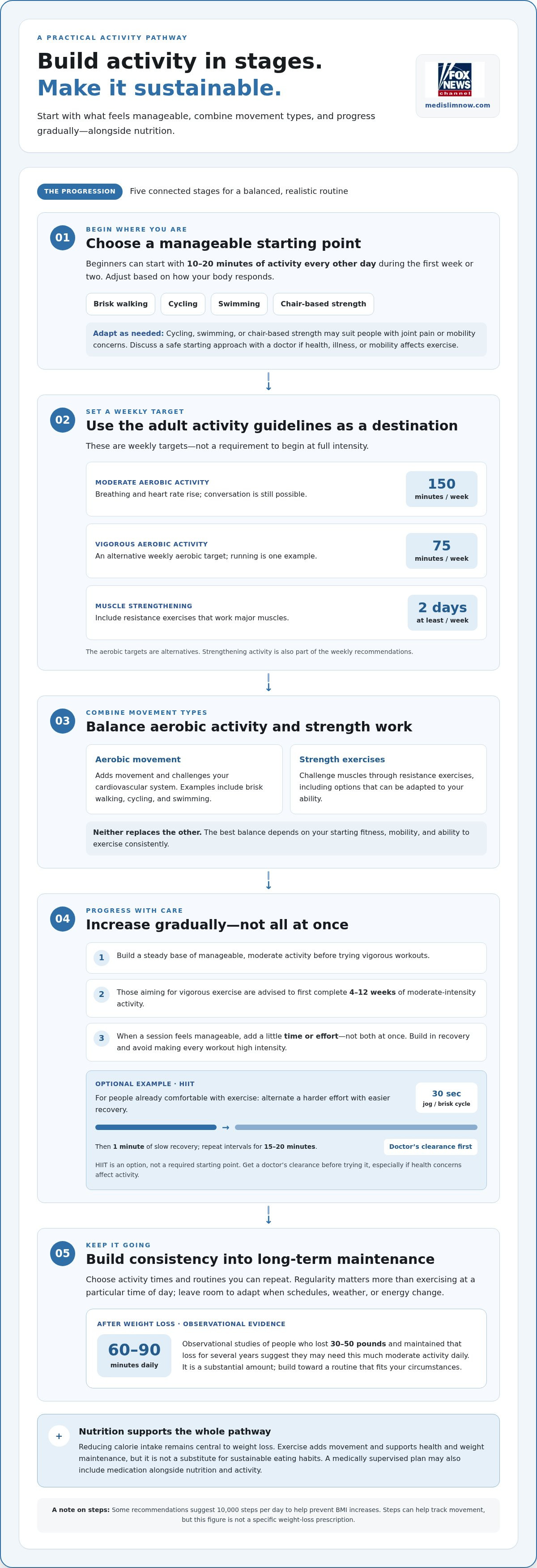
For weight loss, combine aerobic activity, muscle-strengthening exercises, and dietary changes. Weekly guidelines offer a starting target, not a reason to begin at full intensity.
Weekly Aerobic Activity Targets
Weekly aerobic targets describe how much movement raises your breathing and heart rate. U.S. adults need at least 150 minutes of moderate-intensity aerobic activity weekly, according to the U.S. Department of Health and Human Services. Adults can alternatively get at least 75 minutes of vigorous-intensity aerobic activity weekly, according to the U.S. Department of Health and Human Services. If you prefer vigorous activity, such as running, aim for at least 75 minutes a week, according to the U.S. Department of Health and Human Services. Brisk walking or cycling can help you build aerobic activity into your week. Some recommendations suggest 10,000 steps per day to help prevent BMI increases. Steps can help track movement, but that figure is not a specific weight-loss prescription.
Moderate-Intensity Activity and Strengthening
Moderate activity raises your heart rate while still allowing conversation, such as during a brisk walk. U.S. adults need muscle-strengthening activity at least 2 days a week, according to the U.S. Department of Health and Human Services. This can include resistance exercises that work major muscles. Is cardio or strength training better for weight loss? Neither replaces the other: aerobic movement adds activity, while strengthening exercises challenge muscles. Combining both helps you build a balanced weekly routine.
Exercise Alongside Dietary Changes
Combining activity with dietary changes approaches weight loss from more than one direction. Reducing calorie intake supports a calorie deficit, while aerobic exercise adds movement and strength training works your muscles. Exercise alone isn’t the only factor, so don’t treat a long workout as a substitute for sustainable eating habits. For example, pair a brisk walk with a meal plan that supports your health goals. Medication may also be part of a medically supervised weight-management plan, alongside nutrition and activity.
Choosing Sustainable Activities for Weight Loss
Sustainable activity means choosing exercise you can do consistently. Try brisk walking, cycling, swimming, or strength exercises that fit your routine and preferences. How can exercise recommendations be adapted for people with obesity or chronic conditions? Joint pain or mobility concerns may make lower-impact options, such as cycling or swimming, more suitable. Chair-based strength exercises are another option. If illness, mobility, or weight concerns affect your ability to exercise, discuss a safe starting approach with a doctor. Choose an activity you enjoy, then build a routine around it.
Increasing exercise intensity over time
Start with activity you can manage, then increase intensity as fitness improves. A gradual progression helps you build a routine without making every session feel like a test. Beginners can start with 10 to 20 minutes of physical activity every other day during the first week or two, then adjust based on how their bodies respond.
What types of exercise are most effective for weight loss? A mix of aerobic activity, such as walking or cycling, and strength exercises can be useful. Aerobic movement challenges your cardiovascular system, while resistance exercises engage your muscles. The best balance depends on your starting fitness, mobility, and ability to exercise consistently.
How should beginners safely start an exercise plan for weight loss? Begin with manageable, moderate activity and increase duration or effort gradually. Build a steady base before trying vigorous workouts. People who want to progress to vigorous exercise are advised to first complete 4 to 12 weeks of moderate-intensity activity.
Use how you feel to guide each increase. If a session feels manageable, add a little time or effort, but not both at once. Build recovery into your plan, and avoid making every workout high intensity. You can progress with strength work alongside aerobic activity while focusing on good movement and balance.
High-intensity interval training (HIIT) alternates brief, harder efforts with easier recovery periods. One example is 30 seconds of jogging or brisk cycling, followed by 1 minute of slow recovery. Repeat the intervals for 15 to 20 minutes. This structure is an option for people already comfortable with exercise, not a required starting point. Get a doctor’s clearance before trying HIIT, especially if you have health concerns that affect physical activity.
Eating habits and exercise work together in a weight-management plan; increasing intensity alone doesn’t replace nutrition. If you need help aligning activity with a broader medical plan, a medical weight loss consultation can address your goals and starting point.
Motivation and long-term weight maintenance
Weight maintenance depends on habits you can sustain after initial weight loss. Choose an activity time that fits your schedule: regularity matters more than exercising in the morning. A walk after work, for example, may be easier to repeat than an early session that disrupts your routine. A manageable program also gives you room to adapt when work, weather, or energy levels change.
Physical activity also matters after weight loss. Observational studies of people who lost 30 to 50 pounds and maintained that loss for several years suggest they may need 60 to 90 minutes of moderate activity daily. This is a substantial amount, so build toward a routine that fits your circumstances. Walking, swimming, and cycling offer different ways to stay active.
Think of prevention as a continuing process, not a finish line. Evidence from the CARDIA study reports adults gain approximately 0.5 to 1 kg annually. That finding underscores why keeping regular movement in a weight-management program can matter beyond the initial loss. Track a practical measure, such as days active each week, and review it when routines shift.
What are the risks of exercising for weight loss, and how can injuries be prevented? Increasing intensity too quickly can make activity harder to sustain, while joint problems may call for lower-impact options. Build activity gradually, use comfortable movements, and try swimming or cycling if weight-bearing exercise aggravates your joints. If illness or mobility concerns affect your plan, discuss exercise with a doctor.
The routine that helps you lose weight may need adjustment to support maintenance. Notice which activities you can repeat, then set aside time for them each week. A walking route near home or swimming at a convenient time may be easier to maintain than an ambitious plan that conflicts with daily responsibilities. If progress changes, adjust the amount or timing of activity rather than abandoning movement altogether.
Exercise and clinically significant weight loss
Exercise can contribute to clinically significant weight loss, but the evidence distinguishes activity alone from a combined approach. Adults aiming to lose weight can consider how movement fits alongside dietary changes. The science suggests that exercise supports progress, while combining it with diet can produce additional weight loss.
In analyzed studies, exercise-only interventions lasting 4 months or less produced mean weekly weight loss of 0.4 lb. Total weight loss was about 5 lb. These results describe the outcomes in those studies, not a target every adult should expect. They also show why exercise alone is not the only part of a weight-management plan.
A meta-analysis found that adding physical activity to diet produced approximately 1.95 kg more weight loss than diet alone at 12 months. The activity involved at least 45 minutes three times a week. Dietary approaches included a 600 kcal deficit or a low-fat diet. This comparison offers a clearer picture of exercise’s contribution within a structured plan.
The American College of Sports Medicine recommends exercise programs exceeding 225 minutes per week to induce clinically significant weight loss. This is a weekly program target, not a requirement to begin at full volume. Build activity progressively, and consider how aerobic movement and resistance training fit together. A consistent schedule gives the total weekly amount more importance than one demanding session.
For adults managing obesity or a weight-related disease, progress involves more than the number on the scale. Resistance exercise trains muscles, while body weight alone can’t distinguish changes in fat from changes in muscle. Track your activity routine alongside weight trends. That context can help you assess whether your plan supports weight loss and your ongoing health goals.
The takeaway from this science is practical: pair sustained activity with dietary changes, and assess progress over time. If you want help shaping a medically supervised plan around weight loss and exercise, schedule a weight loss consultation.
Medi Slim: Semaglutide
Medi Slim offers physician-supervised medical weight-loss treatment with Semaglutide and Tirzepatide. If nutrition and exercise changes need additional support, a Medical Weight Loss Consultation can help you discuss a personalized plan. Medi Slim serves people in Richmond, Henrico, Mechanicsville, Midlothian, and Glen Allen.
Progress tracking can add useful context beyond scale changes. Styku 3D Body Composition Analysis helps track fat loss and muscle gain during your weight-loss journey. This information can help you discuss how your plan is progressing alongside your activity and nutrition habits.
Exercise remains part of the broader picture, including when medical treatment is involved. Contact Medi Slim to discuss a Medical Weight Loss Consultation and your weight-management goals.
Make Your Next Step Sustainable
Progress can start with a practical choice: decide which movement fits your routine, then make time for it. Exercise recommendations for weight loss patients are most useful when they become habits you can adjust as your needs and schedule change. Focus on consistency and how you feel, rather than expecting every session to look the same. Leave room for ordinary disruptions and make a simple plan to return to your routine afterward.
If weight management feels difficult to navigate alone, professional guidance can help connect activity goals with a broader plan. Consider what support would clarify your next step, whether you want to discuss treatment options or review how you track progress. Note what has felt manageable so far and share those observations during a consultation.
Contact Medi Slim about your options and take the next step at a pace that feels manageable. You don’t need a perfect routine to move forward. A thoughtful plan can help you make choices that support your goals over time.
Frequently Asked Questions
Diet or exercise: Does one matter more?
Diet often has a more direct effect on weight loss because reducing calorie intake creates a calorie deficit. Exercise complements that change and supports fitness and weight maintenance. For example, a meal plan can address calorie intake while a walk adds regular movement. Exercise recommendations for weight loss patients make the most sense as part of a combined approach, not as a substitute for dietary changes.
How many calories are used in typical activities?
Calorie use varies, but estimates for a 160-pound person illustrate how activities compare. One hour of walking at 3.5 mph uses about 314 calories; leisure bicycling under 10 mph uses about 292. Hiking uses about 438 calories, swimming laps at light or moderate effort about 423, and running at 5 mph about 606. These are activity estimates, not personal guarantees.
How much am I burning?
Energy use depends on body weight, activity, pace, and time spent moving, so general estimates can’t provide an exact personal total. Use them as rough comparisons and focus on a repeatable routine rather than trying to offset each meal.
What do moderate- and vigorous-intensity mean?
Moderate-intensity activity raises your breathing while still allowing you to speak, as with brisk walking or comfortable-paced cycling. Vigorous activity makes conversation harder, as during running. How hard an activity feels depends partly on your current fitness, so the same pace may feel different from person to person. Judge intensity by your effort, not speed alone.
How much exercise per week is recommended for weight loss in adults?
For overall health, adults need at least 150 minutes of moderate-intensity aerobic activity weekly, according to the U.S. Alternatively, they can get at least 75 minutes of vigorous aerobic activity weekly. Adults also need muscle-strengthening activity at least 2 days a week, according to the same department, which aligns with guidance provided by experts at Medi Slim.
How should exercise intensity and duration progress over time?
If you’re sedentary, begin with 10 to 20 minutes of physical activity every other day during the first week or two. Increase gradually as the activity feels manageable, progressing from light movement toward moderate effort. If you want to try vigorous exercise, build a base with moderate activity first. People choosing vigorous exercise are advised to build gradually after an initial 4 to 12 weeks of moderate activity.