

How to Talk to Your Doctor About Weight Loss
Weight loss isn't a test of your character; it's a complex medical process governed by biology. If you've spent years struggling with the stigma of willpower, you know how exhausting it is to feel like your body is working against you. It's common to feel anxious about being dismissed or told to simply eat less. You deserve a conversation that treats your health with clinical seriousness. Learning how to talk to your doctor about weight loss is the first step in moving past frustration and toward a science-backed solution.
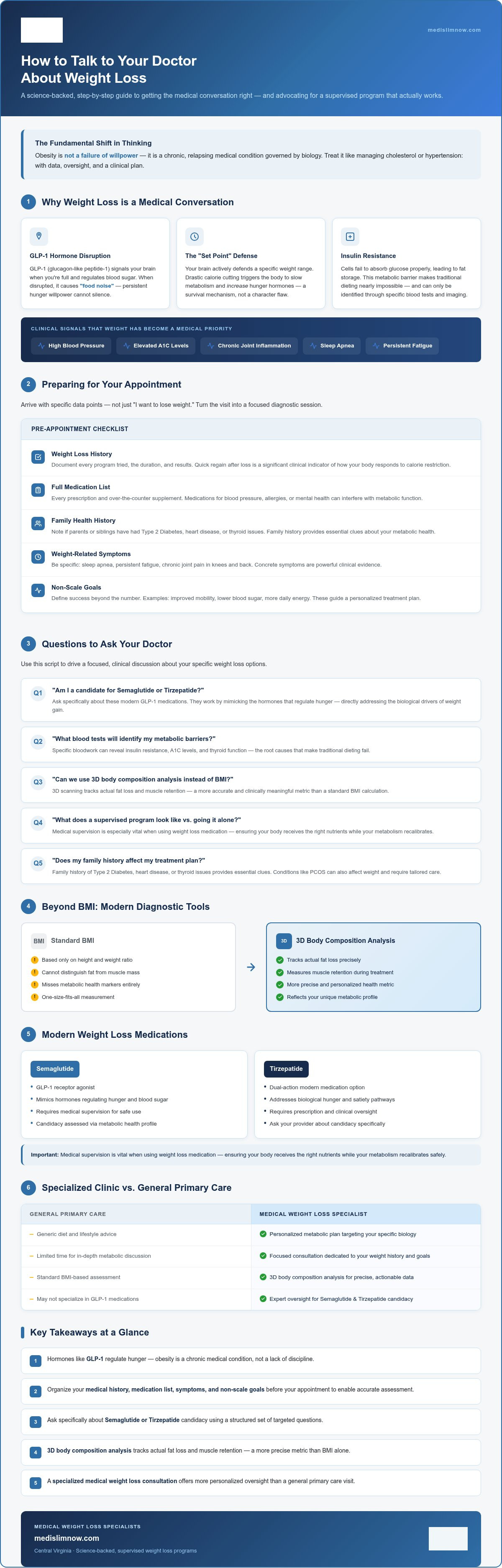
You're right to want more than generic advice. Effective medical weight loss requires understanding your unique metabolic profile rather than just looking at a standard scale. This guide provides a clear plan of action, including the specific questions to ask and how to prepare for a productive consultation. We'll explore how to approach discussions about modern medications like Semaglutide and Tirzepatide. You'll also see why tools like 3D body composition analysis offer a more accurate picture of your health than BMI alone. By the end of this article, you'll have the confidence to advocate for a supervised program that prioritizes your safety and success.
Key Takeaways
- Understand how hormones like GLP-1 regulate hunger and why obesity is recognized as a chronic medical condition rather than a lack of discipline.
- Learn how to organize your medical history and current medication list to provide your provider with the data they need for an accurate assessment.
- Discover a step-by-step script on how to talk to your doctor about weight loss, including specific questions about candidacy for Semaglutide or Tirzepatide.
- Explore why 3D body composition analysis offers a more precise health metric than BMI by tracking actual fat loss and muscle retention.
- Identify the clinical advantages of seeking a specialized medical weight loss consultation over a general primary care visit for more personalized oversight.
Why Weight Loss is a Medical Conversation, Not a Lifestyle Struggle
Obesity is often misunderstood as a failure of discipline. In reality, it is a chronic, relapsing medical condition. This shift in perspective is essential when learning how to talk to your doctor about weight loss. When your body's internal systems aren't functioning correctly, "trying harder" isn't a sustainable medical strategy. Modern obesity medicine focuses on the underlying biological drivers. It treats weight as a data point in your overall health profile, much like managing cholesterol or hypertension.
Hormones like GLP-1 (glucagon-like peptide-1) play a critical role in hunger and satiety. They act as chemical messengers that tell your brain when you've had enough to eat and help regulate blood sugar levels. When these pathways are disrupted, you may experience "food noise" or a persistent feeling of hunger that willpower cannot silence. This biological struggle often manifests in clinical markers. High blood pressure, elevated A1C levels, and chronic joint inflammation are indicators that weight has become a medical priority rather than a cosmetic concern.
Breaking the Willpower Myth
Your brain operates on a "set point" theory, where it actively defends a specific weight range. When you cut calories drastically through self-guided dieting, your body often responds by slowing its metabolism and increasing hunger hormones to protect that set point. It's a survival mechanism, not a lack of grit. Professional oversight is safer and more effective because it utilizes tools to bypass these biological traps. Medical supervision is especially vital when using weight loss medication to ensure your body receives the right nutrients while your metabolism recalibrates.
When to Transition from 'Dieting' to Medical Treatment
You might need to transition to clinical treatment if your current efforts fail to address the root cause of your weight gain. Many patients struggle with insulin resistance, a condition where cells don't respond well to insulin and can't easily take up glucose from the blood. This leads to fat storage and makes traditional dieting nearly impossible. A physician can identify these metabolic barriers through specific blood tests and diagnostic imaging. Knowing these clinical details changes how to talk to your doctor about weight loss. It allows you to advocate for a plan that targets your specific biology rather than a one-size-fits-all diet.
Preparing for Your Appointment: The Data Your Doctor Needs
A successful medical consultation depends on the quality of information you provide. Instead of simply stating that you want to lose weight, you should arrive prepared with specific data points that help your provider understand your metabolic history. This preparation is a vital part of how to talk to your doctor about weight loss effectively. It transforms the appointment from a general discussion into a focused, diagnostic session. When you provide clear evidence of your past struggles and current symptoms, it's easier for a clinician to identify the right treatment path.
Start by creating a comprehensive history of your previous weight loss attempts. Document which programs you tried, how long you followed them, and what the results were. If you lost weight only to regain it quickly, that is a significant clinical indicator of how your body responds to calorie restriction. You should also prepare the following information:
- Medication List: Note every prescription and over-the-counter supplement you take. Certain medications for blood pressure, allergies, or mental health can interfere with metabolic function.
- Weight-Related Symptoms: Be specific about how your weight affects your daily life. Mention issues like sleep apnea, persistent fatigue, or chronic joint pain in your knees and back.
- Non-Scale Goals: Define success beyond the number on the scale. Focus on objectives like improving your mobility, lowering your blood sugar, or having enough energy to stay active throughout the day.
Gathering Your Health History
Your family history provides essential clues about your metabolic health. Note if your parents or siblings have struggled with Type 2 Diabetes, heart disease, or thyroid issues. If you've been diagnosed with Polycystic Ovary Syndrome (PCOS) or experience patterns of emotional eating, share these details openly. It's also important to be honest about your stress levels and sleep quality. Chronic stress and poor sleep drive up cortisol levels, which can make weight loss difficult even if your diet is perfect. Providing this context helps your provider see the full picture of your health.
Setting Realistic Expectations
Understanding the difference between "vanity weight" and health-focused weight reduction is key to a productive journey. Clinical success often centers on improving your metabolic markers rather than reaching a specific aesthetic goal. Medical weight loss is a structured journey that requires patience and professional oversight. It's not a quick fix or a temporary diet. When you book a medical weight loss consultation, you're beginning a supervised process designed for long-term sustainability. Knowing how to talk to your doctor about weight loss with these realistic expectations ensures you stay focused on health outcomes that truly matter.
The Script: Specific Questions to Ask About Medical Weight Loss
Knowing how to talk to your doctor about weight loss involves more than just bringing up the topic; it requires asking the right questions to get the clinical support you need. Many patients feel nervous that their concerns will be dismissed with generic advice to "eat less and move more." Having a specific script allows you to lead the conversation and ensures your provider addresses the biological aspects of your health. Use these targeted questions to move the discussion toward a comprehensive, medical approach.
- "I’ve been struggling with my weight despite consistent lifestyle changes; can we look at biological factors?" This question shifts the focus from your behavior to your physiology.
- "Am I a candidate for prescription treatments like semaglutide for weight loss?" Direct inquiries about modern treatments show you're looking for clinical interventions.
- "How will we monitor my progress beyond just using a standard scale?" This encourages your doctor to look at body composition and metabolic markers.
- "What are the potential side effects of modern weight loss injections?" Understanding the safety profile is a critical part of any supervised program.
- "How does my current health profile, such as my A1C or blood pressure, affect which medication is right for me?" This ensures the treatment is tailored to your specific needs.
Starting the Conversation
If your doctor focuses solely on lifestyle habits, you must pivot the conversation. Use "I" statements to describe your lived experience. For example, say, "I feel my hunger signals are unmanageable despite my best efforts." This phrasing helps the clinician understand that your struggle is internal and likely hormonal. You should also advocate for a comprehensive metabolic panel. This blood work provides the data necessary to identify insulin resistance or other underlying barriers that make weight loss difficult. It’s a practical way to apply how to talk to your doctor about weight loss by demanding data-driven care.
Deep-Diving into Medication Options
Once you’ve established that your weight is a medical priority, ask about the differences between available treatments. You might ask about the distinction between Semaglutide and tirzepatide for weight loss. Each medication works on different hormonal pathways, and one may be more suitable for your specific metabolic profile. Inquire about long-term maintenance plans as well. Reaching your goal is only the first phase; you need a strategy for staying there. Discussing the role of clinical oversight ensures you have a partner to manage any side effects and adjust your dosage as your body transforms.
Beyond BMI: Understanding Modern Diagnostic and Treatment Tools
The body mass index (BMI) has been a standard medical metric for decades, but it's an incomplete tool for assessing individual health. Because it only measures height against weight, it fails to distinguish between lean muscle mass and adipose tissue. A person with high muscle density may be classified as "obese" by BMI standards, while a person with a "normal" BMI could still have dangerous levels of internal fat. Understanding these limitations is a crucial part of how to talk to your doctor about weight loss. You should ask for diagnostics that provide a more granular view of your body composition rather than relying on a crude ratio developed in the 1830s.
One of the most significant advancements in obesity medicine is the ability to track visceral fat. This is the "hidden" fat stored deep within the abdominal cavity, surrounding vital organs like the liver and intestines. Unlike subcutaneous fat, visceral fat is metabolically active and directly linked to insulin resistance and heart disease. Monitoring this specific data point allows for a much more accurate health assessment than a standard scale ever could. When you have access to this data, your medical team can make more informed decisions about your treatment plan.
The Power of 3D Body Scanning
Tracking semaglutide results with styku 3D Body Composition Analysis has become a clinical gold standard for monitoring transformation. A 3D scan creates a precise digital avatar of your body, capturing millions of data points in seconds. This visual data is incredibly motivating because it validates your progress even when the scale stalls. You might see a reduction in waist circumference or an improvement in posture that a simple weight measurement would miss. Seeing these physical changes in a 3D model provides the objective proof needed to stay committed to your program, especially during weeks where your weight remains stable but your body composition is shifting.
Prescription Weight Loss Technology
Modern medical weight loss has moved beyond simple appetite suppressants. Current treatments utilize advanced hormonal mimicry to regulate hunger at the brain level. These once-weekly injections are often more effective and easier to manage than daily pills, which can have fluctuating absorption rates. Because these medications are powerful, physician-led dosing adjustments are essential for safety. A supervised approach ensures your dosage is titrated correctly to minimize side effects while maximizing fat loss. If you're ready for a more precise approach to health, schedule a 3D body scan and consultation to see your data in detail. This level of precision is exactly what you should advocate for when learning how to talk to your doctor about weight loss.
Navigating Your Weight Loss Journey in Central Virginia
Most patients begin their health journey with a primary care physician. While general practitioners are essential for overall wellness, they often manage a broad range of conditions from acute infections to chronic injury. This can leave little time for the deep, metabolic analysis required for sustainable weight reduction. Residents in Richmond, Henrico, and Midlothian often find that a specialized medical weight loss clinic provides a more focused environment. In these settings, your weight isn't a secondary topic; it's the primary clinical priority. This distinction is vital when considering how to talk to your doctor about weight loss. Speaking with a specialist ensures that you're communicating with someone who views obesity through the lens of modern biology rather than lifestyle habits.
The logistical ease of finding specialized care in Central Virginia makes it simpler to prioritize your metabolic health. Specialized clinics offer a streamlined experience that avoids the crowded waiting rooms and distractions of a general practice. You can book a consultation that focuses exclusively on your weight management goals. This allows for a much more thorough diagnostic process, including blood work and body composition measurements, without the time constraints of a standard primary care visit.
Choosing the Right Specialist in Richmond
When selecting a specialist, look for a team that offers comprehensive support rather than just a prescription. A dedicated clinic provides access to advanced tools like 3D scanning, which offers a level of detail that a general practitioner's office might not have. The benefit of a focused team is their deep understanding of the nuances of GLP-1 medications. They know how to adjust dosages and manage side effects with precision. A non-judgmental, clinical atmosphere is essential for better patient outcomes. It reduces the anxiety often associated with weight discussions and allows you to focus on the science of your transformation.
Taking the First Step at Medi Slim
Your initial medical weight loss consultation at Medi Slim is designed to be a clear, informative experience. We don't rely on generic advice; we build a personalized plan that integrates Semaglutide or Tirzepatide with Styku 3D Body Composition Analysis. This ensures your progress is tracked with scientific accuracy. We look at your body's data to ensure you're losing fat while maintaining lean muscle. It's time to move from "thinking about it" to participating in a structured, physician-supervised program. Now that you understand how to talk to your doctor about weight loss, you can take the first step with confidence. A supervised medical program provides the safety, oversight, and results that self-guided dieting simply cannot match.
Start Your Clinical Transformation Today
Your weight is a medical data point; it is not a moral failing. By shifting the focus to your biology and metabolic health, you can move away from the frustration of self-guided dieting. You now have the tools and the specific script needed for how to talk to your doctor about weight loss with confidence. This approach ensures your treatment plan is based on clinical evidence rather than outdated metrics like BMI.
At Medi Slim, we provide physician-supervised Semaglutide and Tirzepatide programs designed for long-term success. Our use of Styku 3D Body Scans ensures your progress is tracked with absolute precision. With convenient locations in Henrico, Midlothian, and Glen Allen, professional oversight is easily accessible. You don't have to manage this process alone. Book Your Medical Weight Loss Consultation in Richmond to begin a structured, science-backed journey. We are here to support your health goals with transparency and professional care.
Frequently Asked Questions
Is it embarrassing to talk to my doctor about weight loss?
It is not embarrassing to discuss your weight with a medical professional because obesity is a chronic condition, not a personal failure. Many patients in Richmond feel anxious about this conversation, but doctors are trained to view weight as a health marker like blood pressure. Approaching the topic clinically helps reduce the stigma. A specialized environment often provides a more supportive atmosphere for those learning how to talk to your doctor about weight loss without judgment.
What if my doctor tells me I just need to exercise more?
If your provider suggests only exercise, you should advocate for a deeper look at your metabolic health. You can request a full blood panel to check for insulin resistance or hormonal imbalances. Explain that lifestyle changes alone haven't yielded sustainable results for you. This shift in the conversation helps your doctor understand that you are seeking a medical intervention rather than just basic fitness advice for your journey in Henrico or Midlothian.
Are weight loss medications like Semaglutide covered by insurance?
Insurance coverage for medications like Semaglutide and Tirzepatide depends entirely on your specific policy and health history. Some plans cover these treatments for weight management, while others require specific comorbidities like Type 2 Diabetes. During a medical weight loss consultation, your provider can help you understand the clinical requirements for these prescriptions. You should contact your insurance carrier directly to verify the details of your pharmacy benefits before starting a program in Central Virginia.
How do I know if I qualify for medical weight loss treatments?
Eligibility for medical weight loss treatments is usually determined by your body mass index (BMI) and the presence of weight-related health conditions. Generally, a BMI of 30 or higher, or a BMI of 27 with conditions like hypertension or high cholesterol, may qualify you. However, a physician-supervised assessment is the only way to confirm candidacy. Our specialists in Glen Allen use comprehensive data to determine which medical path is safest and most effective for your unique biology.
What is the difference between a GP and a medical weight loss specialist?
A general practitioner manages a wide array of health issues, whereas a medical weight loss specialist focuses exclusively on the biology of obesity. Specialists often have access to advanced diagnostic tools that a GP office may not provide. For example, at Medi Slim, we use Styku 3D Body Composition Analysis to track fat loss and muscle retention. This focused expertise ensures your treatment plan is optimized for metabolic health rather than just general wellness.
What should I bring to my first weight loss consultation?
You should bring a complete list of your current medications and a summary of your past weight loss efforts to your first visit. Include any supplements you take and specific health goals you want to achieve beyond the scale. Having your family medical history ready is also helpful for identifying metabolic trends. Being prepared allows your specialist in Mechanicsville to spend more time discussing how to talk to your doctor about weight loss options like Semaglutide or Tirzepatide.
Can I talk to my doctor about weight loss if I'm not technically 'obese'?
Yes, you can discuss weight management even if you don't meet the clinical definition of obesity. If your weight is causing joint pain, fatigue, or affecting your metabolic markers like A1C, it is a valid medical concern. Many residents in the Richmond area seek professional help to prevent future health complications. A specialist can help you determine if your current weight is impacting your long-term wellness and if a supervised program is appropriate for your specific needs.
How long does a typical medical weight loss program last?
Medical weight loss is a long-term health journey rather than a temporary diet. The duration of a program varies based on your individual goals and metabolic response to treatment. Most patients stay in a supervised program for several months to reach their target weight safely. After achieving your goals, a maintenance phase is often recommended to ensure lasting success. Your medical team in Henrico will work with you to develop a sustainable timeline that prioritizes your safety.