

Improving Metabolic Health in Henrico: A Practical, Medically Guided Plan
What if progress in metabolic health were measured by more than the number on the scale? If you’re unsure which habits or health measures deserve your attention, you’re not alone. A practical plan for improving metabolic health Henrico residents can follow starts with understanding your personal health picture, then choosing realistic steps you can sustain.
Weight can be one part of that picture, but it doesn’t tell the whole story. A clinician may consider blood sugar and other relevant health measures alongside your goals and daily habits. Looking at these factors together can make it easier to understand what progress might mean for you, especially if it feels difficult to track or maintain.
In this guide, you’ll find practical ways to support metabolic health, examples of progress beyond weight, and situations where medical guidance may help. You’ll also learn how a medical weight-loss consultation can help you discuss an individualized plan, including prescription options when clinically appropriate, and how Styku 3D Body Composition Analysis can help track changes in body composition. The goal is to identify a clear, manageable next step, not to promise a one-size-fits-all result.
Key Takeaways
- Metabolic health involves more than one weight or lab result. Your personal context helps make sense of the measures.
- For improving metabolic health Henrico residents can start by reviewing daily routines and choosing manageable changes to track over time.
- Nutrition, movement, sleep, stress, medications, and health history can all inform an individualized plan.
- A medical weight-loss consultation gives you an opportunity to discuss your goals, health history, and possible next steps with clinical guidance.
- Prescription Semaglutide or Tirzepatide treatment is an individualized option, not a requirement for everyone.
What does improving metabolic health in Henrico actually mean?
Metabolic health describes how well your body manages energy and processes nutrients, considered alongside your health history and other relevant measures. It isn’t a single number, clothing size, or judgment about how well you’re caring for yourself. A measurement can provide useful information, but its meaning depends on the person and the broader health picture.
That context matters in Henrico, where people have different routines, health goals, family histories, and access to care. You may want to understand a blood test result, or you may be looking for a sustainable approach to weight management. Neither goal can be assessed by applying one universal target to everyone. Improving metabolic health Henrico residents can work toward starts with identifying which measures matter to them and interpreting those measures in the appropriate clinical context.
Which parts of health are commonly considered metabolic?
Blood glucose is the amount of sugar circulating in your blood. Insulin is a hormone that helps move glucose from the bloodstream into cells, where it can be used for energy. These processes are related, but a single glucose result or symptom doesn’t provide a complete picture or establish a diagnosis.
Clinicians may consider relevant measurements alongside your health history, current treatments, and other individual factors. Metabolic Syndrome describes a cluster of risk factors, while metabolic health is a broader way to discuss how different aspects of a person’s health fit together. If a result concerns you, a clinician can help explain what it means in your circumstances.
Is metabolic health only about body weight?
No. Weight is one measure, not a complete account of health or progress. It doesn’t show how much of your body weight is fat or muscle, and a change on the scale may not reflect every change you want to track. Consider weight alongside relevant health information and personal goals.
Body composition offers another perspective by looking at the proportions of fat and muscle. Styku 3D Body Composition Analysis can help you observe body-composition changes over time. It adds information for progress tracking, but doesn’t replace a clinical assessment. Weight loss isn’t a necessary goal for every person seeking to support their health. The right focus depends on individual circumstances, not comparisons with someone else’s results.
In practical terms, metabolic health is best understood through a combination of measures and personal context, not a pass-or-fail score. Start by naming the question you want answered: what does a particular measurement mean, or what type of progress matters to you? Then discuss relevant history and results with a clinician. This keeps the conversation specific and helps distinguish a useful next step from a one-size-fits-all target.
How do daily habits and individual factors influence metabolic health?
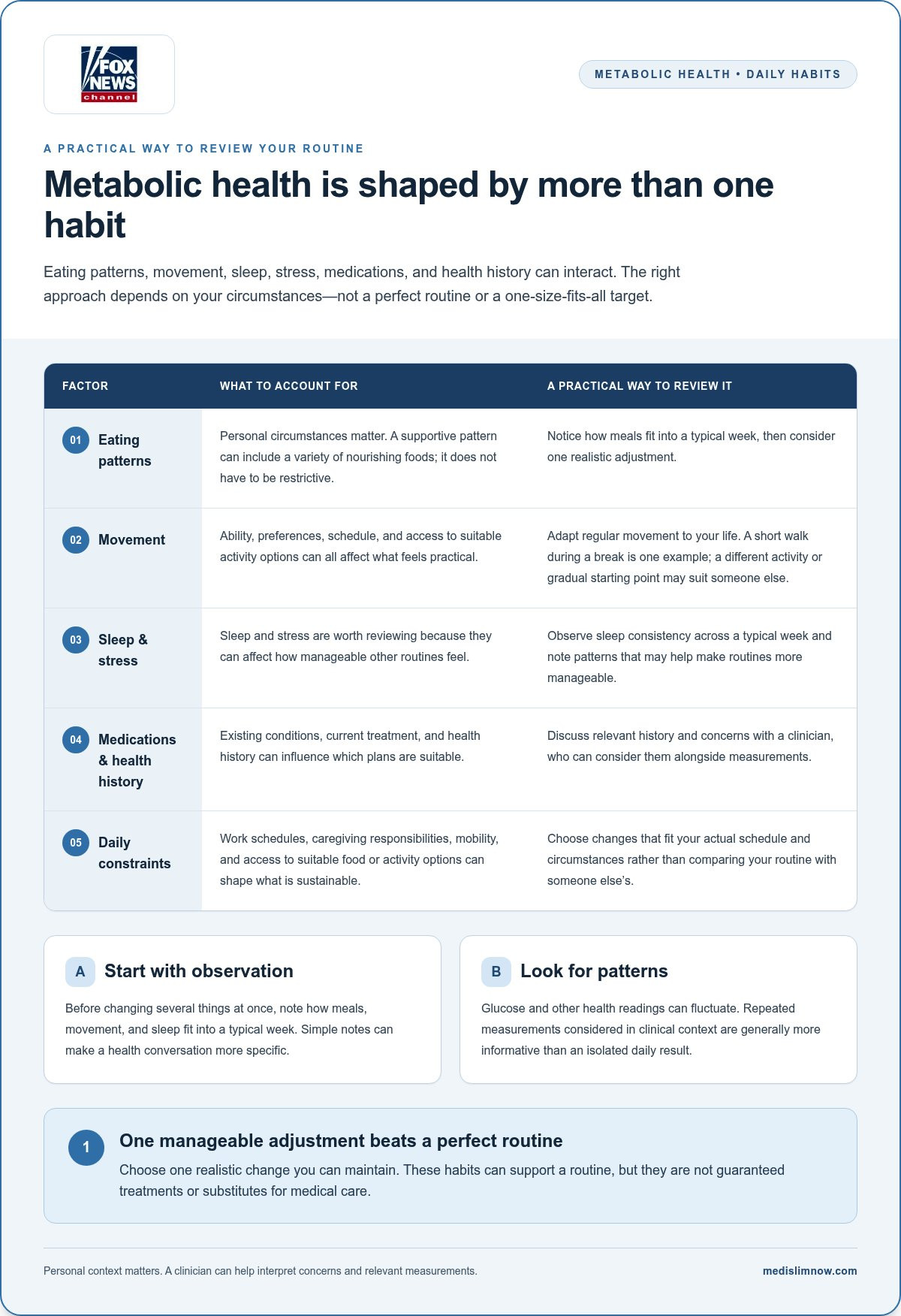
Metabolic health is influenced by more than one choice or routine. Eating patterns, movement, sleep, stress, medications, and health history can interact, and the mix is different for each person. A change that fits one person’s schedule or medical context may not be realistic or suitable for someone else. Improving metabolic health Henrico residents can sustain often starts with practical adjustments, not a perfect routine.
There isn’t one food, workout, or supplement that fixes metabolic health on its own. The Coalition for Metabolic Health offers a broader perspective on the nutritional science and policy connected to the topic. Individual choices still need to fit personal circumstances.
What everyday habits can support a healthier routine?
Start with habits you can repeat. A balanced eating pattern can include a variety of nourishing foods without requiring a restrictive diet. Adapt regular movement to your ability, preferences, and schedule. Sleep and stress are worth reviewing too, since they can affect how manageable other routines feel. These are supportive habits, not guaranteed treatments or substitutes for medical care.
Before changing several things at once, observe your routine. Note when meals, movement, and sleep fit into a typical week, then choose one realistic adjustment. A short walk during a break may suit one person; someone else may prefer a different kind of movement or a gradual starting point.
Why can two people need different approaches?
Health history, current treatment, preferences, and daily constraints all shape what’s practical. Work schedules, caregiving responsibilities, mobility, and access to suitable food or activity options can affect which habits are sustainable. Body size or appearance alone doesn’t explain someone’s metabolic health or identify the right plan.
If a symptom or health concern persists, discuss it with a clinician rather than assuming it has a particular cause. A clinician can consider your history and relevant measurements together, including whether a medication or existing condition may affect the plan.
Look for patterns rather than drawing conclusions from one day. Glucose and other health readings can fluctuate, so repeated measurements considered in clinical context are generally more informative than an isolated daily result. If you’re tracking habits, record simple details such as sleep consistency, planned movement, and changes you can maintain. These notes can make a health conversation more specific, but they don’t diagnose a condition.
Choose measures that match your goal, and don’t make the scale your only record of progress. A clinician can help identify which health measures are relevant to you, while routine notes can show whether a habit fits everyday life. If medical weight management is part of what you’re considering, a medical weight-loss consultation gives you a setting to discuss your goals, health history, and individual options.
Self-Guided vs. Medical Support in Henrico
There’s no single route that fits everyone. You may be able to begin with manageable changes to meals, movement, sleep, or other routines. You may also benefit from discussing health concerns with a clinician, particularly if progress is difficult to maintain or you have questions about your health history or current treatment. Supervised medical weight management provides another level of support, with a clinician considering your goals and treatment options in context.
These approaches aren’t competing choices. Self-directed habits can help whether or not you also seek medical guidance. A conversation with a clinician can put health concerns or measurements in perspective, while a medical weight-loss consultation can focus on weight-management goals and potential treatment options. Choose a starting point based on what you want help with.
When might a medical consultation add useful support?
A consultation can help organize your goals, health history, current treatments, and questions into a focused discussion. It may be useful if concerns persist, you’re unsure how to interpret your progress, or you want to understand whether medically supervised weight management is relevant to your goals. The conversation supports an individualized assessment; it doesn’t make medication appropriate by default.
Weight loss alone isn’t a complete measure of metabolic health. The scale may be one part of tracking, but progress can also involve other relevant health measures and changes in body composition. A clinician can help frame those measures around your health profile instead of treating a particular number as the only definition of success.
What can Semaglutide or Tirzepatide contribute to a plan?
Semaglutide and Tirzepatide are prescription-based options offered through Medi Slim’s physician-supervised program. They may be considered as part of an individualized medical weight-management plan, but they aren’t required or appropriate for everyone. A clinician evaluates whether an option fits your health profile. A general article can’t replace that assessment or determine an individual treatment decision.
For a broader overview of prescription choices, see this prescription weight loss medication guide. If you’re interested in one medication in particular, the Semaglutide weight loss patient guide offers medication-specific information. Use these resources to prepare questions, not to select treatment on your own.
As you consider improving metabolic health Henrico, keep the decision practical: identify what you want support with, note relevant health history and current treatments, and choose a next step that matches your question. A consultation can connect your personal goals with medical weight-management options. Self-guided habits remain part of the picture whether or not prescription treatment is considered.
How can you build a realistic metabolic-health plan in Henrico?
A workable plan starts with what matters to you and what fits your actual week. Instead of changing everything at once, set a direction, test manageable habits, and review what’s useful. Account for work, family responsibilities, transportation, and the routines you already have.
- Clarify your goal. Decide what you want to understand or work toward. That might mean building a steadier routine, discussing a health measurement, or exploring weight-management support.
- Review your starting point. Note your usual meals, movement, sleep, and other routines. Gather relevant health history and a list of current treatments or medications to discuss with a clinician.
- Choose one or two manageable changes. Pick actions that fit your schedule, such as setting a regular time for movement or making a meal routine easier to maintain. Make the goal specific enough to review.
- Reassess and adjust. After giving a change a fair trial, consider whether it’s practical and what you’ve observed. A clinician can help interpret relevant health measures and discuss whether the plan needs to change.
This approach keeps improving metabolic health Henrico grounded in your circumstances rather than an ideal routine that may be hard to sustain. Bring questions about persistent concerns, medical history, and current treatment to a clinician. Don’t stop or change prescribed medication without discussing it with the clinician who manages your care.
What should you track besides the scale?
Choose a small set of measures related to your goal. You might note energy, consistency with a routine, and health measures your clinician recommends. The purpose is to notice patterns, not to monitor every detail or judge a single day. If body-composition changes are relevant to your goals, Styku 3D Body Composition Analysis can help you observe fat and muscle changes over time alongside other progress measures. Learn more about tracking body-composition progress with Styku.
How can you keep changes practical and sustainable?
Make the routine fit the life you have. If work or family commitments make a long workout difficult, try a shorter movement break that works with your day. If meal planning feels like too much, start with one meal or preparation habit. Review your approach periodically and adjust when circumstances change. A missed day doesn’t erase progress, and an all-or-nothing target can make it harder to restart.
Keep a brief record of what you tried and what got in the way. If new symptoms arise or you have questions about treatment, discuss them with a clinician rather than relying on a tracking app or changing your plan on your own. For individualized support connecting your goals with medical weight-management options, explore a medical weight-loss consultation.
How can Medi Slim support metabolic-health goals in Henrico?
Improving metabolic health Henrico can involve different questions for different people. You may want to discuss weight-management goals, understand which options could fit your health profile, or find a more useful way to observe progress. Medi Slim offers physician-supervised medical weight-loss consultations, prescription-based Semaglutide and Tirzepatide treatment when clinically appropriate, and Styku 3D Body Composition Analysis. These services support an individualized discussion without assuming one treatment or measure is right for everyone. Medi Slim serves patients in Henrico, Richmond, Mechanicsville, Midlothian, and Glen Allen.
What can patients discuss during a medical weight-loss consultation?
A consultation gives you an opportunity to talk through personal goals, relevant health history, current treatments, and questions about supervised medical weight management. Sharing what you’ve already tried and what feels difficult to sustain can give the discussion useful context. The clinician can consider your circumstances and discuss options. A consultation supports individualized decision-making; it doesn’t guarantee a prescription or a particular outcome.
Writing down your main questions beforehand can help you use the conversation well. You could ask how a proposed option relates to your goals, what factors will inform the clinical discussion, or how you might track progress. Bring relevant information about your health history and current medications so these details can be considered.
How can Styku analysis complement progress discussions?
Scale readings show total body weight, but they don’t describe how that weight is distributed between fat and muscle. Styku 3D Body Composition Analysis offers another way to observe body-composition changes over time. It’s one progress measure, not a diagnosis or complete health assessment, and it’s most useful when considered alongside your goals and other relevant information. Learn more about Styku body-composition analysis.
These tools serve different purposes. A consultation helps you discuss goals and clinical options. Prescription-based Semaglutide or Tirzepatide may be considered within the supervised program when clinically appropriate, while Styku scans can add body-composition information to progress discussions. None is a universal requirement, and no scan or medication alone captures every aspect of metabolic health.
A realistic next step is to identify what you want help understanding and bring that question to a personalized consultation. This keeps the conversation focused on your health profile rather than assumptions based on weight alone. To explore Medi Slim’s medical weight-loss services, review the options for a medically guided discussion of your goals.
Choose a Next Step That Fits Your Health Goals
Improving metabolic health Henrico doesn’t require you to solve everything at once. Choose one question you’d like answered or one manageable habit you’re ready to work on. Then give yourself room to see what feels sustainable and adjust as your needs change.
If you’d benefit from a medically guided conversation, Medi Slim can help you discuss your goals and possible next steps in a personalized consultation. Physician-supervised care may include prescription treatment when clinically appropriate, while Styku 3D Body Composition Analysis offers another way to observe progress. Neither a scan nor a specific treatment guarantees a particular result, and your care should reflect your individual circumstances.
Take the next step at a pace that feels realistic. Explore Medi Slim’s physician-supervised weight-loss services to learn more about available support. A focused conversation can help you move forward with a plan shaped around your goals.
Frequently Asked Questions
What does metabolic health mean?
Metabolic health describes how the body manages processes such as blood glucose and energy use. No single result or outward appearance tells the whole story. If a lab value concerns you, write down the result, when it was taken, and your questions, then discuss it with a qualified healthcare professional. This article provides general education, not a diagnosis, and symptoms alone can’t determine your metabolic health.
Can you improve metabolic health without losing weight?
Yes. Weight loss isn’t the only possible health goal, and a scale can’t show every change. You might focus on building a routine you can maintain or discuss a clinician-recommended measure that’s relevant to your circumstances. Someone who wants to understand a lab result, for example, may need a different progress marker from someone tracking changes in body composition. A clinician can help identify appropriate goals without assuming weight loss is necessary.
How long does it take to improve metabolic health?
There’s no universal timeline. Different measures can change at different rates, and short-term fluctuations don’t necessarily show an overall pattern. If you’re tracking a measure, use the same method consistently and record the date and relevant context, such as a change in routine or treatment. Review the pattern with a clinician rather than judging progress from one reading. Your clinician can help decide which measures and review schedule suit your situation.
Is medication necessary to improve metabolic health?
No. Prescription medication isn’t necessary or appropriate for everyone. Some people focus on daily habits, while others discuss supervised medical weight-management options as part of a broader plan. A clinician considers your health profile and treatment questions before discussing whether medication may be suitable. Don’t start, stop, or change a prescription based on an article or someone else’s experience. Discuss medication questions with the healthcare professional involved in your care.
What is the difference between metabolic health and body composition?
Metabolic health concerns body processes and relevant health indicators; body composition describes the relative amounts of components such as fat and muscle. They offer different kinds of information, but neither fully describes the other. A body-composition measurement may help you observe physical changes, while a clinician considers other information to discuss your health. Treat each measure as one piece of context, not a complete assessment or diagnosis.
Can a body scan measure metabolic health?
No. A body-composition scan can track changes in fat and muscle, but it doesn’t measure every aspect of metabolic health or diagnose a condition. Styku 3D Body Composition Analysis can provide one view of physical changes over time. To make that information useful, consider what goal you’re tracking and discuss how the scan fits alongside other relevant measures. It shouldn’t replace a clinical assessment or be treated as a stand-alone health verdict.
When should I talk with a clinician about metabolic health?
Consider a medical conversation if a health concern persists, a measurement leaves you with questions, or you’re considering prescription weight-management treatment. People searching for “improving metabolic health Henrico” can use a consultation to discuss their goals and relevant health history. Medi Slim’s medical weight-loss consultations serve people in Henrico, Richmond, Mechanicsville, Midlothian, and Glen Allen. For severe or sudden symptoms, seek urgent medical care rather than relying on an online guide.