

Managing Semaglutide Nausea: Clinical Guide to Relief
You've finally started seeing progress on the scale, but the thought of your next injection brings a wave of dread rather than excitement. It's frustrating when the very tool helping you reach your health goals also makes you feel like you're constantly fighting an upset stomach. You aren't alone in this experience. Many patients find that the transition to higher doses comes with a fear of vomiting in public or a total loss of enjoyment in the healthy foods they've worked hard to incorporate.
The good news is that this discomfort is a manageable biological response to how the medication works. Learning how to manage nausea on semaglutide doesn't require a struggle of willpower; it requires a clinical approach. This guide offers medically-backed strategies and lifestyle adjustments designed to provide immediate relief and restore your confidence. We will explore how precision timing, specific food textures, and professional oversight can eliminate these side effects. By understanding the mechanics of delayed gastric emptying, you can ensure your weight loss journey remains a positive transformation rather than a daily struggle.
Key Takeaways
- Understand the biological reasons behind GI distress, including how delayed gastric emptying affects your body's response to the medication.
- Discover how specific dietary adjustments, such as the "Small and Frequent" rule, can significantly reduce symptoms while maintaining necessary protein intake.
- Learn practical behavioral habits, such as optimizing your injection site and timing, to find out exactly how to manage nausea on semaglutide effectively.
- See why professional supervision in Richmond and Henrico allows for precise dose titration and access to clinical interventions when needed.
- Explore how Styku 3D Body Composition Analysis helps you stay focused on fat loss progress even during temporary periods of physical discomfort.
Understanding Semaglutide Nausea: Why It Happens and How Long It Lasts
Nausea is the most frequently reported side effect for those starting GLP-1 medications. It's often the primary concern when patients ask how to manage nausea on semaglutide. This sensation isn't a sign that something is wrong. Instead, it's a direct result of Semaglutide's mechanism of action. The medication mimics a hormone that targets GLP-1 receptors in both your brain and your digestive tract.
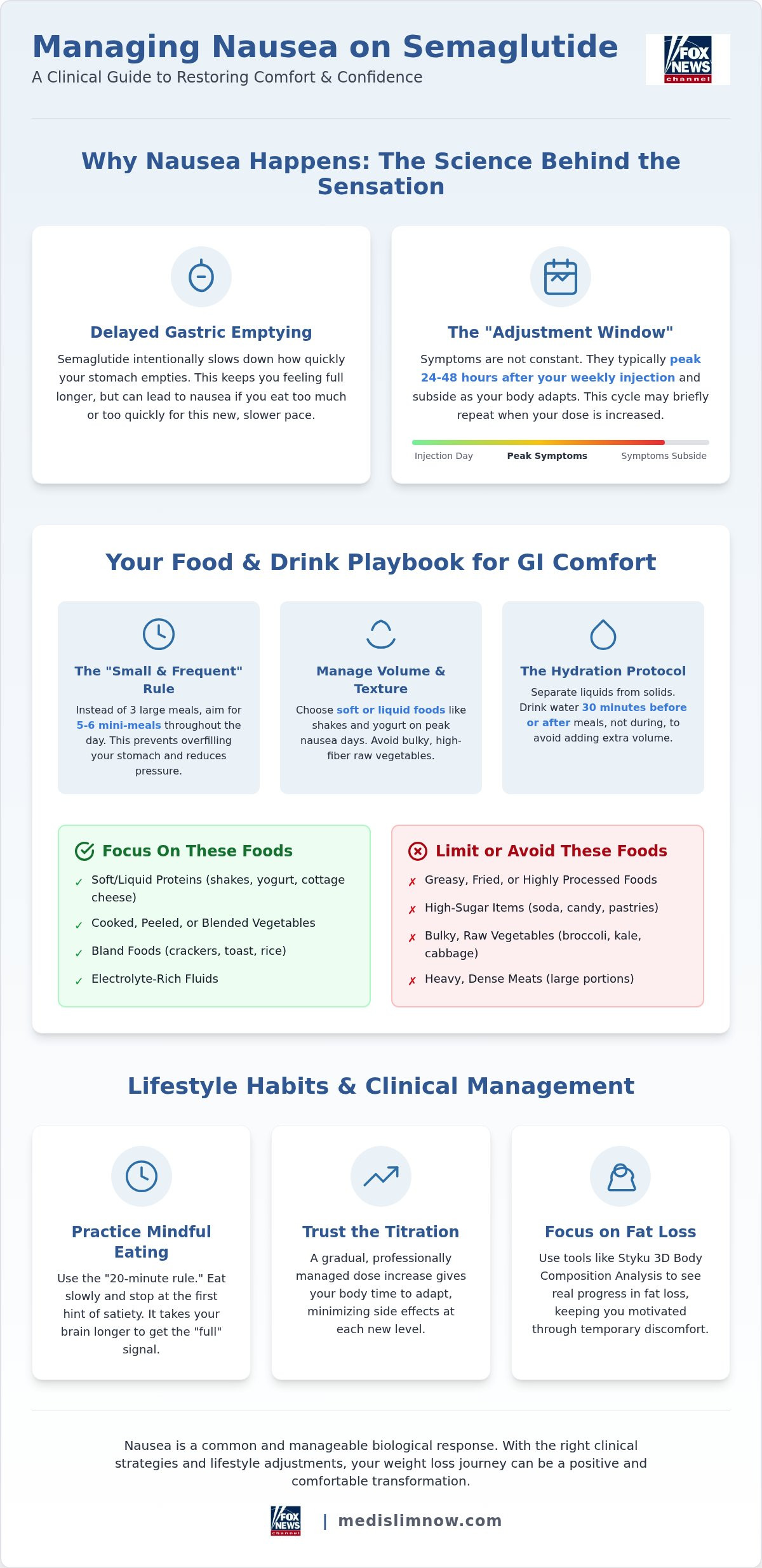
Semaglutide nausea is a physiological adjustment period to slowed digestion. Most patients notice that symptoms follow a predictable pattern, typically peaking 24 to 48 hours after their weekly injection. This happens as the medication reaches its highest concentration in your bloodstream, sending strong signals to your gut and the area of your brain that regulates appetite. For most, this feeling is temporary and subsides as the body adapts to the medication.
The Science of Delayed Gastric Emptying
One of the main ways this medication works is through delayed gastric emptying, sometimes called gastroparesis. In simple terms, your stomach retains food longer than it did before. This process is intentional; it keeps you feeling full and stabilizes your blood sugar levels. However, if your eating habits don't change to match this new speed, that feeling of "fullness" quickly turns into nausea. Your stomach is signaling to your brain that it's still occupied, and adding more food or liquid can trigger a distress signal. Understanding this biological speed limit is the first step in learning how to manage nausea on semaglutide effectively.
Dose Escalation and the 'Adjustment Window'
Your body needs time to build a tolerance to the GLP-1 hormone. This is why medical weight loss programs use a gradual titration schedule. You start on a low loading dose to introduce the medication to your system. As you increase the dose every four weeks, you may experience a brief return of symptoms. This adjustment window usually lasts for the first week of a new dosage level. By the time you reach the four to eight week mark, your central nervous system typically adapts, and the constant low-grade nausea begins to fade. If symptoms persist or feel unmanageable, it's a sign that your titration schedule may need a professional adjustment.
Dietary Strategies to Reduce GI Distress During Treatment
Changing what and when you eat is the most effective way to gain control over your symptoms. The standard approach of eating three large meals often fails because your stomach cannot process high volumes of food at its previous speed. Instead, adopt the "Small and Frequent" rule. Consuming five to six mini-meals throughout the day prevents your stomach from becoming overextended. This is a primary strategy for anyone looking for how to manage nausea on semaglutide without sacrificing essential nutrition.
Maintaining muscle mass is vital during your weight loss journey, which makes protein a non-negotiable part of your diet. However, heavy portions of steak or dense poultry can feel heavy in a slowed digestive system. Focus on high-quality protein without the physical bulk. Identifying your personal trigger foods early is also necessary for long-term success. While greasy or highly processed foods are common culprits, some patients find that high-sugar items also spark significant distress. Keeping a simple food log during the first few weeks can help you pinpoint which items to eliminate.
Managing Food Volume and Texture
Volume control is just as important as food choice. Liquid or soft proteins, such as whey shakes, Greek yogurt, or cottage cheese, are often easier on the stomach during the first few days after an injection. You should also use the "20-minute rule" by eating slowly and stopping the moment you feel a hint of satiety. It takes longer for your brain to receive the fullness signal when digestion is slowed. During peak nausea days, avoid high-fiber, bulky vegetables like raw broccoli or kale. These can sit in the stomach for extended periods and worsen bloating; opt for cooked, peeled, or blended vegetables instead.
The Hydration Protocol for GLP-1 Patients
Dehydration often mimics and worsens the symptoms of Semaglutide nausea. To prevent this, you must separate your liquids from your solids. Drinking large amounts of water during a meal adds unnecessary volume and increases the risk of reflux. Instead, aim to hydrate 30 minutes before or after your mini-meals. Using electrolytes can also help maintain blood pressure and energy levels as your caloric intake decreases. You should take small sips of ginger or peppermint tea between meals to naturally soothe the stomach lining. If you find these dietary adjustments difficult to implement on your own, a medical weight loss consultation can provide a structured nutrition plan tailored to your specific tolerance levels.
Behavioral Habits to Mitigate Side Effects
While food choices are critical, your physical habits play an equal role in your daily comfort. Simple adjustments to your routine can significantly reduce the severity of symptoms. Many patients find that success isn't just about what they eat, but how they structure their day around their medication. These behavioral shifts help your body process the medication more efficiently while minimizing the impact on your quality of life.
When considering how to manage nausea on semaglutide, timing and positioning are your most effective tools. By anticipating when your body will be most sensitive, you can take proactive steps to avoid the worst of the GI distress. This grounded, methodical approach transforms the experience from an unpredictable struggle into a manageable medical process.
Strategic Injection Timing and Placement
Timing is a vital component of symptom management. Administering your dose on a Friday evening is a common clinical recommendation for those who work a traditional schedule. This strategy allows you to sleep through the initial rise in medication levels. It also gives you the weekend to recover if symptoms peak during that 24 to 48 hour window. If you take your dose in the morning, you may find yourself struggling with waves of nausea during your most productive hours.
The location of your injection also carries weight. While the abdomen is a common site, many patients report fewer gastrointestinal side effects when injecting into the thigh or the back of the arm. While clinical data on injection sites is still evolving, the anecdotal evidence from supervised programs is strong. Tracking your specific "nausea window" in a journal allows you to identify patterns and plan your week with confidence, ensuring that your important commitments don't clash with your body's adjustment period.
Post-Meal Habits for Better Digestion
Because Semaglutide slows the movement of food through your stomach, your posture after eating is non-negotiable. You should stay upright for at least two hours after your last mini-meal. Lying down too soon increases the risk of acid reflux and nighttime nausea, as gravity is no longer assisting your digestion. If you experience nausea at night, try elevating your head with a wedge pillow or sleeping on your left side to reduce gastric pressure.
Gentle movement is another powerful tool for relief. A 10-minute "digestion walk" through your local Richmond neighborhood or a nearby park can stimulate gastric motility without causing the "sloshing" sensation that vigorous exercise might trigger. It's also helpful to avoid restrictive clothing or tight belts that put unnecessary pressure on your abdomen. These small behavioral shifts help you maintain momentum toward your weight loss goals while keeping physical discomfort at a minimum. Learning how to manage nausea on semaglutide through these habits ensures the process remains streamlined and integrated into your modern lifestyle.
Clinical Management and Medication Options
Lifestyle adjustments provide a strong foundation, but some patients require clinical support to remain comfortable during their treatment. Knowing how to manage nausea on semaglutide often involves a combination of over-the-counter (OTC) aids and professional guidance. Vitamin B6, ginger supplements, and antacids are common starting points for mild distress. If these options don't provide sufficient relief, your provider may consider prescription anti-emetics such as Ondansetron. Understanding your choices is easier when you have a clear Weight Loss Medication Guide: Understanding Prescription Options in 2026 to reference.
Professional dose titration is the most effective long-term solution for persistent side effects. Rather than following a rigid schedule, a clinician can implement "micro-dosing" or slower titration strategies. This allows your body more time to adapt to the GLP-1 hormone. You should never self-adjust your dose or skip injections without oversight, as this can lead to more severe symptoms when you eventually resume the medication.
When to Seek Medical Intervention
It's vital to identify "red flags" that require immediate medical attention. While mild nausea is common, severe abdominal pain that radiates to the back could indicate pancreatitis. This is a rare but serious complication. Persistent vomiting that prevents you from keeping down liquids also requires a professional evaluation to prevent dehydration. A physician can help you differentiate between a standard adjustment period and more significant health concerns. If your current dose feels unmanageable, your doctor can adjust your schedule to find the "sweet spot" where you see results without constant physical struggle.
Pharmacological Support Strategies
Pharmacological aids can bridge the gap while your body builds tolerance. For those struggling with nighttime symptoms, a combination of Vitamin B6 and Doxylamine is often effective at reducing morning sickness sensations. Natural gastric soothers like ginger root and peppermint oil can also help calm the stomach lining between meals. These tools are most effective when integrated into a supervised plan. If you're finding it difficult to stay on track due to side effects, scheduling a Medical Weight Loss Consultation is the best way to refine your treatment plan and ensure your safety.
The Medi Slim Approach: Supervision in Richmond and Henrico
Nausea can be a significant psychological barrier to long-term weight loss success. When you feel unwell, it's natural to question if the progress is worth the physical cost. This is where local oversight in Richmond and Henrico makes a critical difference. Unlike generic online prescription services, Medi Slim provides a face-to-face clinical partnership. We don't just provide a script; we provide a specific strategy for how to manage nausea on semaglutide based on your unique physiological response.
Our personalized plans are designed to evolve with you. If you struggle with a dose increase, your local provider is available to adjust your titration schedule immediately. This level of supervision ensures that your safety and comfort remain the priority. By working with experts who understand the local community in Central Virginia, you gain a level of accountability and clinical precision that remote platforms simply cannot match. We focus on the mechanics of your health journey to ensure the process remains manageable and effective.
Motivation Beyond the Scale with Styku
Feeling "off" or nauseous can make you feel like you aren't making progress, even when your body is actively transforming. We use Styku 3D Body Composition Analysis to provide a clearer, more motivating picture of your success. Seeing visible inch loss on a 3D scan helps you push through a difficult week of side effects. While the scale only shows a single number, Tracking Semaglutide Results with Styku proves that the medication is working by documenting fat loss and muscle preservation.
This data-driven approach is essential for maintaining your momentum. When you can visualize your transformation at our Glen Allen or Midlothian locations, the temporary discomfort becomes a manageable part of a larger, positive goal. Knowing exactly how your body is changing provides the confidence needed to stay committed to the program. It shifts the focus from how you feel in the moment to the scientific validation of your results.
Getting Started with a Consultation
Your journey begins with a comprehensive visit to our Richmond clinic. During your first session, we evaluate your health history and discuss your specific concerns regarding potential side effects. We don't believe in a one-size-fits-all approach. Instead, we customize your Semaglutide journey to minimize discomfort from day one. This includes detailed, professional guidance on how to manage nausea on semaglutide through the dietary and behavioral strategies that fit your life.
For patients in Mechanicsville and across Central Virginia, taking the next step is a straightforward process. Our goal is to make medical weight loss a streamlined, user-friendly experience that integrates into your modern lifestyle. By combining advanced technology with local clinical expertise, we ensure that your path to a healthier weight is well-defined, uncomplicated, and professionally managed.
Take Control of Your Weight Loss Journey
Nausea doesn't have to be the price you pay for reaching your health goals. By understanding the science of delayed digestion and implementing strategic dietary shifts, you can reclaim your daily comfort. Success relies on viewing these side effects as manageable biological signals rather than obstacles of willpower. Knowing how to manage nausea on semaglutide turns a difficult adjustment period into a sustainable path forward.
At Medi Slim, we prioritize your physical well-being through physician-supervised programs in Central VA. Our team provides personalized side-effect management and utilizes advanced Styku 3D Body Scanning to keep your progress visible. This data-driven approach ensures you stay motivated by seeing real body transformation even when the scale feels slow. You don't have to navigate these challenges alone.
Ready to start a professional, guided weight loss experience? Book Your Medical Weight Loss Consultation in Richmond Today and take the first step toward a more comfortable transformation. You've already done the hard work of starting; now let's help you stay the course with confidence.
Frequently Asked Questions
How long does nausea usually last after starting Semaglutide?
Nausea typically lasts for the first 4 to 8 weeks as your body adjusts to the GLP-1 hormone. You might notice it peaks within 24 to 48 hours after your weekly injection. Most patients find that symptoms subside once they reach a maintenance dose and their nervous system adapts. If you are struggling with the timeline, learning how to manage nausea on semaglutide through professional titration can make this adjustment period much easier to endure.
Can I take Dramamine or Pepto-Bismol while on Semaglutide?
You can use over-the-counter aids like Dramamine or Pepto-Bismol, but it's best to consult your medical provider first. These medications can provide temporary relief from acute symptoms or indigestion. However, clinical experts often recommend Vitamin B6 or ginger as more sustainable options for long-term management. Always ensure that any OTC medication you take doesn't interfere with your specific health profile or other prescriptions you may be using during your weight loss journey.
Is it better to inject Semaglutide in the stomach or the thigh for less nausea?
Many patients report fewer gastrointestinal side effects when they inject the medication into the thigh or back of the arm instead of the stomach. While the abdomen is a common site, the rate of absorption may differ slightly in areas with different fat distribution. Rotating your injection site each week is a practical strategy for anyone looking for how to manage nausea on semaglutide. This simple behavioral shift often provides significant relief without requiring additional medication.
What should I eat if I feel sick on Semaglutide?
Focus on bland, low-fat foods that are easy for your slowed digestive system to process. Cold, protein-rich items like Greek yogurt or chilled protein shakes are often better tolerated than hot or greasy meals. You should avoid spicy foods, heavy fats, and high-fiber vegetables during peak nausea days. Small, frequent portions prevent your stomach from becoming overextended, which is a common trigger for vomiting or severe reflux during the first few weeks of treatment.
Should I skip my Semaglutide dose if I am currently feeling nauseous?
You should not skip a dose without clinical oversight. Skipping injections can cause your blood levels of the medication to drop, which often leads to more severe nausea when you eventually resume the treatment. If your symptoms feel unmanageable, your physician can adjust your titration schedule or lower your dose temporarily. This professional management keeps you on track toward your weight loss goals while ensuring your physical comfort remains a top priority throughout the process.
Does nausea on Semaglutide mean the medication is working better?
Nausea is a common side effect, but it isn't a requirement for the medication to be effective. The weight loss benefits come from appetite suppression and blood sugar stabilization, not from feeling physically ill. Some patients experience significant results with almost no GI distress, while others face a longer adjustment period. Your progress is best measured by body composition changes rather than the presence or severity of side effects during your weekly treatment cycle.
When should I be worried about nausea while taking weight loss injections?
You should seek medical attention if you experience severe abdominal pain that radiates to your back, persistent vomiting, or a fever. While mild nausea is expected, these "red flags" could indicate rare complications like pancreatitis or severe dehydration. It's important to differentiate between standard adjustment symptoms and a medical emergency. A supervised program provides the necessary oversight to monitor these risks and ensure that your health journey remains safe and professionally managed at all times.
Can drinking more water really help stop Semaglutide side effects?
Hydration is essential because dehydration often mimics or worsens the feeling of nausea. Drinking enough water helps maintain your blood pressure and supports your kidneys as you lose weight. However, you should avoid "chugging" large amounts of liquid. Instead, take small sips throughout the day and try to separate your water intake from your meals by at least 30 minutes. This prevents your stomach from becoming too full, which can trigger immediate GI distress or reflux.