

Semaglutide for Non-Diabetics in Richmond: Eligibility, Safety and Care
Can you be considered for semaglutide weight management if you don’t have diabetes? Yes. Diabetes status alone doesn’t determine eligibility. If you’re researching semaglutide for non-diabetics Richmond, it helps to know that Wegovy is approved for chronic weight management, while Ozempic is approved for type 2 diabetes. They contain the same active ingredient, but their indications differ.
It’s understandable to have questions about which medication may be appropriate, what side effects to discuss, and whether you meet the criteria. A clinician may consider factors such as BMI, weight-related health conditions, medical history, and potential risks. Common side effects include nausea, vomiting, and constipation, so treatment should be discussed with and monitored by a healthcare professional.
This article explains how diabetes and weight-management indications differ, what a prescriber may evaluate, and what to ask about safety and follow-up. You’ll also learn how a physician-supervised medical weight-loss consultation in Richmond can help you discuss whether semaglutide may be suitable. Eligibility isn’t guaranteed, but an individualized assessment can clarify your next step.
Key Takeaways
- Diabetes status alone doesn’t determine whether semaglutide may be considered for weight management.
- A prescriber may review your health, weight-related factors, and medical history when assessing eligibility for semaglutide for non-diabetics Richmond.
- Compare potential benefits, common side effects, and alternatives with a clinician before deciding on treatment.
- Prepare for a consultation by organizing your health and medication history, clarifying your goals, and asking about follow-up.
- Medi Slim’s physician-supervised consultations and optional Styku 3D body composition analysis can support individualized care and progress tracking.
Semaglutide for non-diabetics in Richmond: what weight-management treatment means
It’s reasonable to associate semaglutide with diabetes treatment. Some semaglutide products also have an FDA-approved indication for chronic weight management, so a person doesn’t necessarily need diabetes for a clinician to discuss this type of treatment. Whether it’s appropriate for you is a separate question, based on your health and the intended use.
Semaglutide is a glucagon-like peptide-1 (GLP-1) receptor agonist. It acts on pathways involved in appetite and blood sugar regulation and may help with weight management as part of medical care. Results vary, and using the medication doesn’t guarantee weight loss. The Semaglutide overview explains its mechanism and uses. A prescriber can help you understand how those uses apply to your situation.
Does not having diabetes rule out a weight-management discussion?
No. Diabetes status alone doesn’t establish or rule out suitability. The clinician first considers the purpose of treatment. FDA labeling for Wegovy includes chronic weight management for eligible adults, but candidacy still depends on the applicable criteria, health history, and individual risks. Wanting to lose weight, by itself, doesn’t establish that a prescription is suitable.
An approved indication describes a use authorized for a specific product and patient group. It doesn’t mean that everyone who wants treatment qualifies. A medical assessment helps determine whether the intended use fits your circumstances or whether another approach may be more appropriate.
Wegovy and Ozempic: why product indication matters
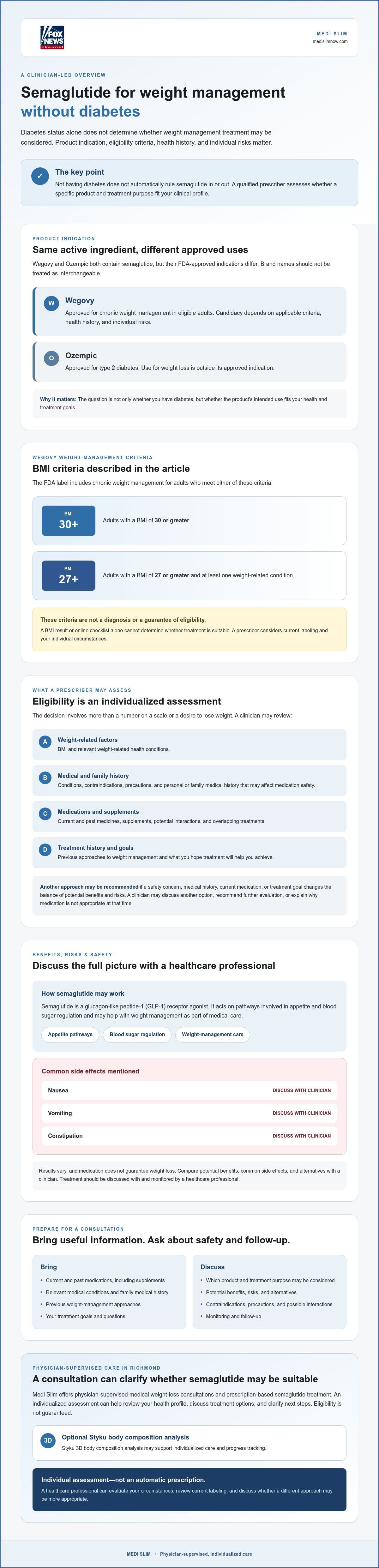
Wegovy and Ozempic contain semaglutide, but their FDA-approved indications differ. Wegovy is approved for chronic weight management in eligible adults. Ozempic is approved for type 2 diabetes, so using it for weight loss is outside its approved indication. The products also have different prescribing contexts. A clinician should refer to current labeling when considering a medication rather than treating the brand names as interchangeable.
This distinction matters if you’re exploring semaglutide for non-diabetics Richmond: the question isn’t simply whether you have diabetes, but whether a particular product and treatment purpose fit your clinical profile. Medi Slim provides prescription-based semaglutide treatment and physician-supervised medical weight-loss consultations. Ask during a consultation which product may be considered and how the prescriber evaluates suitability. A discussion is an individualized assessment, not a promise of a prescription.
Who may qualify for semaglutide without diabetes in Richmond?
Not having diabetes doesn’t automatically make semaglutide either appropriate or inappropriate. A prescriber assesses whether the medication’s intended use fits your health profile, then weighs potential benefits against risks. For weight management, the decision involves more than a number on a scale or a desire to lose weight.
For Wegovy, the FDA label includes chronic weight management for adults with a BMI of 30 or greater, or 27 or greater with at least one weight-related condition. These are treatment criteria, not a diagnosis or a guarantee of eligibility. You can review the FDA’s Wegovy prescribing information, then discuss how current labeling and your individual circumstances apply with a qualified prescriber.
What information can affect an eligibility assessment?
Bring a clear picture of your health and treatment history to the consultation. List current and past medications, relevant medical conditions, previous approaches to weight management, and what you hope treatment will help you achieve. Include medicines and supplements so the prescriber can review potential interactions and overlapping treatments.
Your clinician may also ask about health factors that affect medication safety. Semaglutide isn’t suitable for everyone. Before making a recommendation, the prescriber should review contraindications, precautions, and your personal or family medical history. Don’t use an online checklist or a BMI result alone to decide that you qualify.
When might a clinician recommend another approach?
A different plan may make more sense if a safety concern, medical history, current medication, or treatment goal changes the balance of potential benefits and risks. The clinician may discuss another prescription option, recommend further evaluation, or explain why medication isn’t appropriate at that time. That’s part of individualized care, not a judgment about your effort or goals.
Ask what monitoring may involve, which side effects or symptoms should prompt a call, and how to reach the care team with concerns. Getting clear answers before starting treatment helps you understand what to expect.
If you’re exploring semaglutide for non-diabetics Richmond, a medical weight-loss consultation can turn general criteria into an individualized discussion. Medi Slim provides physician-supervised consultations and prescription-based semaglutide treatment, but an assessment doesn’t guarantee a prescription. Learn more about Medi Slim’s medical weight-loss care as you consider your next step.
How to weigh semaglutide's potential benefits, risks, and alternatives
Semaglutide may help eligible patients manage weight, but it isn’t a replacement for an individualized plan. For chronic weight management, FDA-approved use is alongside reduced-calorie eating and increased physical activity. Lifestyle-focused care may suit some people; others may discuss prescription treatment in light of their health history, goals, or response to previous approaches. No single option is best for everyone.
Discuss side effects with a clinician rather than relying on guesswork. The FDA prescribing information lists gastrointestinal effects such as nausea, vomiting, diarrhea, constipation, and abdominal pain among common reactions. The label also addresses less common but serious risks, including pancreatitis and gallbladder problems. Your own risk depends on personal factors. Ask how your medical history affects the decision and what symptoms warrant prompt contact.
What trade-offs should patients discuss?
Before deciding, clarify how the proposed product is taken, what follow-up is expected, and how the clinician will assess tolerability and progress. Dosing and any changes belong to the prescriber. Don’t adjust treatment on your own. Responses vary, and the care plan may need review if side effects are difficult, progress differs from expectations, or your health needs change.
Useful questions include: What should I do if symptoms interfere with daily activities? How should I report a concern? When will we review whether the plan still fits my goals? Agreeing on these points sets clearer expectations and helps make supervised care practical.
How does semaglutide differ from other weight-loss options?
Options may include lifestyle-focused care, semaglutide, other prescription medications, or a combination of approaches. They differ in how they work, how they’re taken, and their potential risks. Tirzepatide is another prescription option available through Medi Slim, but that doesn’t make it a better fit for every patient. A clinician can compare choices in light of your medical history, preferences, and treatment goals without assuming one will work best.
For broader context on medication categories and questions to consider, read this prescription weight loss medication guide. If you’re considering semaglutide for non-diabetics Richmond, use a consultation to weigh potential benefits, risks, and alternatives with a prescriber. The goal is a suitable, monitored plan, not a promised result.
What to ask at a Richmond semaglutide consultation
A consultation is a chance to understand whether semaglutide may fit your health needs, not an automatic start to treatment. Before an appointment, clarify what you hope to achieve, gather your medication and health history, and note the concerns you want to discuss. Medi Slim provides physician-supervised medical weight-loss consultations in Richmond, where suitability can be considered individually.
A Richmond semaglutide patient guide offers broader treatment context. Use it to prepare questions, then ask the prescriber how recommendations apply to your circumstances.
Questions to bring to your first appointment
Bring an up-to-date list of prescriptions, over-the-counter medicines, and supplements. Include relevant health conditions, previous weight-management approaches, and any side effects or concerns you’ve experienced. Sharing the full picture helps the prescriber assess precautions and potential interactions.
- How do you assess whether semaglutide is suitable for my health history and goals?
- What risks or precautions should I understand before making a decision?
- What follow-up and monitoring should I expect, and whom should I contact with concerns?
- What measures do you use to review progress beyond body weight?
- If semaglutide isn’t a good fit, what alternatives might we discuss?
These questions can help you understand the reasoning behind a recommendation. Ask for an explanation if a term or next step isn’t clear. The decision may be to consider treatment, explore another option, or gather more information first.
How progress monitoring can support follow-up
Follow-up gives the clinician an opportunity to review how you’re responding, whether you’re tolerating treatment, and whether the plan remains appropriate. Ask how to raise concerns between appointments and what changes should prompt you to get in touch. Monitoring supports informed decisions; it doesn’t guarantee a particular result.
Medi Slim offers Styku 3D body composition analysis as an option for tracking changes beyond scale weight. It can add context to progress discussions alongside the clinician’s review of your response and health needs. Read more about tracking semaglutide results with Styku to understand this measurement option.
If you’re considering semaglutide for non-diabetics Richmond, take the next step by discussing your suitability in a medical weight-loss consultation. A prescriber can review your questions and determine whether semaglutide or another approach may be appropriate.
Explore physician-supervised semaglutide care with Medi Slim in Richmond
Learning about eligibility is a useful start. Next, discuss whether medical weight management fits your health history, goals, and preferences. Medi Slim provides physician-supervised medical weight-loss consultations and prescription-based semaglutide treatment for Richmond and nearby communities, including Henrico, Mechanicsville, Midlothian, and Glen Allen. A consultation is an opportunity to discuss suitability, not a guarantee that semaglutide will be prescribed.
What Medi Slim's documented approach includes
The consultation supports individualized medical weight-management planning. The prescriber can review your circumstances and discuss whether semaglutide, another option, or a different approach may be appropriate. Medi Slim also offers tirzepatide, but the right treatment depends on an individual assessment rather than a general comparison.
Styku 3D body composition analysis is available to follow body-composition changes alongside clinical follow-up. Measurements beyond scale weight can provide additional context for progress discussions. Ask whether this tracking option fits your care plan and how the information would be considered alongside your health and treatment response.
A practical next step for Richmond-area readers
Before contacting the clinic, gather a current list of prescriptions, over-the-counter medicines, and supplements. Note relevant health conditions, previous weight-management approaches, and the goals you’d like to discuss. This preparation can help make the conversation more focused.
Write down questions about how candidacy is assessed, what monitoring may involve, and what alternatives could be considered if semaglutide isn’t suitable. If you’re nearby in Richmond, Henrico, Mechanicsville, Midlothian, or Glen Allen, confirm current appointment and service details directly with the clinic rather than assuming a particular format or schedule.
If you’re considering semaglutide for non-diabetics Richmond, discuss your circumstances with Medi Slim’s medical weight-loss team. The clinician can review whether treatment may fit your needs; the decision is individualized, and a prescription isn’t automatic. Discuss your weight-management options with Medi Slim.
Take the next step with informed, individualized care
Diabetes status alone doesn’t determine whether semaglutide may be appropriate for weight management. The decision depends on the medication’s intended use and an individual review of health history, risks, and goals. Understanding potential side effects and asking about monitoring can help you take part in that decision.
If you’re exploring semaglutide for non-diabetics Richmond, Medi Slim offers physician-supervised medical weight-loss consultations and prescription-based semaglutide and tirzepatide treatments. Styku 3D body composition analysis is also available to add context to progress beyond scale weight. A consultation can help clarify whether a treatment option fits your circumstances, but it doesn’t guarantee a prescription.
Prepare your questions and medication history, then discuss your weight-management options with Medi Slim. A thoughtful conversation is a practical first step toward choosing care that feels informed and appropriate for you.
Frequently Asked Questions
Can non-diabetics take semaglutide for weight loss?
Yes, some adults without diabetes may be considered for a semaglutide product approved for chronic weight management if they meet its criteria and a prescriber finds it appropriate. Diabetes status alone neither qualifies nor disqualifies you. For people exploring semaglutide for non-diabetics Richmond, an assessment should include medical history, current medicines, weight-related factors, and potential risks. Product indications differ, so check current FDA labeling and discuss personal suitability with a qualified clinician.
Do you need diabetes to qualify for Wegovy?
No, diabetes isn’t automatically required for Wegovy’s chronic weight-management indication. Eligibility depends on the product’s current FDA-approved criteria and your health profile, which a prescriber needs to assess. Wegovy and Ozempic aren’t interchangeable descriptions of an indication, even though both contain semaglutide. Ask a clinician which product, if any, may fit your circumstances, what risks to consider, and what monitoring or follow-up may be appropriate.
What is the difference between Ozempic and Wegovy for someone without diabetes?
Both products contain semaglutide, but their FDA-approved indications and labeling differ. Ozempic is indicated for type 2 diabetes care, while Wegovy has an indication for chronic weight management in eligible patients. Don’t choose or substitute a medication based on online brand comparisons. A prescriber can review current labeling, your medical history, and treatment goals to explain whether either product is appropriate and what alternatives may be considered.
What should I expect at a semaglutide consultation in Richmond?
Expect to discuss your health history, medications, weight-management goals, and factors that may affect safety or suitability. The clinician can explain potential benefits, risks, alternatives, and follow-up, but a consultation doesn’t mean treatment will begin automatically. Medi Slim offers medical weight-loss consultations for people in Richmond and nearby Henrico, Mechanicsville, Midlothian, and Glen Allen. Confirm current appointment details directly with the clinic.
What side effects should non-diabetics discuss before starting semaglutide?
Ask about digestive symptoms such as nausea, vomiting, diarrhea, constipation, or abdominal discomfort, which are among the effects that may occur. Product warnings and individual risks should be reviewed using current prescribing information. Tell the clinician about relevant health conditions and medicines, and ask which symptoms need prompt attention. Don’t start, stop, or change treatment without professional guidance, even if symptoms seem manageable at first.
Can I use semaglutide if I take other medications?
Possibly, but a prescriber should review all your medicines and supplements before recommending treatment. Include prescriptions, over-the-counter products, vitamins, and other supplements in an up-to-date list. Your health conditions and medications may affect suitability, safety considerations, or monitoring. Ask about interactions specific to you. Don’t stop or adjust another prescribed medicine simply because you’re considering semaglutide; discuss any changes with the clinician who manages that treatment.
How does Medi Slim track progress during semaglutide treatment?
Medi Slim offers Styku 3D body composition analysis as an option for tracking body changes alongside medical weight-loss care. This can add information beyond scale weight, but a scan doesn’t guarantee results or replace clinical assessment. Ask the care team how progress is reviewed, whether Styku analysis fits your plan, and how scan information may be considered alongside your treatment response and overall health.