

Semaglutide Side Effects Management: A Patient’s How-To Guide for 2026
Did you know that nausea affects up to 44% of people starting their weight loss journey with GLP-1 medications? If you are dealing with persistent fatigue or stomach discomfort, you might feel like your body is working against your goals. Mastering semaglutide side effects management is the key to turning a challenging transition into a predictable, clinical process. You deserve to feel confident and energized while you work toward a healthier body composition.
Effective management isn't about "toughing it out" through the discomfort. It's about using clinical strategies and nutritional adjustments to align the medication with your unique biology. By understanding how to properly navigate the titration process and identify specific food triggers, you can significantly reduce daily symptoms without sacrificing your progress. This approach moves you away from self-guided guesswork and into a professionally supervised program.
This guide provides a clear plan to mitigate nausea and boost your energy levels. You will learn how professional oversight simplifies the transition to higher doses, such as the 7.2 mg Wegovy HD approved in early 2026. We will also help you distinguish between routine adjustments and rare, serious side effects so you can move forward with peace of mind and scientific validation.
Key Takeaways
- Understand why a low starting dose of 0.25mg is essential for priming your receptors and minimizing digestive disruption.
- Implement a pre-injection protocol involving hydration and protein-loading to prepare your body for each weekly dose.
- Discover how identifying specific trigger foods, like high-fat or fried options, can prevent immediate post-meal distress.
- Learn the "Protein First" rule to maintain satiety while ensuring your digestive system isn't overtaxed during treatment.
- Master semaglutide side effects management by distinguishing between expected adjustments and symptoms that require professional intervention.
What are the Common Semaglutide Side Effects?
Most individuals starting their weight loss journey will experience some physical changes as their body adapts. Semaglutide is a GLP-1 receptor agonist, meaning it mimics metabolic hormones that naturally regulate appetite and digestion. Because the medication communicates directly with your gut and brain, gastrointestinal responses are the most frequent symptoms reported by patients. These aren't necessarily signs of an illness, but rather a predictable biological reaction to the medication's mechanism. Proactive semaglutide side effects management begins with understanding that these issues are typically most acute during the first 48 hours after an injection.
You will likely notice that symptoms peak as the medication reaches its highest concentration in your bloodstream. The most reported issues include nausea, constipation, and a temporary drop in energy levels. While these can be frustrating, they're usually manageable through the clinical and nutritional strategies outlined in this guide. Understanding the difference between a normal adjustment period and a serious reaction is the first step toward a successful outcome.
The Role of Slowed Gastric Emptying
The "overly full" feeling many patients describe is a direct result of delayed gastric emptying. The medication keeps food in your stomach longer to help you feel satisfied with smaller portions. This process can lead to indigestion or bloating if your meal sizes aren't reduced accordingly. Gastric motility refers to the speed and efficiency with which the stomach muscles move food into the small intestine. When this motility slows, your blood sugar levels stabilize, but the rapid shift can occasionally cause early-stage dizziness or lightheadedness as your metabolism recalibrates.
Distinguishing Normal Adjustment from Red Flags
While discomfort is common, you must know when "stomach upset" requires a call to your Richmond medical provider. Routine symptoms should be mild and manageable with basic lifestyle changes. However, severe abdominal pain that radiates to your back could indicate a rare complication like pancreatitis. Signs of dehydration, such as extreme thirst or dark urine, are also critical indicators that your semaglutide side effects management plan needs professional adjustment. Seeking oversight from a clinic in Henrico or Midlothian ensures that your journey remains safe and your health is monitored by experts who understand the nuances of GLP-1 therapy.
The Science of GLP-1 Titration: Why Your Dose Starts Low
Dosing starts low for a reason. By beginning at 0.25mg, you aren't necessarily looking for immediate weight loss; instead, you are priming your GLP-1 receptors to handle the medication. This introductory phase is a fundamental pillar of semaglutide side effects management. It allows your body to build tolerance before you move toward therapeutic levels. If you were to start at a high dose immediately, the sudden hormonal shift would likely overwhelm your digestive system, leading to severe nausea or vomiting.
The "More is Not Better" rule is a core principle of our clinical approach. Rushing to higher doses doesn't always accelerate weight loss, but it almost always increases the intensity of side effects. You should follow the structured escalation plan found in the FDA Medication Guide for Wegovy, which typically suggests a four-week interval between dose increases. However, a personalized schedule often proves more effective than a one-size-fits-all pharmacy protocol. A supervised plan allows for adjustments based on how you feel, rather than sticking to a rigid calendar.
Managing the 4-Week Escalation Cycle
Expect a brief period of re-adjustment every time your dosage increases. You might notice a slight return of fatigue or a change in your appetite during the first few days of a new dose. If these symptoms feel unmanageable, your provider may suggest staying on your current dose for an additional month to ensure your comfort. Gradual titration minimizes metabolic shock by allowing your digestive system to adapt to hormonal changes over time. This flexibility is why a medical weight loss consultation is so valuable for long-term success.
The Importance of Steady-State Blood Levels
Maintaining consistent blood levels is vital for minimizing "peak and valley" symptom flares. When you use semaglutide for weight loss, the goal is hormonal stability. Choosing a consistent "injection day" helps your body anticipate the medication and keeps your metabolic response steady. Many patients prefer Friday evenings, as this allows any potential fatigue to pass during the weekend. Consistency is a simple but powerful tool for semaglutide side effects management, ensuring that the medication works with your lifestyle rather than against it.
- Pick a day and time you can commit to every week.
- Set a recurring reminder on your phone to avoid missed doses.
- Inject at approximately the same time of day to keep levels predictable.
A Step-by-Step Routine to Manage Nausea and Digestive Issues
Effective semaglutide side effects management relies on a structured routine that begins before you even take your dose. Preparing your body for the hormonal shift can significantly dampen the intensity of gastrointestinal responses. We recommend a "Pre-Injection Protocol" that starts 24 hours before your scheduled dose. Focus on high-quality protein intake and aggressive hydration during this window. This creates a metabolic buffer that helps your system process the medication more smoothly.
If nausea strikes, it typically occurs about 12 hours after your injection as blood levels peak. Don't wait for the discomfort to escalate. Keep ginger lozenges or peppermint tea on hand, as these natural remedies help relax the digestive tract. If symptoms persist, transitioning to a temporary "Bland Diet" (often called the BRAT diet: Bananas, Rice, Applesauce, and Toast) can settle your stomach. This clinical approach is supported by the NIH guide on semaglutide side effects, which emphasizes monitoring adverse reactions to ensure patient safety.
To maintain balance during a flare-up, use over-the-counter electrolytes. Standard water is often insufficient if you're experiencing vomiting or diarrhea. Electrolyte-enhanced fluids help maintain your blood pressure and prevent the lightheadedness often associated with early-stage treatment. By following a sequential plan, you move from reactive discomfort to proactive control.
Optimizing Injection Technique for Comfort
Where you inject can influence how you feel. While the abdomen is a common site, many patients report fewer GI issues when they rotate to the upper arm or the front of the thigh. This change in site may slow the initial absorption rate slightly, which can be a helpful strategy for semaglutide side effects management. Use the "pinch and breathe" method: gently pinch the skin at the site, take a deep breath, and inject during the exhale to reduce local irritation and anxiety.
Hydration: The Secret to Fighting Fatigue
GLP-1 medications often dull the body's natural thirst reflex. You might not feel thirsty, but your cells still require significant fluid to process the medication and burn fat. This "hidden" dehydration is the primary cause of "semaglutide headaches" and persistent fatigue. Aim for a concrete goal of 80 to 100 ounces of fluid daily. Tracking your intake with a marked water bottle ensures you meet this target, even when your appetite is low. Adding a pinch of sea salt or an electrolyte powder to your morning water can provide a sustained energy boost throughout the day.
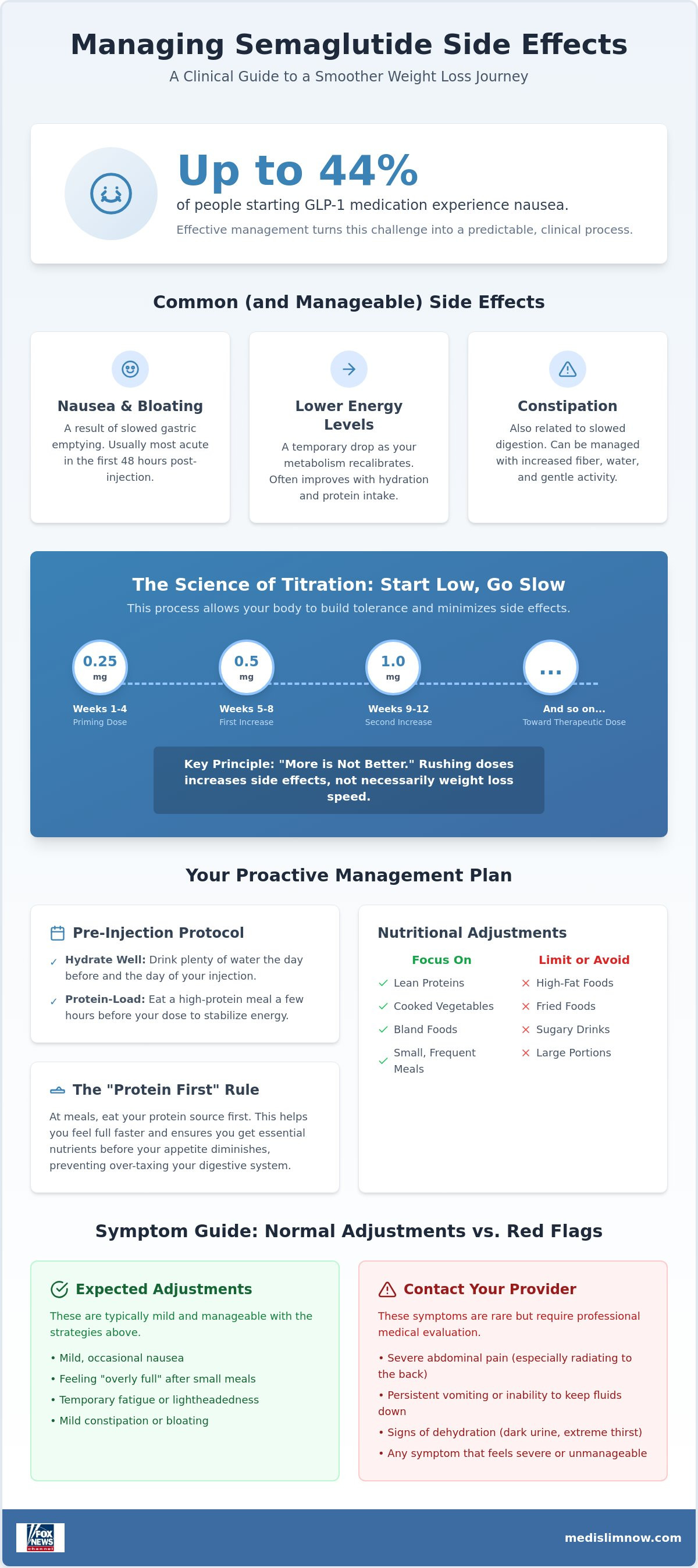
Diet and Lifestyle Strategies to Mitigate Semaglutide Side Effects
Dietary choices are the most influential factor in your daily comfort during treatment. Because the medication slows gastric emptying, food remains in your stomach for an extended period. This means that high-fat, greasy, or fried foods often cause immediate distress, as they are naturally harder for the body to digest. Identifying these trigger foods is a foundational step in semaglutide side effects management. If you consume a heavy or oily meal, you're likely to experience significant bloating, reflux, or nausea as your system struggles to process the volume.
Adopting a "Protein First" rule ensures you maintain satiety without overtaxing your digestive tract. Focus on lean sources like chicken, white fish, or tofu at every meal. Instead of the traditional "three square meals," try eating five or six smaller portions throughout the day. This approach keeps your blood sugar stable and prevents the "overly full" sensation that frequently leads to gastric discomfort. By keeping portions small, you allow your slowed digestion to work efficiently without becoming overwhelmed.
What to Eat (and Avoid) for Optimal Comfort
Fiber management is essential for preventing constipation, a common side effect of slowed motility. Incorporating soluble fiber from vegetables and seeds helps keep your system moving regularly. You should also be cautious with alcohol consumption. It can exacerbate medication-induced nausea and lead to unexpected blood sugar drops while on GLP-1 therapy. For specific meal plans and a list of recommended snacks, refer to our full nutrition guide for semaglutide.
Tracking Progress Beyond the Scale with Styku 3D
Rapid weight loss can sometimes mask a "hidden" side effect: muscle wasting, clinically known as sarcopenia. When you lose weight quickly without adequate protein or resistance training, your body may burn lean muscle instead of fat. This loss of muscle mass is a primary contributor to the persistent fatigue many patients report. To ensure your weight loss is healthy and sustainable, we use Styku 3D Body Composition Analysis to monitor your progress.
This technology provides a precise breakdown of fat, water, and muscle mass. Seeing visual, three-dimensional progress in Richmond helps you stay motivated, especially during weeks when the scale remains stagnant but your body composition is improving. It moves the focus from a single number to a comprehensive view of your metabolic transformation. To ensure you are losing fat while preserving vital muscle, schedule your medical weight loss consultation to receive a personalized composition baseline.
Clinical Oversight in Richmond: Managing Your Journey with Medi Slim
Attempting a "DIY" approach to weight loss medications often leads to unnecessary suffering. Without professional guidance, many patients struggle to find the right balance between effective weight loss and daily comfort. Expert semaglutide side effects management requires more than just reading a label. It involves real-time adjustments based on your body's specific feedback. Choosing to work with a local medical team ensures that you aren't guessing about your health or your dosage.
At Medi Slim, we provide physician-supervised weight loss programs designed for residents across Central Virginia. Our approach prioritizes your safety and long-term success over rapid, unmanaged results. If you experience persistent nausea or fatigue, our team can immediately adjust your dosage or provide clinical remedies to help you stay on track. We offer a level of accessibility that national telehealth platforms simply cannot match. This local support is essential when searching for weight loss shots near me, as it bridges the gap between receiving a prescription and achieving a healthy transformation.
Personalized Consultations in Henrico and Midlothian
Having a medical team that understands your health history makes a significant difference in your experience. We don't just provide the medication; we monitor your metabolic health through regular check-ins and lab work. These visits allow us to identify early signs of dehydration or nutrient deficiencies before they become problematic. We look at more than just the number on the scale. In our Henrico and Midlothian locations, we integrate Styku 3D body scans into your care plan. This data-driven approach allows us to refine your semaglutide side effects management strategy by ensuring your weight loss comes from fat stores rather than lean muscle. If the data shows muscle loss, we adjust your nutritional plan immediately.
Take the Next Step Toward Managed Weight Loss
You don't have to navigate the complexities of GLP-1 therapy alone. A side-effect-free transformation is possible when you have the right clinical support. Our goal is to help you reach your target weight with confidence and clarity. We prioritize professional oversight because we know that a supervised journey is a safer, more predictable journey. You deserve a partner who values your health as much as your results. If you're ready to move forward with a plan tailored to your lifestyle and biology, schedule your consultation at Medi Slim Wellness today. Our team is ready to partner with you on your path to better health.
Your Path to a Managed Transformation
Mastering semaglutide side effects management is the bridge between a difficult transition and a sustainable lifestyle change. You've seen that these symptoms are predictable biological responses that respond well to slow titration and a "Protein First" nutritional strategy. By preparing your body with proper hydration and avoiding high-fat triggers, you can maintain your daily routine without the burden of persistent nausea or fatigue.
Success in 2026 relies on more than just the medication. It requires a partnership with a medical team that prioritizes your safety and metabolic health. Our physician-supervised weight loss programs include Styku 3D Body Composition Analysis to ensure you're losing fat while preserving vital lean muscle mass. We're proud to serve the communities of Richmond, Henrico, and Midlothian with professional care tailored to your unique biology.
Take control of your health journey today with a plan designed for clarity and comfort. Book Your Medical Weight Loss Consultation at Medi Slim to begin your supervised transformation. You deserve a partner who provides the clinical oversight necessary for a smoother, more effective weight loss experience.
Frequently Asked Questions
What is the most common side effect of semaglutide and how long does it last?
Nausea is the most common side effect, affecting up to 44% of patients in clinical trials. It is usually most intense during the first 48 hours after an injection or following a dose escalation. For most individuals, this discomfort subsides as the body adapts to the medication over several weeks. Consistent semaglutide side effects management, such as eating smaller meals, can help reduce the duration of these symptoms.
Can I drink alcohol while managing semaglutide side effects?
You can technically drink alcohol, but it often exacerbates gastrointestinal side effects like nausea and vomiting. Alcohol also impacts blood sugar levels, which may lead to dizziness when combined with GLP-1 therapy. Many patients find that even small amounts of alcohol cause significant stomach upset. It's best to limit intake until you understand how your body responds to the medication and its impact on your digestion.
Why do I feel so tired on semaglutide, and how can I fix it?
Fatigue is often caused by a combination of a rapid calorie deficit, dehydration, or the loss of lean muscle mass. You can fix this by increasing your daily protein intake and ensuring you drink 80 to 100 ounces of water with electrolytes. Monitoring your body composition with Styku 3D scans helps ensure you aren't losing muscle, which is a primary driver of low energy during significant weight loss.
What should I do if I experience severe constipation on semaglutide?
Severe constipation occurs because the medication slows down your digestive tract. You should increase your intake of soluble fiber and water immediately to help move waste through your system. If lifestyle changes aren't enough, consult your medical provider about using over-the-counter stool softeners or magnesium supplements. Proactive semaglutide side effects management prevents these digestive backups from becoming a chronic issue that interferes with your daily comfort and progress.
Is there a specific time of day to inject semaglutide to avoid nausea?
There isn't a single "best" time for everyone, but many patients prefer injecting in the evening. This allows you to sleep through the initial peak of medication levels when nausea is most likely to occur. Choosing a consistent day, such as Friday, ensures you have the weekend to recover if you experience a temporary dip in energy or appetite as your body processes the weekly dose.
How can I tell the difference between normal side effects and an allergic reaction?
Normal side effects are primarily gastrointestinal, such as nausea, bloating, or diarrhea. An allergic reaction is a medical emergency characterized by hives, severe itching, swelling of the face or throat, and difficulty breathing. If you experience a skin rash at the injection site that spreads or any respiratory distress, seek immediate medical attention. Always report unusual symptoms to your physician for a professional assessment of your safety.
Does semaglutide cause hair loss, and is it permanent?
Hair loss associated with weight loss is typically a temporary condition called telogen effluvium. It's caused by the physiological stress of rapid weight loss rather than the medication itself. This shedding is usually not permanent and resolves once your weight stabilizes and your nutrient intake remains consistent. Ensuring you meet your daily protein goals is the best way to support hair health and regrowth during this transition.
What foods should I avoid to minimize stomach upset while on GLP-1s?
You should avoid high-fat, fried, and heavily processed foods to minimize stomach upset. These items stay in the stomach longer due to slowed gastric emptying, leading to severe bloating and acid reflux. Sugary carbonated drinks and spicy meals can also trigger discomfort. Sticking to a bland, protein-rich diet during the first few days after your injection provides the best results for your overall digestive comfort.