

Troubleshooting a tirzepatide plateau and what to consider
A plateau doesn’t automatically mean tirzepatide has stopped working. Weight-loss progress can slow or pause for a time, and a brief scale stall does not necessarily mean treatment has stopped working. Troubleshooting a tirzepatide plateau starts with looking beyond the number on the scale, including changes in body weight, eating patterns, activity, and medication response.
It can be frustrating when the scale slows after a period of steady progress. A slowdown is a common part of weight loss, not a sign that you’ve failed. This guide to troubleshooting a tirzepatide plateau explains possible causes and what to discuss with your clinician, including medication response, nutrition, and activity.
You’ll also learn how protein and resistance training can support muscle during weight loss, what to review before changing your routine, and when a persistent stall warrants a medical conversation.
Key Takeaways
- Use several weeks of consistent weight trends, not a few scale readings, to decide whether progress has truly stalled.
- As body weight decreases, energy needs can shift; reviewing nutrition and activity may help explain slower progress.
- Discuss your medication response and dosing schedule with a clinician before making any changes.
- Estimate a practical protein target with clinical guidance and pair it with resistance training to support muscle.
1. How long can a dual-action GLP-1 weight-loss plateau last?
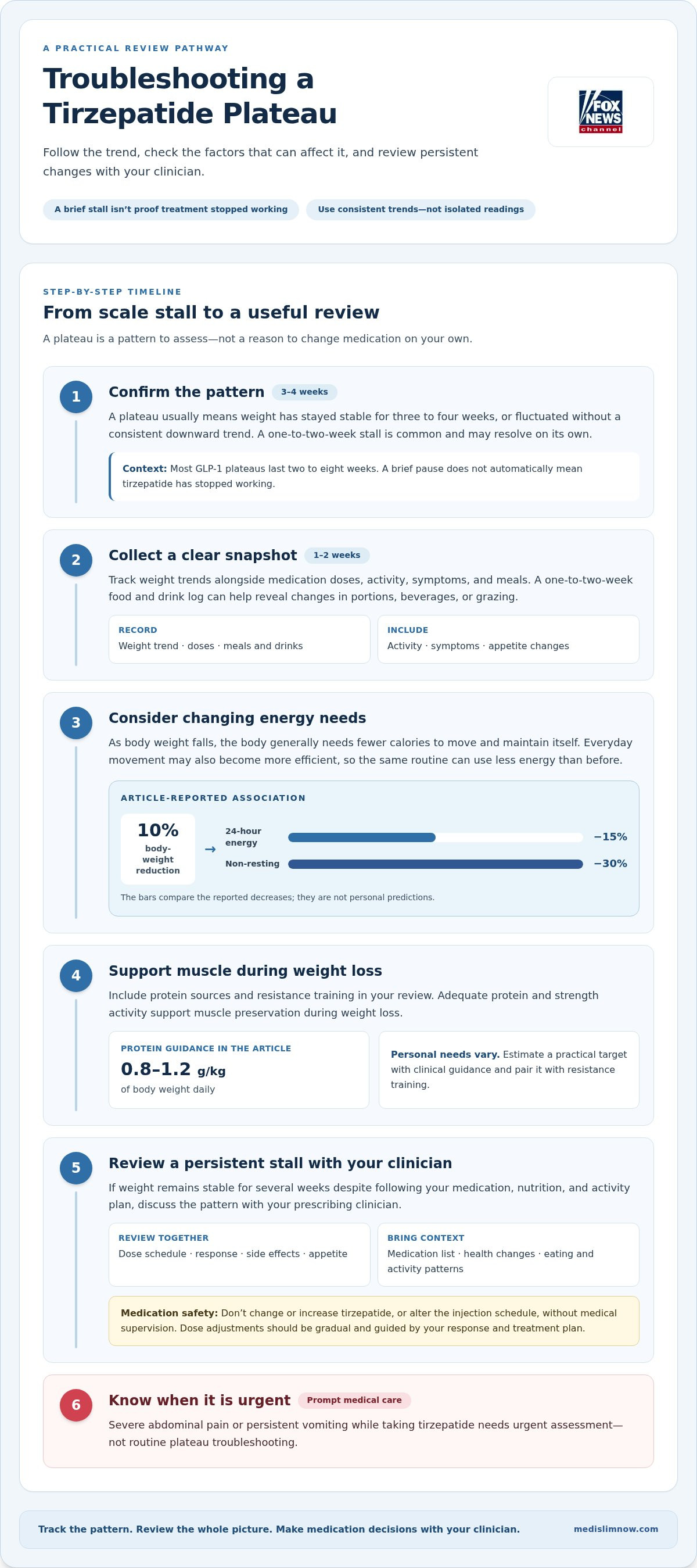
A weight-loss plateau usually means weight stays stable for three to four weeks, or fluctuates without a consistent downward trend. Most GLP-1 plateaus last two to eight weeks; a one-to-two-week scale stall is common and may resolve on its own.
Weight loss can slow as your body becomes lighter and needs less energy. Changes in appetite, food intake, activity, fluid balance, and hormones can also affect the scale. Tirzepatide activates GLP-1 and GIP receptors, but plateaus can occur with tirzepatide or other GLP-1 medications. A plateau doesn’t automatically mean treatment has stopped working.
To troubleshoot, record your weight trend, medication doses, activity, symptoms, and meals. A one-to-two-week food and drink log can help reveal changes in portions, beverages, or grazing. Include protein sources and strength activity, since adequate protein and resistance training support muscle preservation. A commonly suggested protein range is 0.8-1.2 grams per kilogram of body weight daily; personal needs vary.
If your weight remains stable for several weeks despite following your medication, nutrition, and activity plan, review the pattern with your prescribing clinician. Discuss your dose schedule, response, side effects, and whether nutrition or activity may need adjustment. Don’t change or increase tirzepatide without medical supervision. Any dose adjustment should be gradual and guided by your response and treatment plan.
Other medications and health conditions can affect appetite, fluid balance, movement, or weight trends. Bring your clinician an up-to-date medication list and mention relevant health changes so these factors can be considered alongside your dosing and routine.
Seek prompt medical care for severe abdominal pain or persistent vomiting while taking tirzepatide. These symptoms need urgent assessment, not routine plateau troubleshooting.
2. Changes in energy needs and metabolism during weight loss
As body weight falls, the body generally needs fewer calories to move and maintain itself. A 10% reduction in body weight is associated with a 15% decrease in 24-hour energy expenditure and a 30% decrease in non-resting energy expenditure. Everyday movement may also become more efficient, so the same routine can use less energy than before.
Tirzepatide activates GLP-1 and GIP receptors, helping regulate appetite and food intake. Weight loss often moves fastest during the first 3-6 months, then slows as the body adjusts to a lower weight and calorie needs change. Loss can continue gradually for 72 weeks or longer; average maximum loss in semaglutide and tirzepatide studies was reached around 9-18 months, after which weight tended to stabilize.
Plateaus can happen at different points. Tirzepatide weight loss may begin slowing within 24-36 weeks, while the majority of loss with semaglutide or tirzepatide occurs during the first year. A slower trend later in treatment doesn’t by itself show that the medication has stopped working.
Clinical-trial averages offer context, not a personal target. In a phase 3 trial, tirzepatide was associated with average body-weight loss of 16% at 5 mg, 21.4% at 10 mg, and 22.5% at 15 mg. In a head-to-head trial, tirzepatide produced average loss of 20.2%, compared with 13.7% for semaglutide. Results vary between individuals and study conditions.
Compared with semaglutide, tirzepatide showed greater average weight loss in that head-to-head trial; the figures don’t predict an individual’s progress or compare every obesity treatment. Track weight trends alongside food intake, strength training, and daily movement. If progress changes, a medical weight-loss consultation can help review your routine and treatment response.
3. Should I increase my dual-action GLP-1 medication dose to break a plateau?
A plateau alone doesn’t mean your tirzepatide dose needs to increase. The standard starting dose is 2.5 mg, which helps the body adjust to treatment. Dose escalation should happen gradually under medical supervision, based on your response, side effects, and treatment plan.
Ask your clinician to review your progress when weight has stayed stable despite consistent dosing and a steady eating and activity routine. Discuss appetite changes, missed or delayed doses, side effects, and whether you can maintain adequate nutrition. For Zepbound, the approved maximum is 15 mg once a week. A higher dose isn’t automatically the right response to every stall.
Don’t change your dose or injection schedule without medical advice. Don’t skip or double doses to try to speed up weight loss. Your clinician can decide whether to continue your current dose, adjust it gradually, or review other factors affecting progress. They’ll consider your response and tolerability, rather than relying on the scale alone.
Review how you administer each dose, too. Bring your medication schedule and any questions about injection technique to your appointment. Consistent use matters when assessing treatment response, and an administration issue can complicate that review. Follow the instructions for your medication and ask your clinician if anything is unclear.
Before discussing a dose increase, note your recent weight trend, eating patterns, activity, and symptoms. Resistance training and adequate protein can help preserve muscle during weight loss, so include those habits in the conversation. Mention it if reduced appetite makes it difficult to eat enough. A dose adjustment should fit your overall health plan, not replace a review of nutrition, movement, or how you’re feeling.
Use the appointment to agree on what response to monitor and when to review it. This gives you a clear, medically supervised next step without making an unsupervised change.
4. Protein targets for breaking a plateau
Protein deserves attention during tirzepatide treatment because reduced appetite can make it harder to meet nutrition needs. A practical daily target used during weight loss is 0.6 to 0.75 grams per pound of goal body weight. Your goal weight and health needs help determine where your target fits within that range.
Make protein easier to include by planning it around foods you already eat. For example, add eggs, yogurt, beans, fish, tofu, or poultry to meals, and note portions in a food log. Tracking what you eat for a week can show whether smaller meals or appetite changes have reduced your protein intake. A clinician can help tailor your target if you have a health condition that affects nutrition.
Diet, protein intake, exercise, sleep, and hydration can all influence your routine and weight trend. During calorie reduction, adequate protein combined with resistance training helps preserve lean mass. Aim for two to three resistance-training sessions per week if appropriate for your fitness and health. Sleep also matters: the suggested target is 7-9 hours per night. Keep fluids consistent, particularly if appetite changes make regular eating and drinking more difficult.
Protein supports muscle, but it doesn’t guarantee that the scale will move. Body composition can change even when weight changes slowly. If you exercise, include strength training and pay attention to how your routine feels, rather than relying on scale readings alone. A food log can also show whether your meals provide enough protein and energy to support activity.
If reduced appetite makes protein intake difficult, bring your food log and questions to your next medication review. You can discuss your tirzepatide treatment and a protein target that fits your needs with a clinician.
Medi Slim: Semaglutide
Medi Slim offers medical weight loss consultations to review your progress, nutrition, and medication response. If a plateau persists, a consultation can help you discuss next steps and whether semaglutide or tirzepatide fits your treatment plan. Medication decisions should reflect your health needs and current treatment.
Changes in scale weight don’t show the whole picture. Styku 3D Body Composition Analysis helps track fat loss and muscle gain, adding useful context as you monitor progress. These measurements can help you and your clinician assess changes beyond the scale.
For a supervised review of your weight-loss treatment, contact Medi Slim or visit medislimnow.com.
Make your next conversation count
A useful step in troubleshooting a tirzepatide plateau is to clarify what you want your care plan to support. Weight is one measure, but your priorities may also include strength, energy, or habits you can maintain. Naming those priorities gives your clinician a clear starting point for discussing progress and treatment goals.
Before your next appointment, write down the change you want to understand and the decision you need help making. You might ask how your response shapes the plan, which measures of progress matter for you, or how to keep nutrition and activity manageable. A focused conversation can turn uncertainty into a practical next step without changing medication on your own.
Medi Slim offers medical weight loss consultations, along with semaglutide, tirzepatide, and Styku 3D Body Composition Analysis. Connect with Medi Slim to discuss your plateau and take a considered next step with professional guidance.
Frequently Asked Questions
Does a plateau mean dual-action GLP-1 medication has stopped working?
No. The scale can stay stable while treatment continues to support weight management. Look at more than one outcome: whether appetite control has changed, how your clothing fits, and whether your weight trend is steady over time. If you’re troubleshooting a tirzepatide plateau, bring those observations to your clinician rather than judging treatment by a single weigh-in.
How long can a dual-action GLP-1 weight-loss plateau last?
Most GLP-1 plateaus last two to eight weeks, although some continue longer. A short stall may reflect ordinary variation rather than a lasting change in progress. Weigh under similar conditions and compare trends across weeks, not isolated days. If weight remains stable for four to six weeks despite consistent medication and routines, discuss the pattern with your clinician.
Should I increase my dual-action GLP-1 medication dose to break a plateau?
Don’t increase your dose on your own. Before considering a gradual adjustment, a clinician reviews your current dose, treatment response, side effects, and ability to follow the plan. Bring your dose history to your appointment and note any missed injections or changes in appetite. Increasing the dose isn’t a guaranteed way to restart weight loss, so decisions should reflect your overall treatment needs.
Can you build a tolerance to tirzepatide?
A plateau alone doesn’t mean you’ve developed tolerance to tirzepatide. Weight loss can slow as your body changes, even while medication continues to support weight management. Note whether appetite effects have changed and whether you’ve taken doses consistently. Your prescriber can review these details and your longer-term trend before deciding whether your treatment plan needs adjustment.
Is it normal to plateau more than once during treatment?
Yes. People may experience more than one plateau during treatment as their bodies adjust to lower weights. A later stall doesn’t erase earlier progress or automatically call for a dose change. Keep a record of trends and treatment changes, then discuss recurring stalls with your clinician. That context can help distinguish a brief pause from a persistent change.
Why might weight loss stall while taking tirzepatide?
Weight loss may stall because a smaller body uses less energy, while daily movement or eating patterns can shift over time. Sleep, fluid changes, health conditions, and other medications can also affect the picture. For example, a new routine that involves less walking may change your energy use. Share relevant health or medication changes with your clinician for a fuller review.